
Groton, Connecticut
Explore photographs from the place behind the story — the landscapes, landmarks, and details that reveal how this place became what it is today.
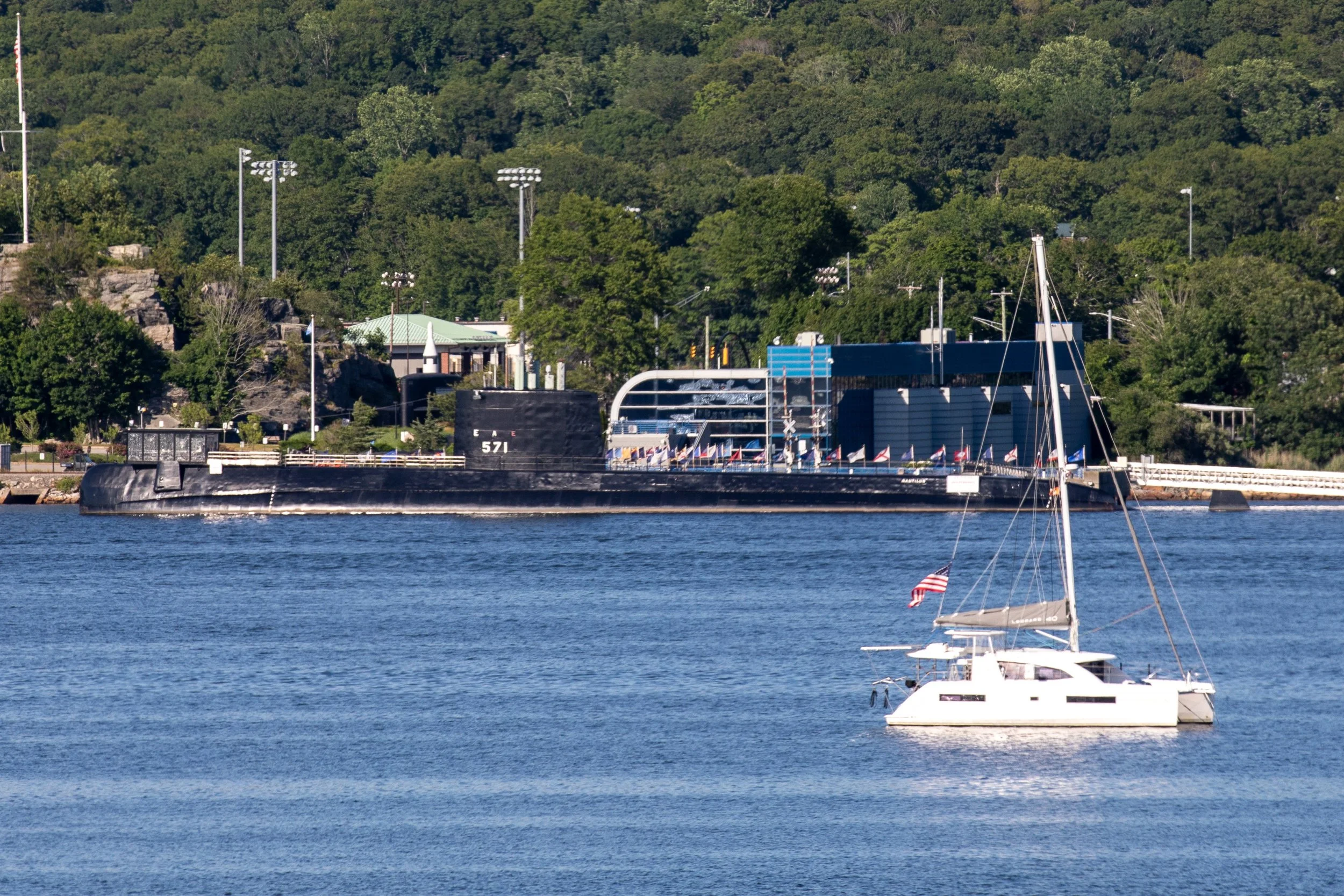
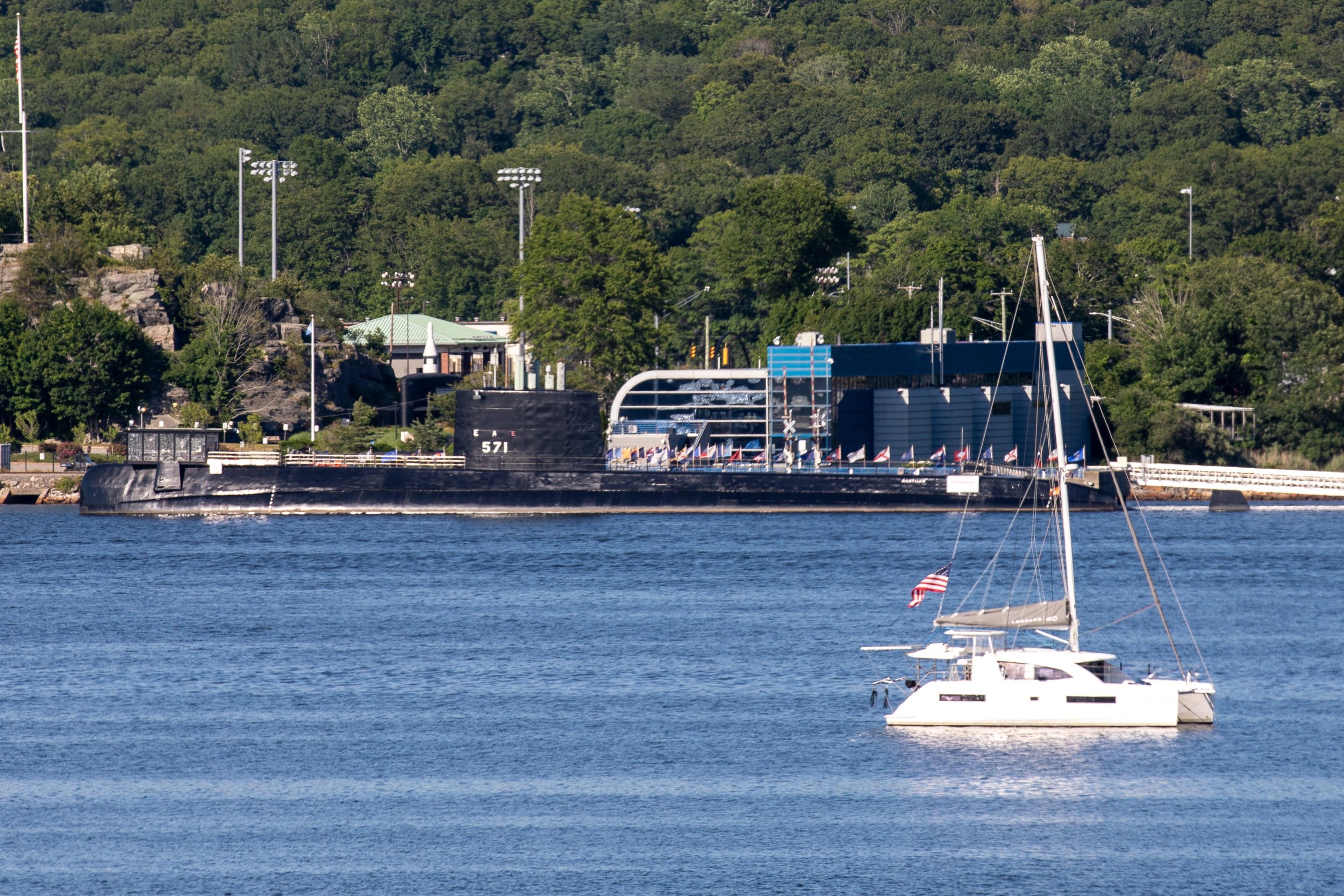
A sailboat crosses the Thames River while USS Nautilus rests on the Groton shore. The peaceful pairing captures two sides of the same waterway: a place for ordinary summer days and the birthplace of a revolution in submarine travel.
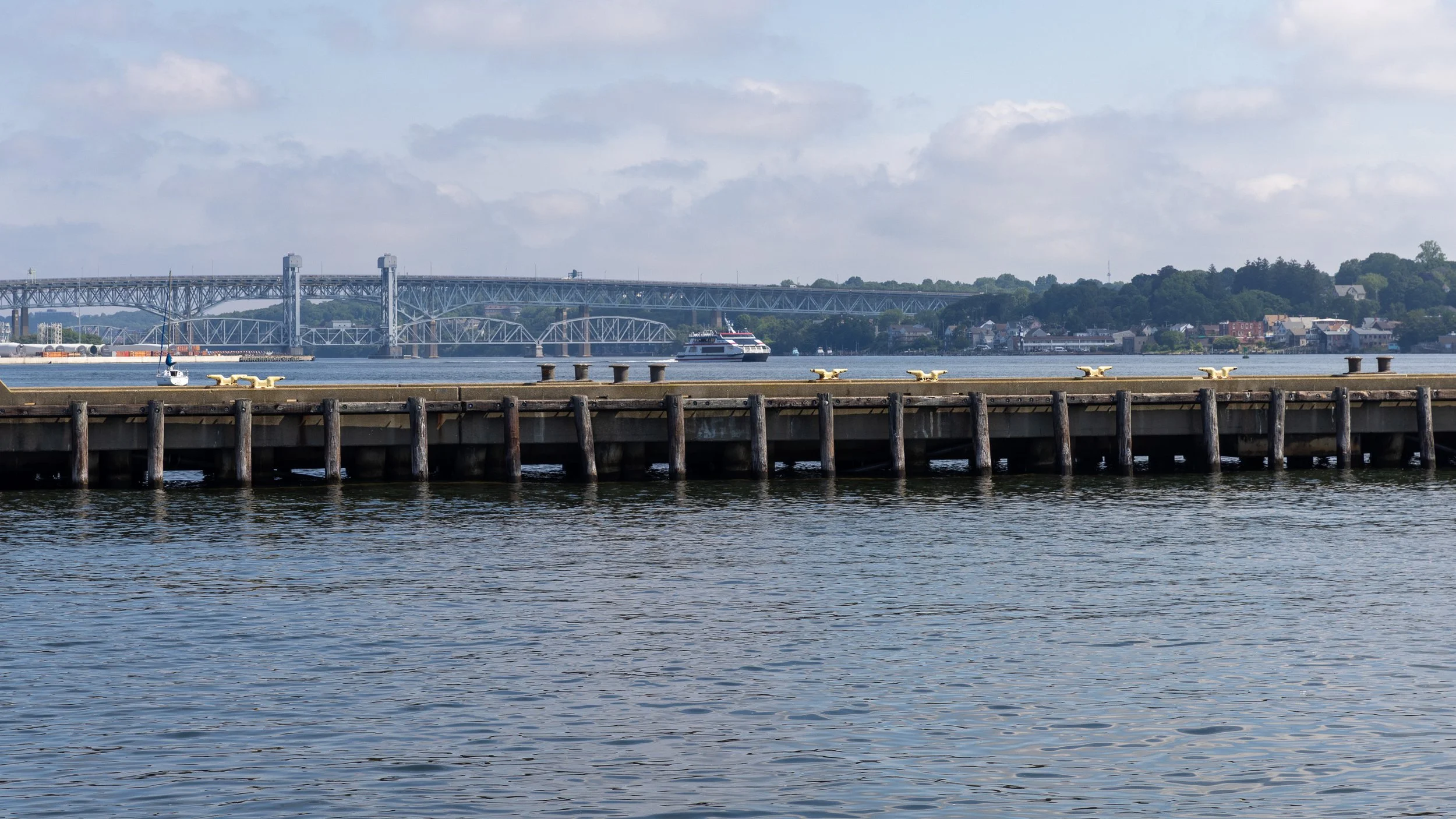
The Gold Star Memorial Bridge carries I-95 across the Thames River between New London and Groton. Thousands of travelers cross this water every day without realizing how much of Connecticut’s military and industrial history took shape along its shores.
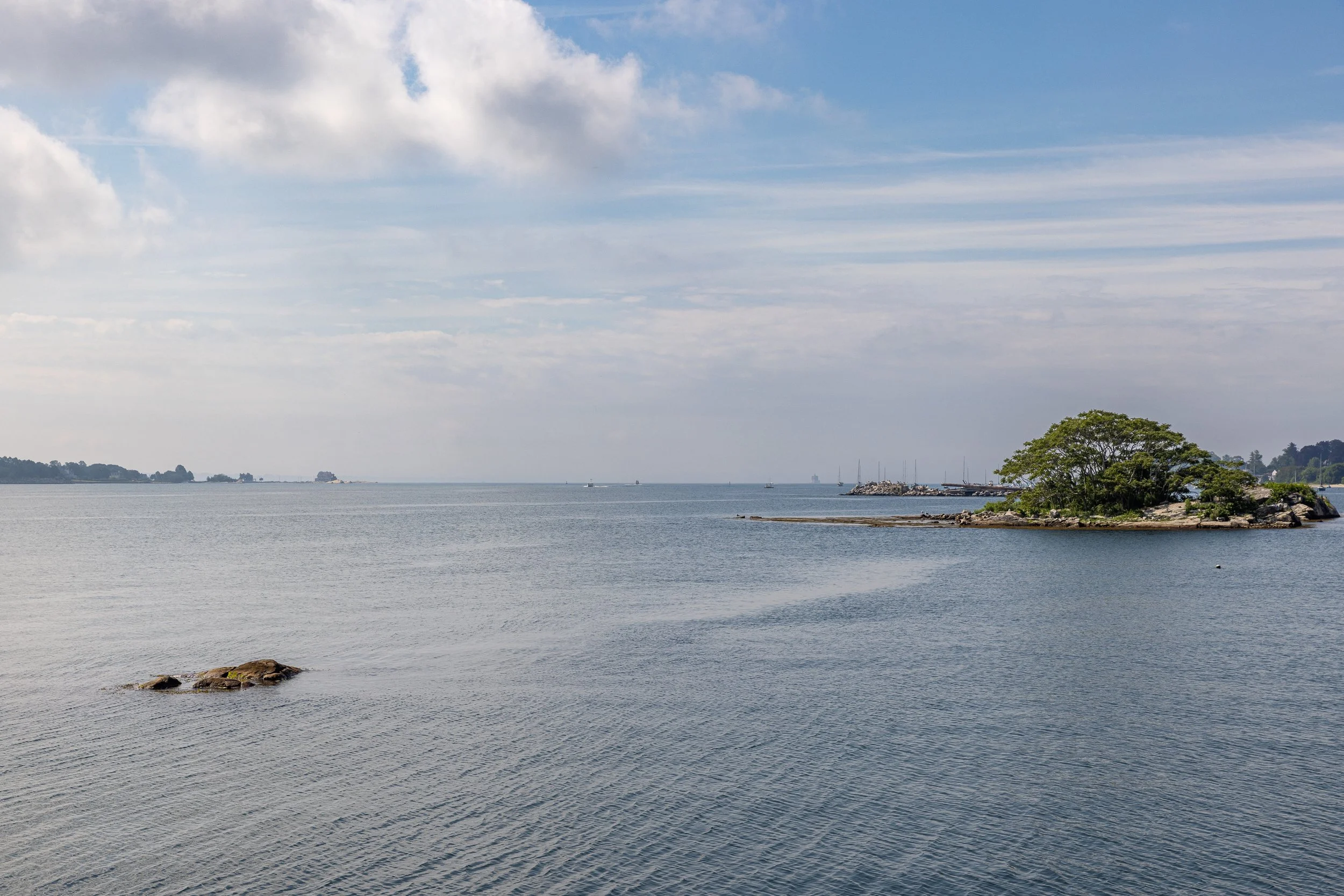
A wind-shaped tree gives tiny Powder Island a recognizable silhouette in the lower Thames River. Beyond Groton’s forts and submarines, scenes like this reveal a waterway experienced simply as a place to sail, swim, and explore.
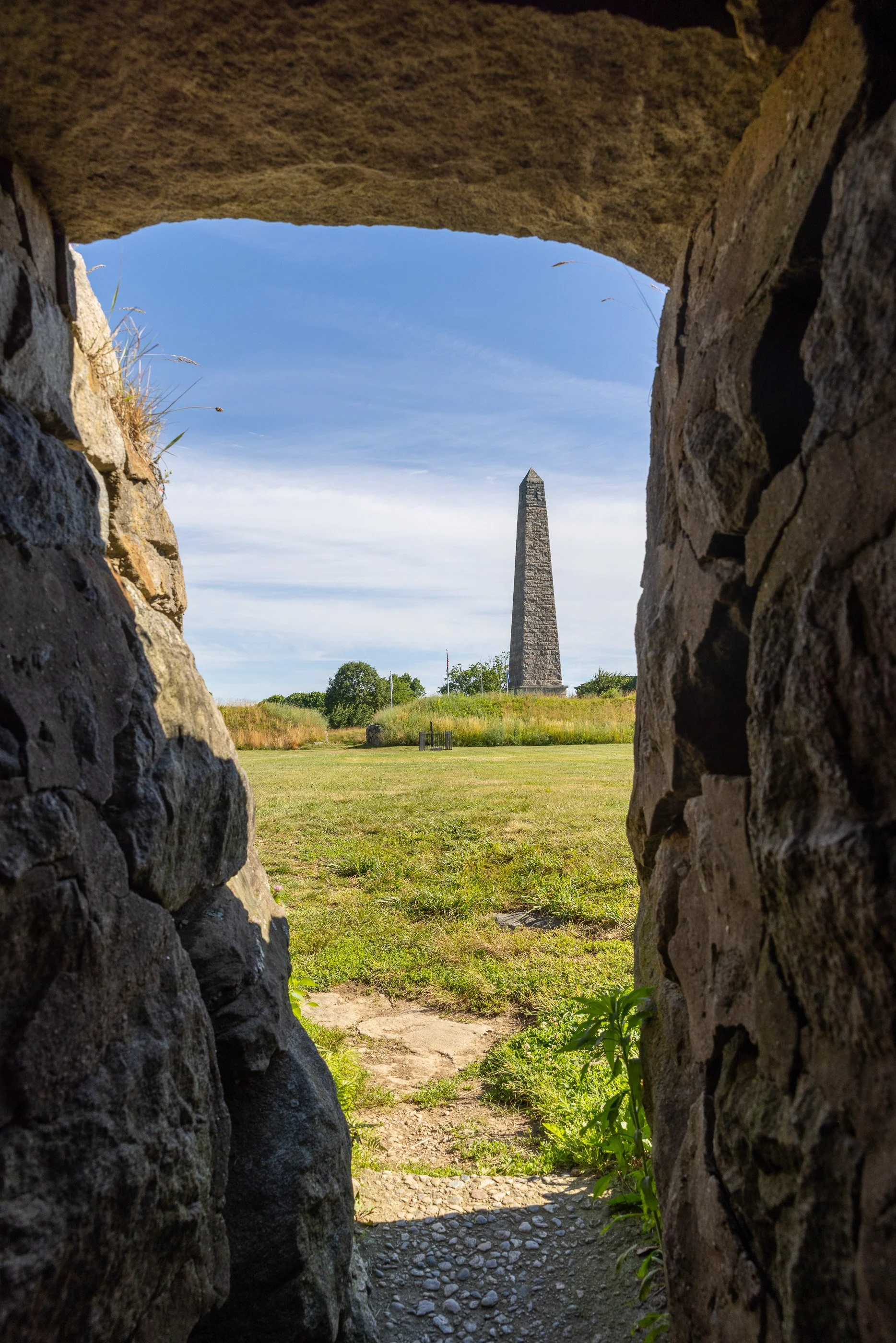
A stone passage through Fort Griswold’s earthworks frames the Groton Monument beyond it. The view links the surviving Revolutionary War fort with the memorial built to honor the defenders who died there.
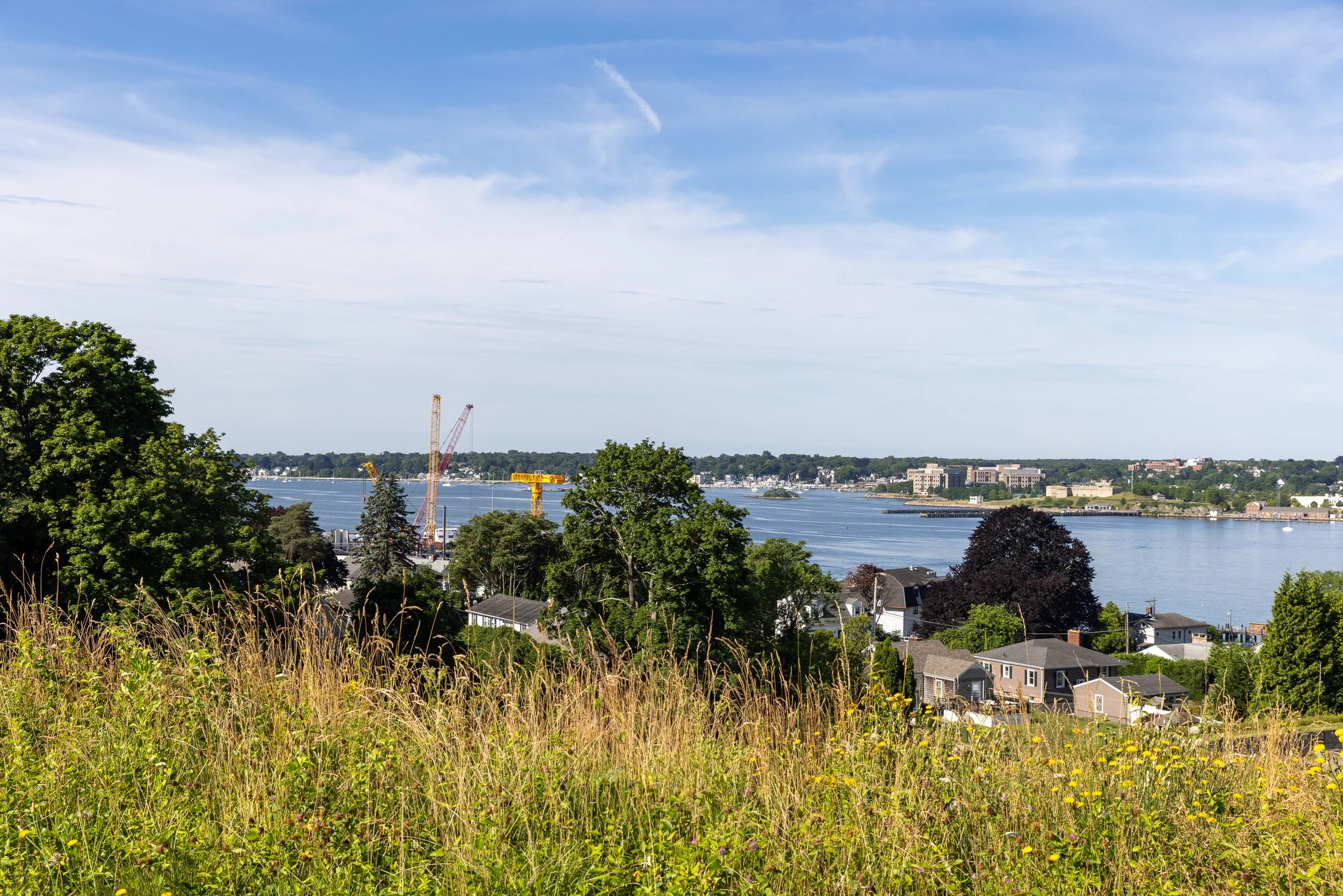
Fort Trumbull remains visible across the Thames River from the heights of Fort Griswold in Groton. The two forts guarded opposite shores of the same harbor, revealing how geography shaped the defense of both communities.
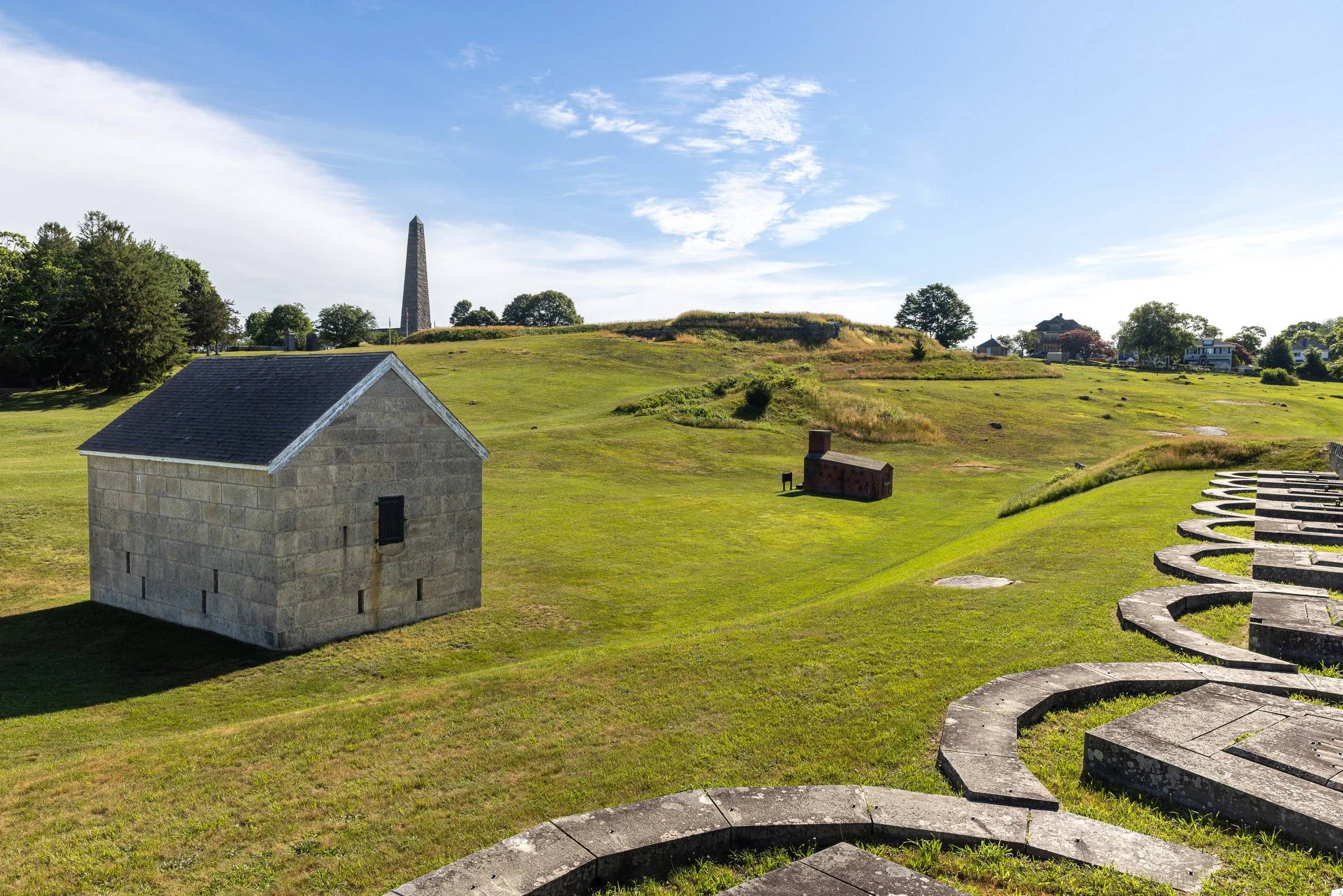
A stone powder magazine, brick shot furnace, grassy earthworks, and the Groton Monument share Fort Griswold’s lower battery. The layered landscape reveals how this strategic hill continued to serve harbor defense and remembrance long after the Revolutionary War.
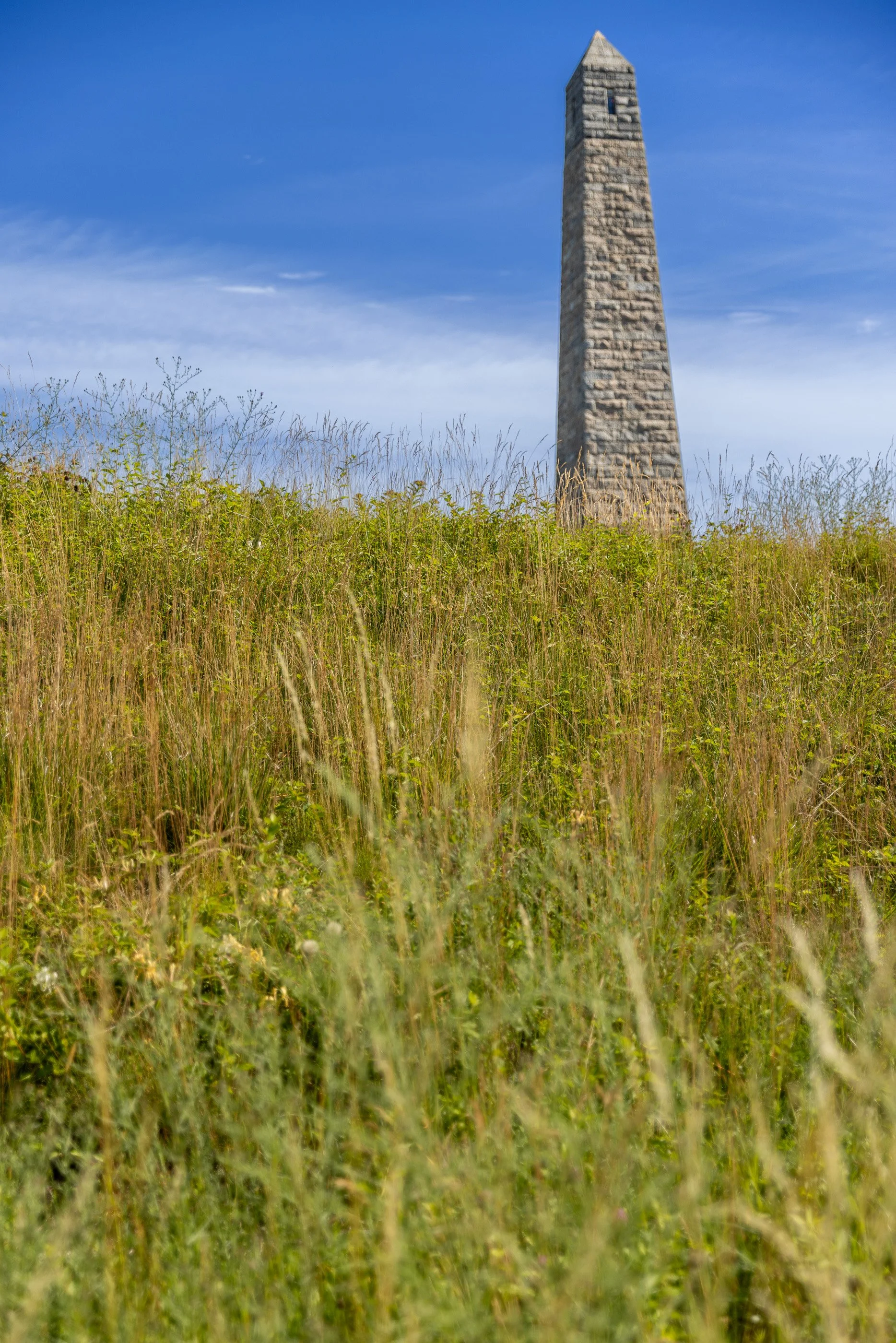
The Groton Monument rises beyond the tall grass and surviving earthworks of Fort Griswold. From this angle, the memorial’s direct relationship to the battlefield it commemorates becomes impossible to miss.
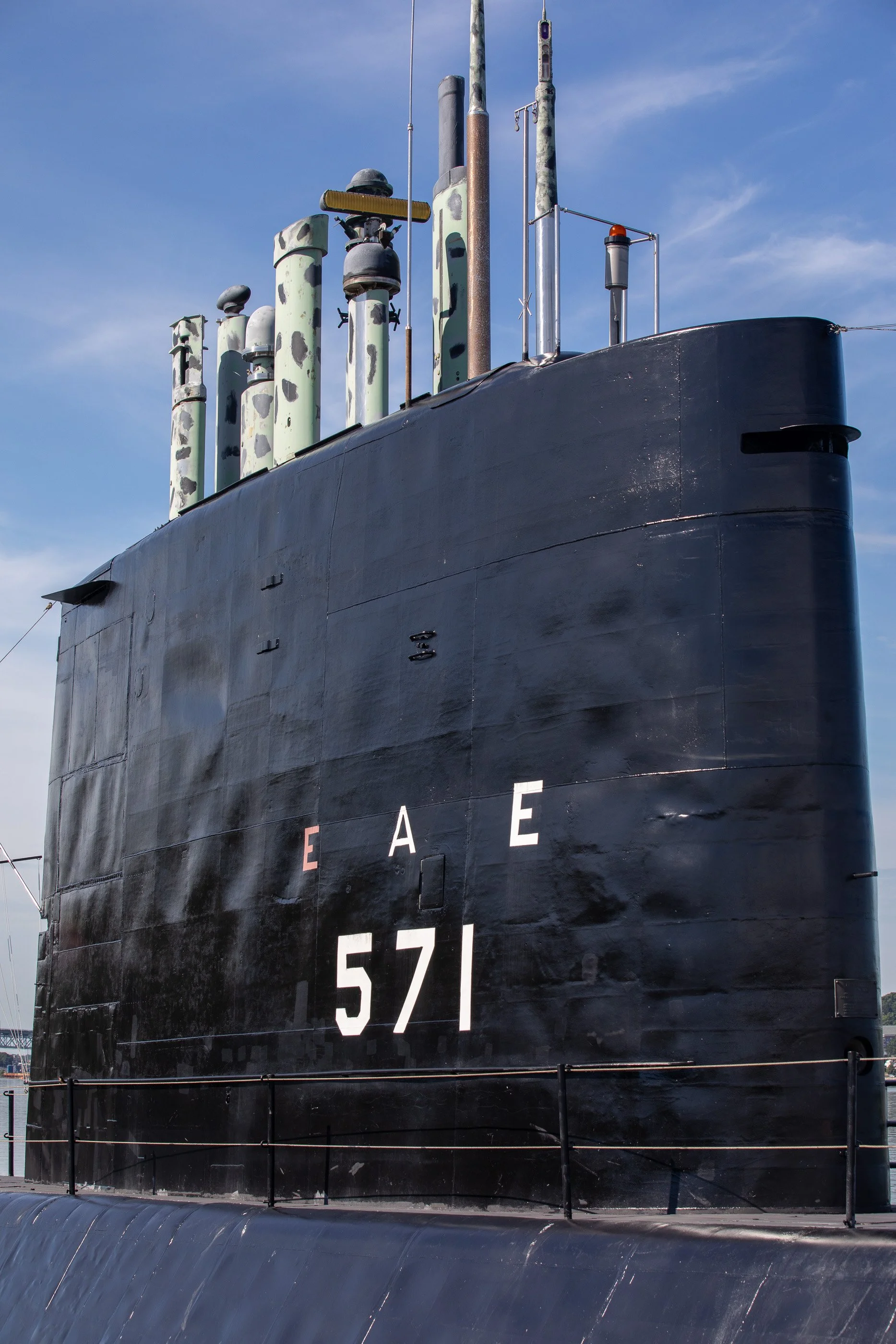
The number 571 identifies USS Nautilus, preserved beside the Thames River at the Submarine Force Museum in Groton. Its familiar submarine silhouette conceals the engineering breakthrough that made prolonged submerged travel without surfacing possible.
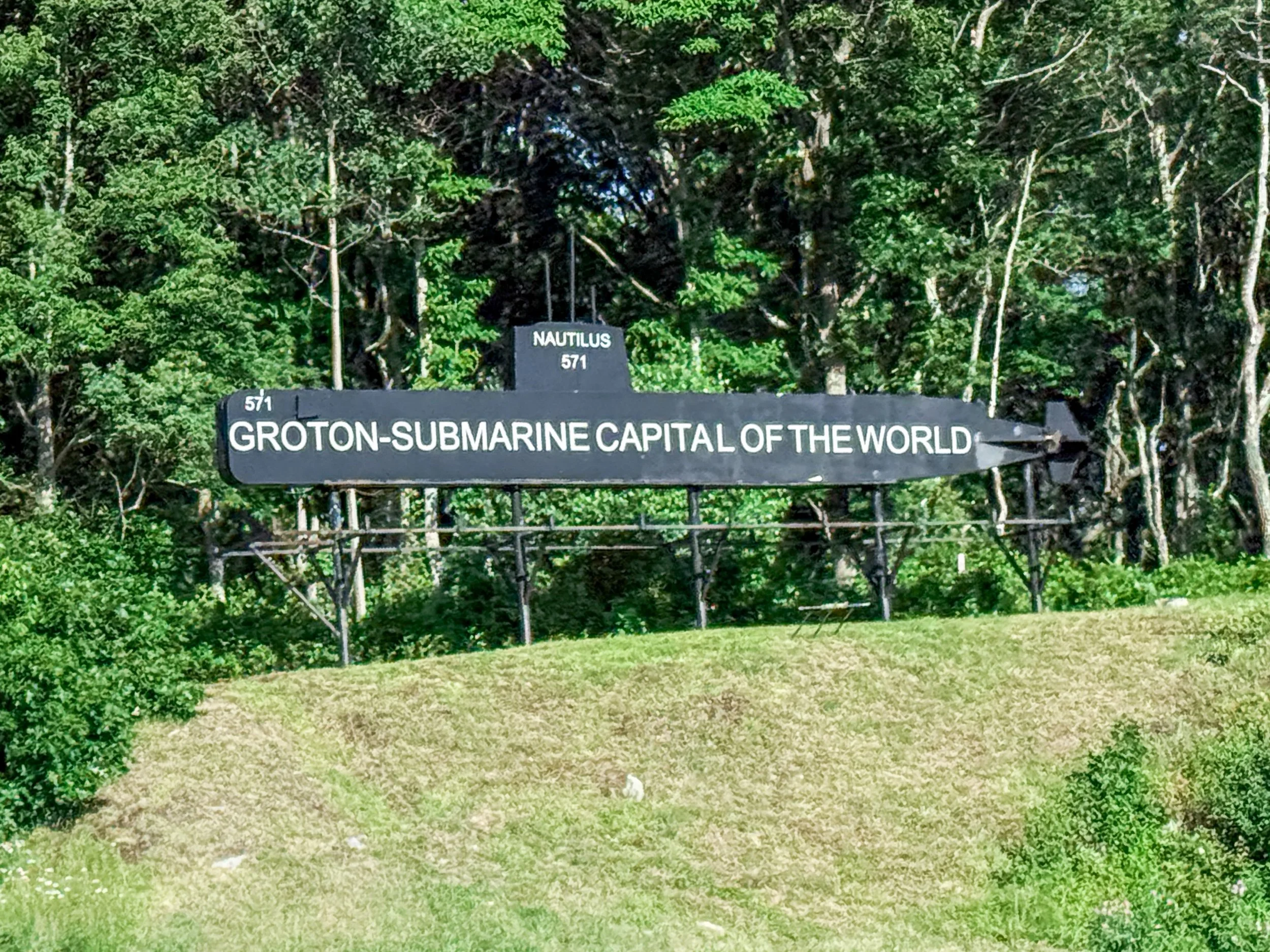
A roadside sign welcomes visitors to Groton, the Submarine Capital of the World, beneath a silhouette marked 571. The title grew from more than a century of intertwined decisions by Electric Boat, the U.S. Navy, engineers, workers, and the town itself.
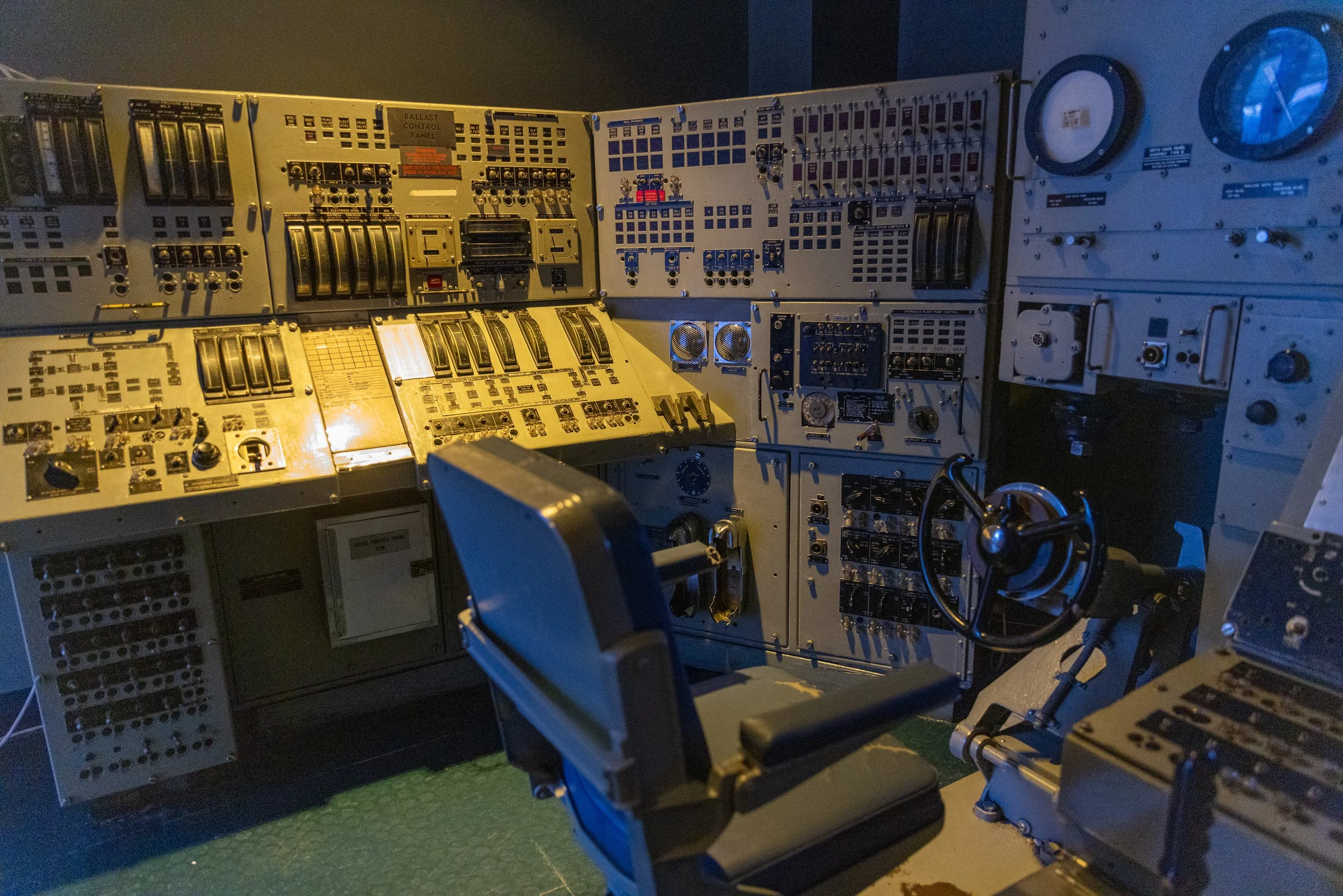
The Submarine Force Museum in Groton recreated a Cold War control room using equipment from USS Greenling (SSN-614), including ballast, ship-control, and fire-control panels. Its crowded stations reveal a defining constraint of submarine design: nearly every available inch must serve a purpose.
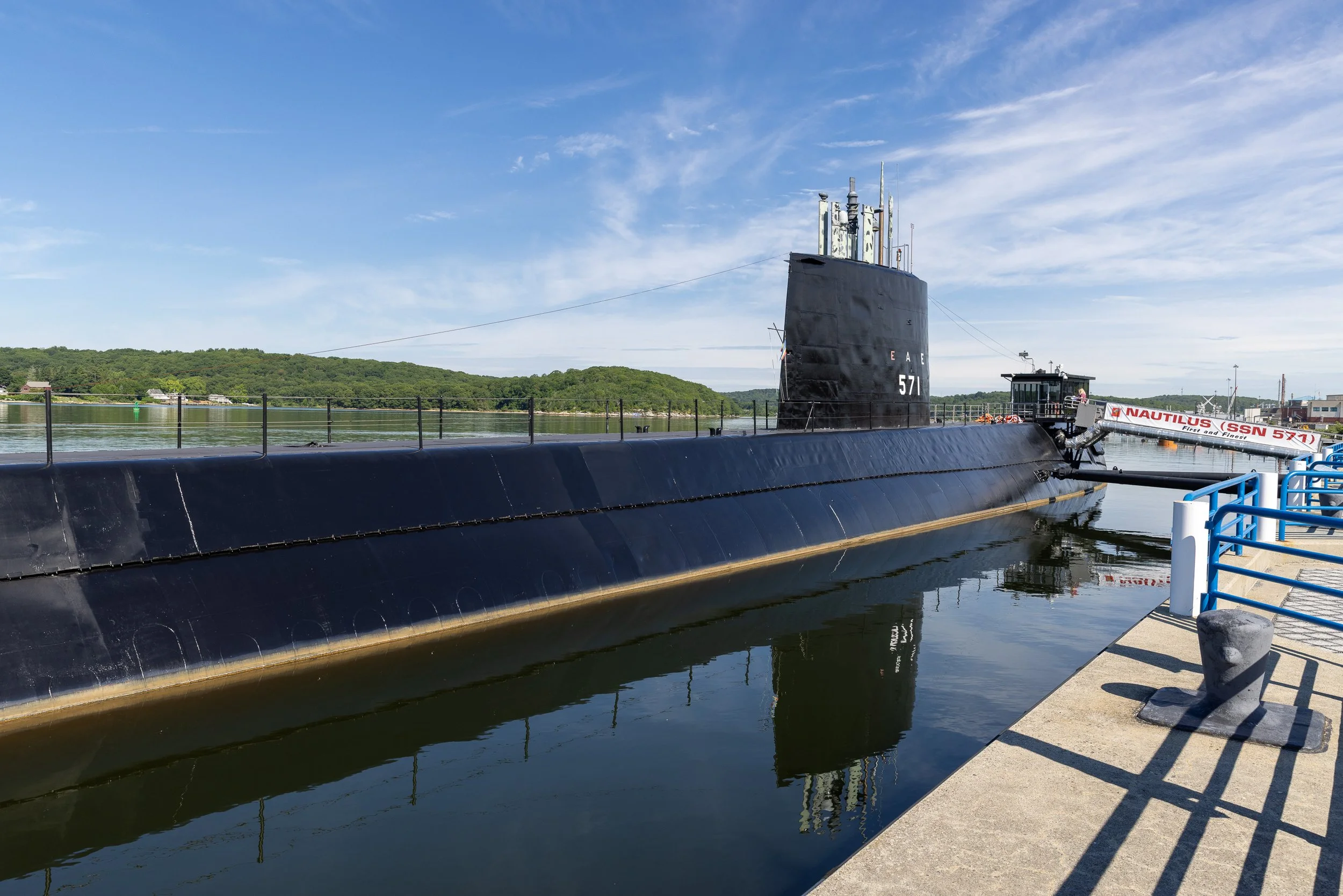
USS Nautilus stretches along her berth beside the Thames River at the Submarine Force Museum in Groton. Beneath the familiar hull was the breakthrough that changed submarine travel: a nuclear propulsion plant engineered to operate underwater for extended periods.
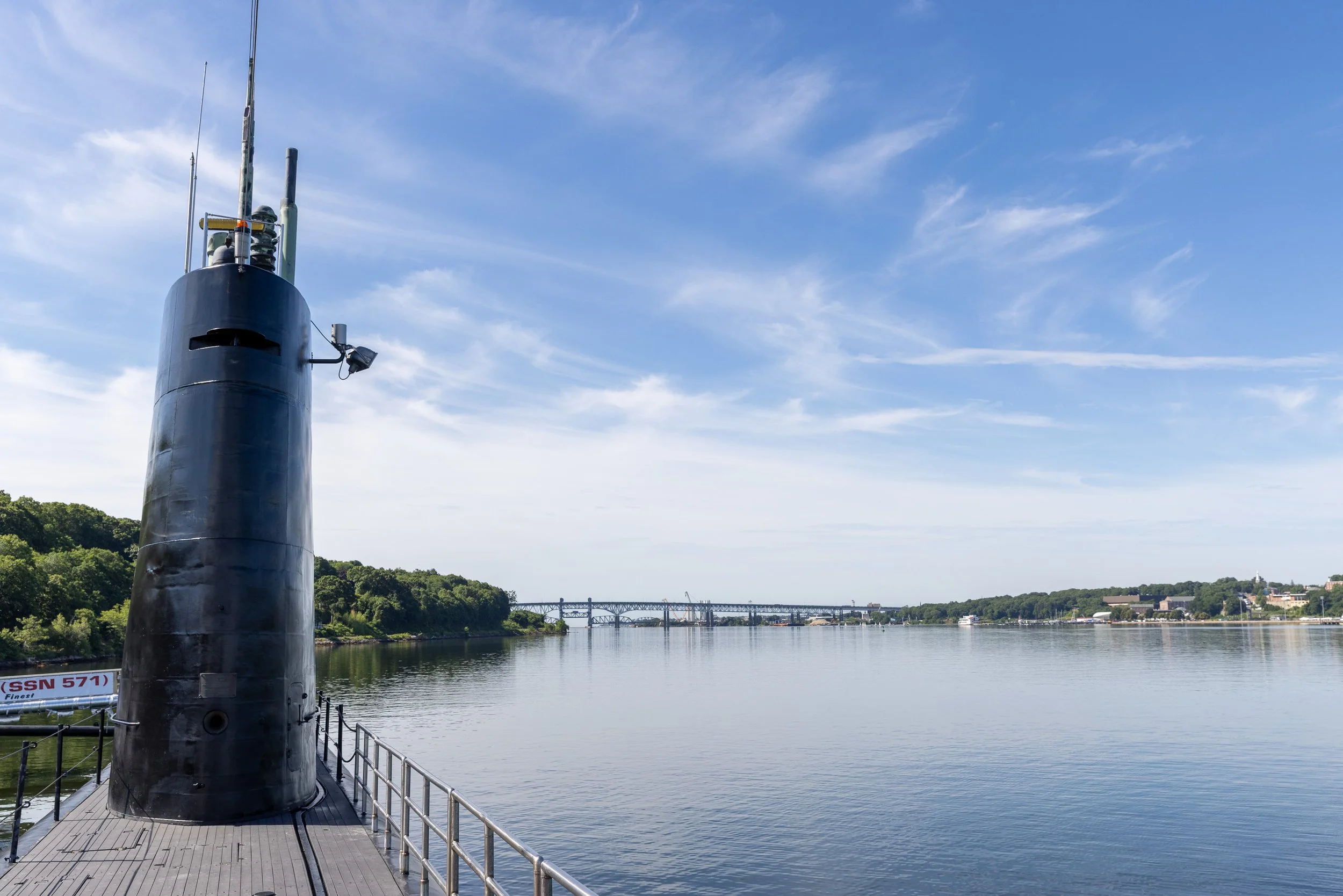
The sail of USS Nautilus stands beside a broad view up the Thames River toward the Gold Star Memorial Bridge. Built at Electric Boat in Groton, the submarine remains inseparable from the river where she was launched and first headed to sea.
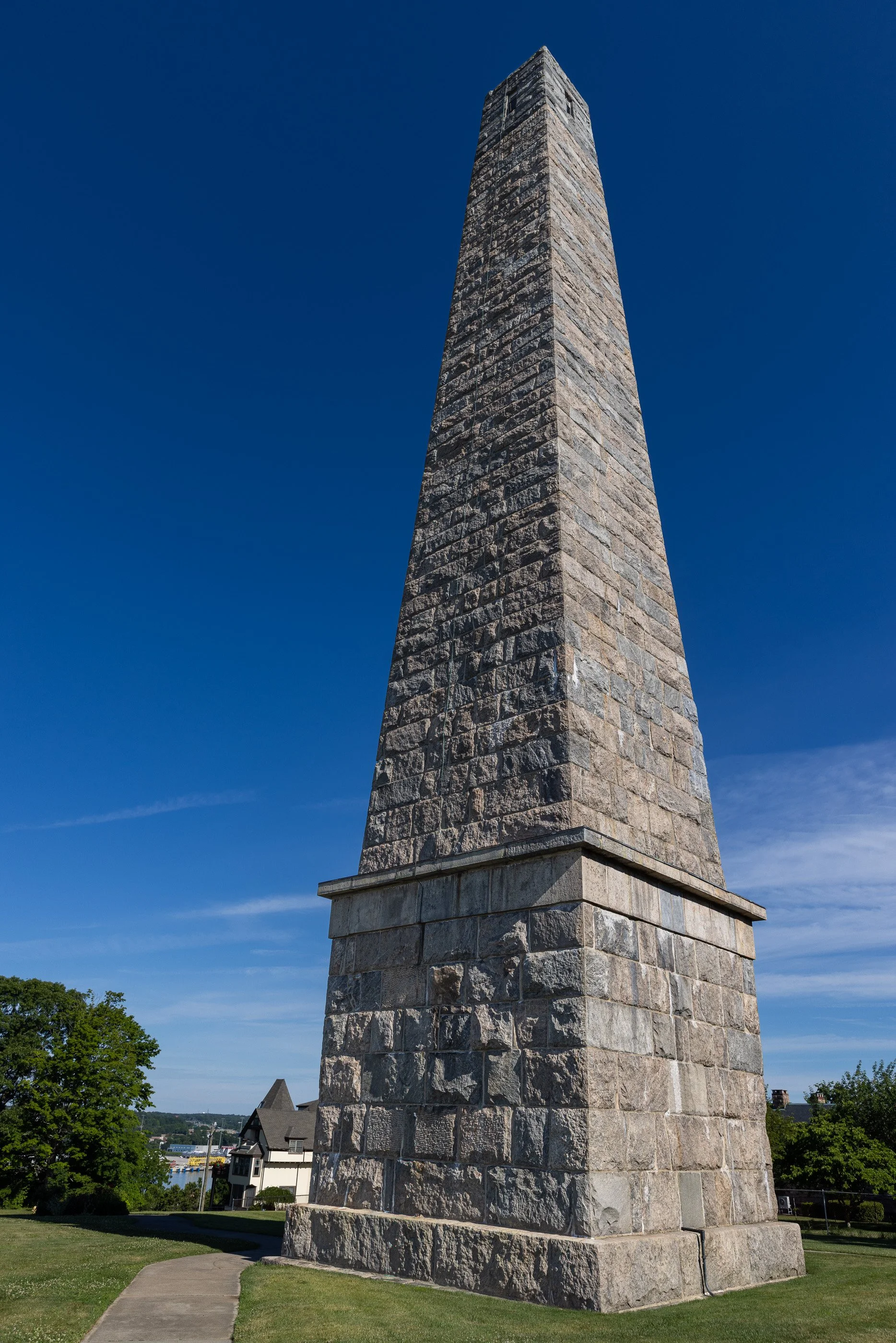
The 135-foot Groton Monument rises beside Fort Griswold in memory of the defenders who fell there in 1781. Completed in 1830, the granite obelisk made their sacrifice visible from the Thames River and across the harbor.
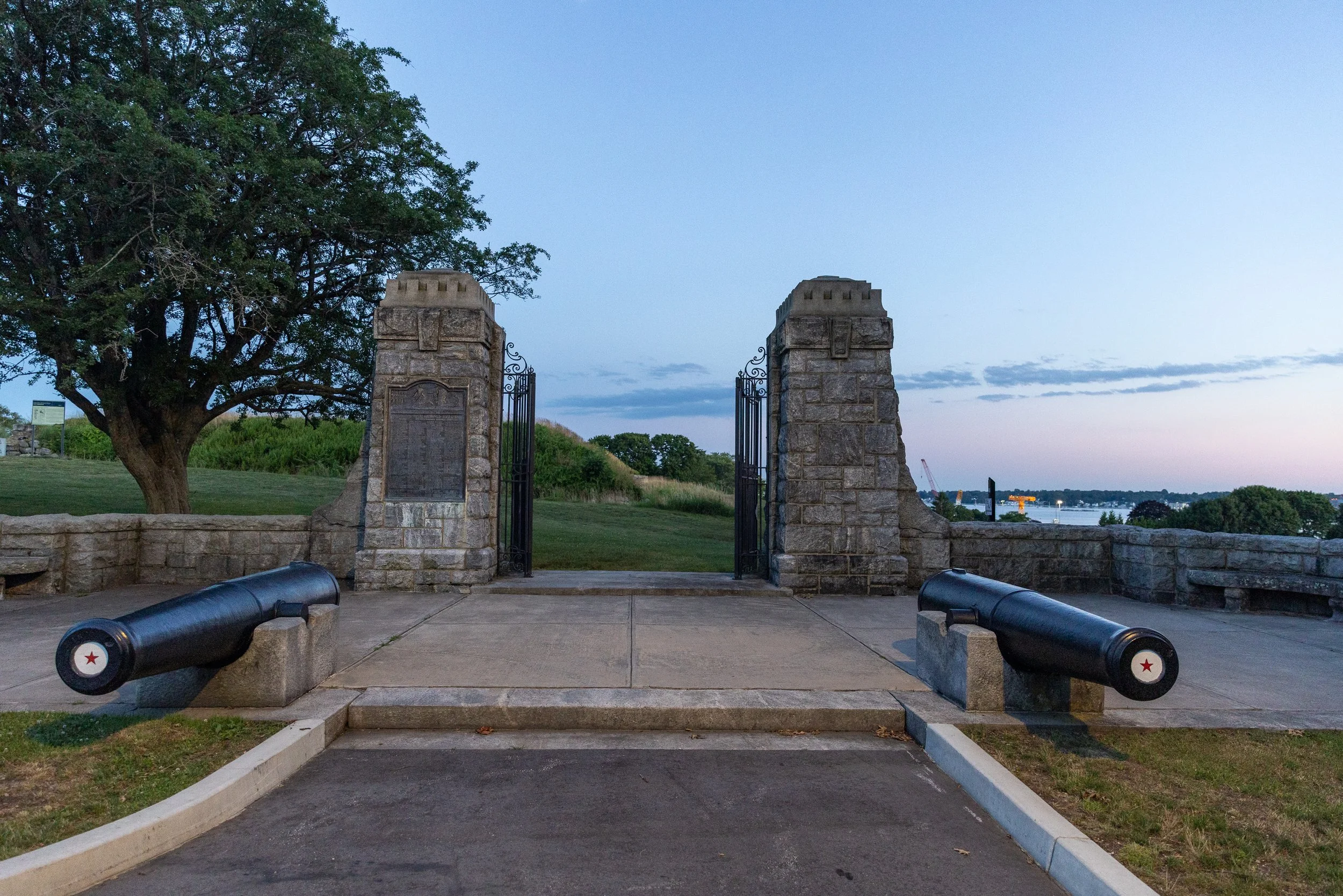
Cannons flank the Memorial Gate at Fort Griswold Battlefield State Park in Groton. Dedicated in 1911, the gate’s bronze plaque records the names and fates of the defenders caught in the attack of September 6, 1781.
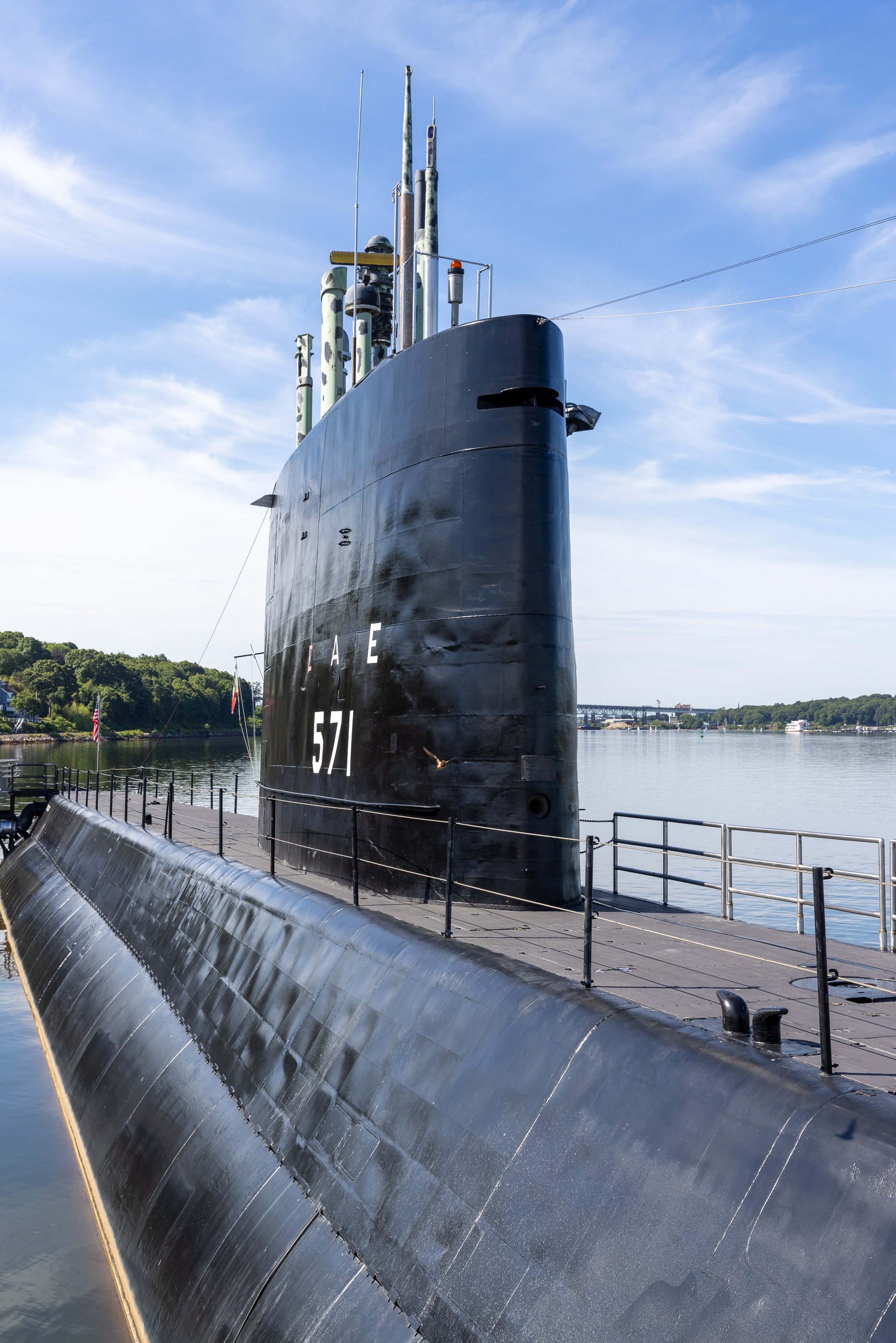
The black sail of USS Nautilus rises above her curved hull at the Submarine Force Museum in Groton. In 1954, the number 571 belonged to a vessel no navy had built before: the world’s first nuclear-powered submarine.
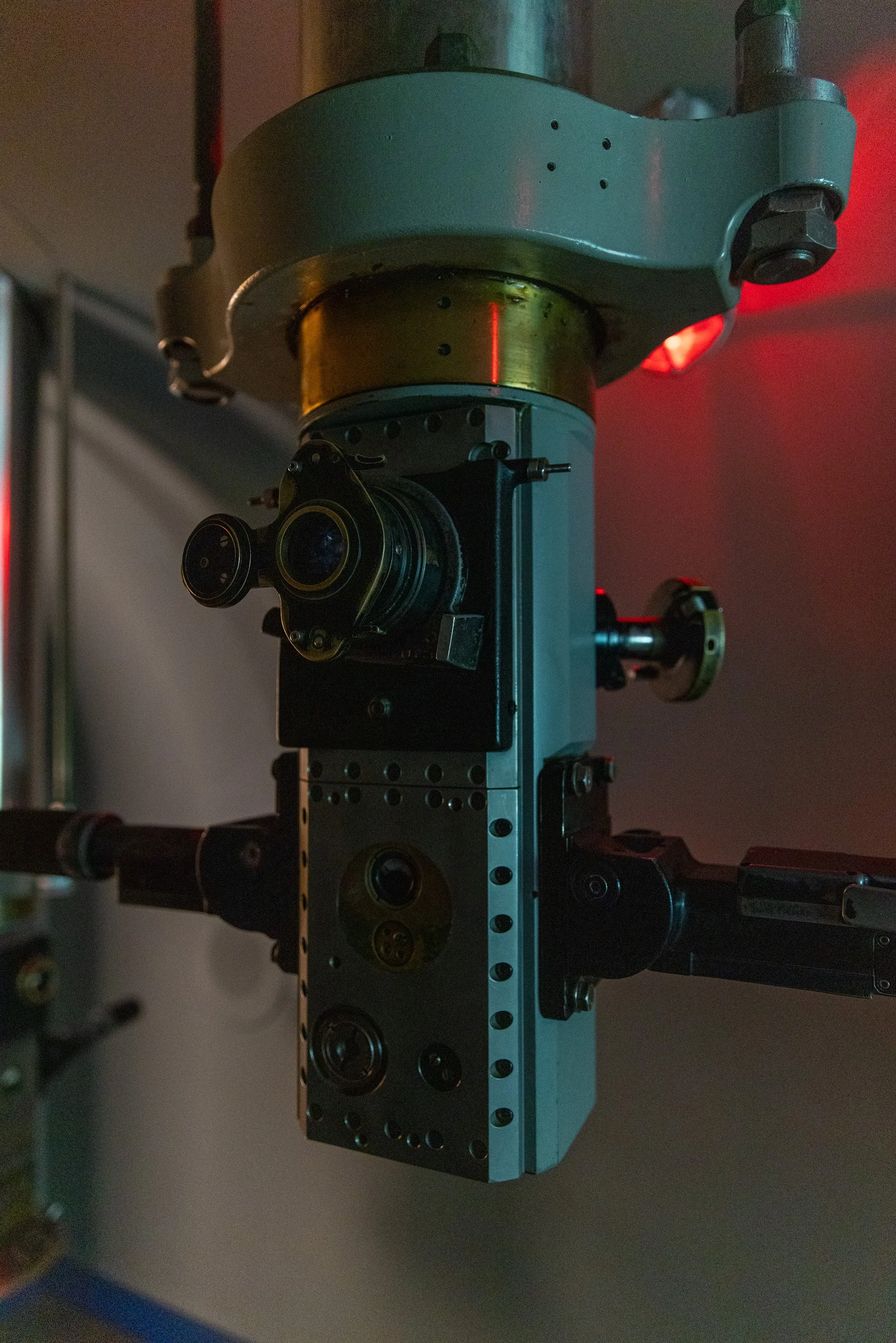
The black sail of USS Nautilus rises above her curved hull at the Submarine Force Museum in Groton. In 1954, the number 571 belonged to a vessel no navy had built before: the world’s first nuclear-powered submarine.
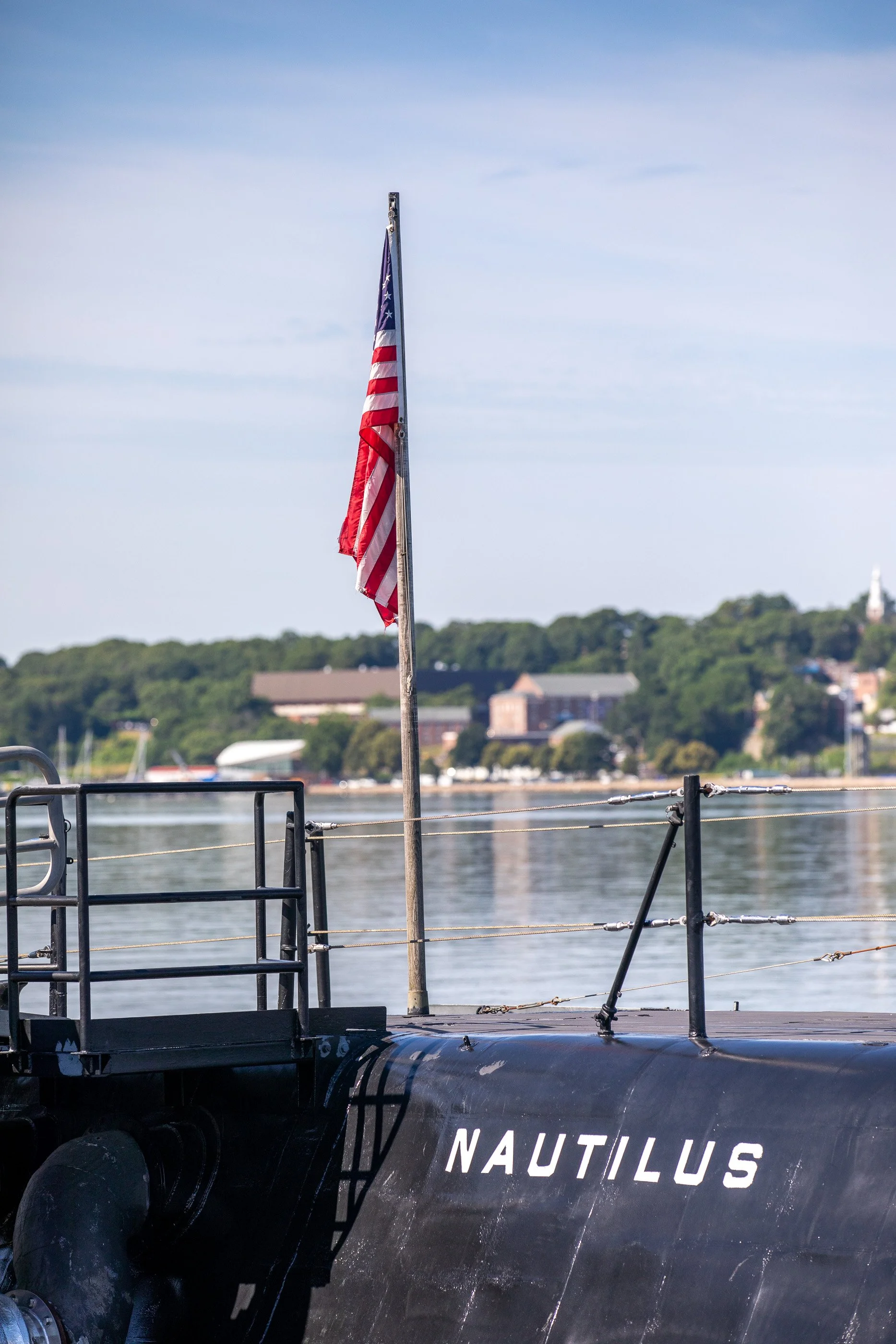
An American flag flies above the deck of USS Nautilus at the Submarine Force Museum in Groton. Built nearby at Electric Boat and launched into the Thames in 1954, the pioneering submarine eventually returned to the river where her history began.
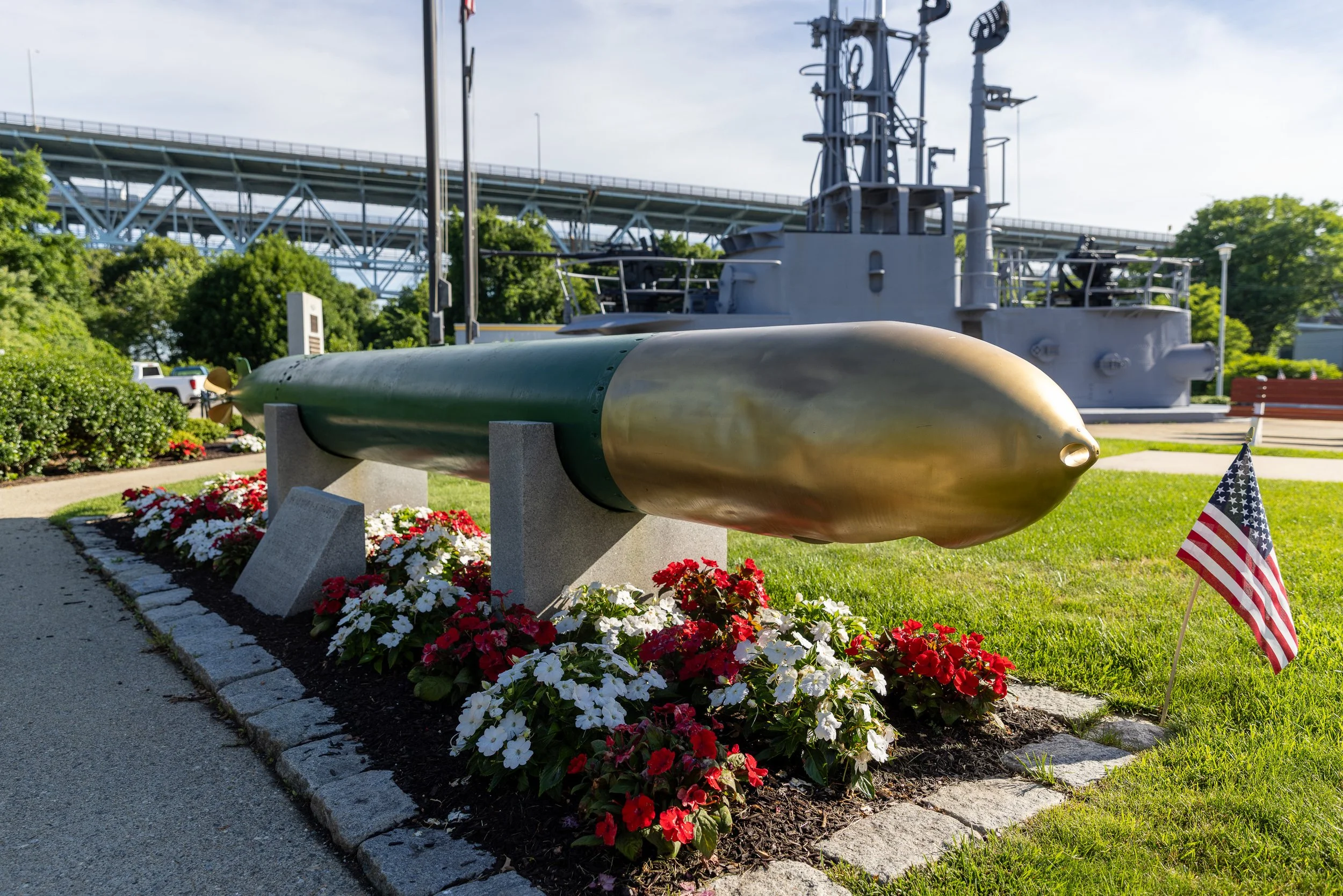
A preserved torpedo fills the foreground at the Submarine Force Museum in Groton, with a historic submarine sail and the Gold Star Memorial Bridge behind it. Weapon, vessel, river, and highway converge in a single view of the town that became the Submarine Capital of the World.
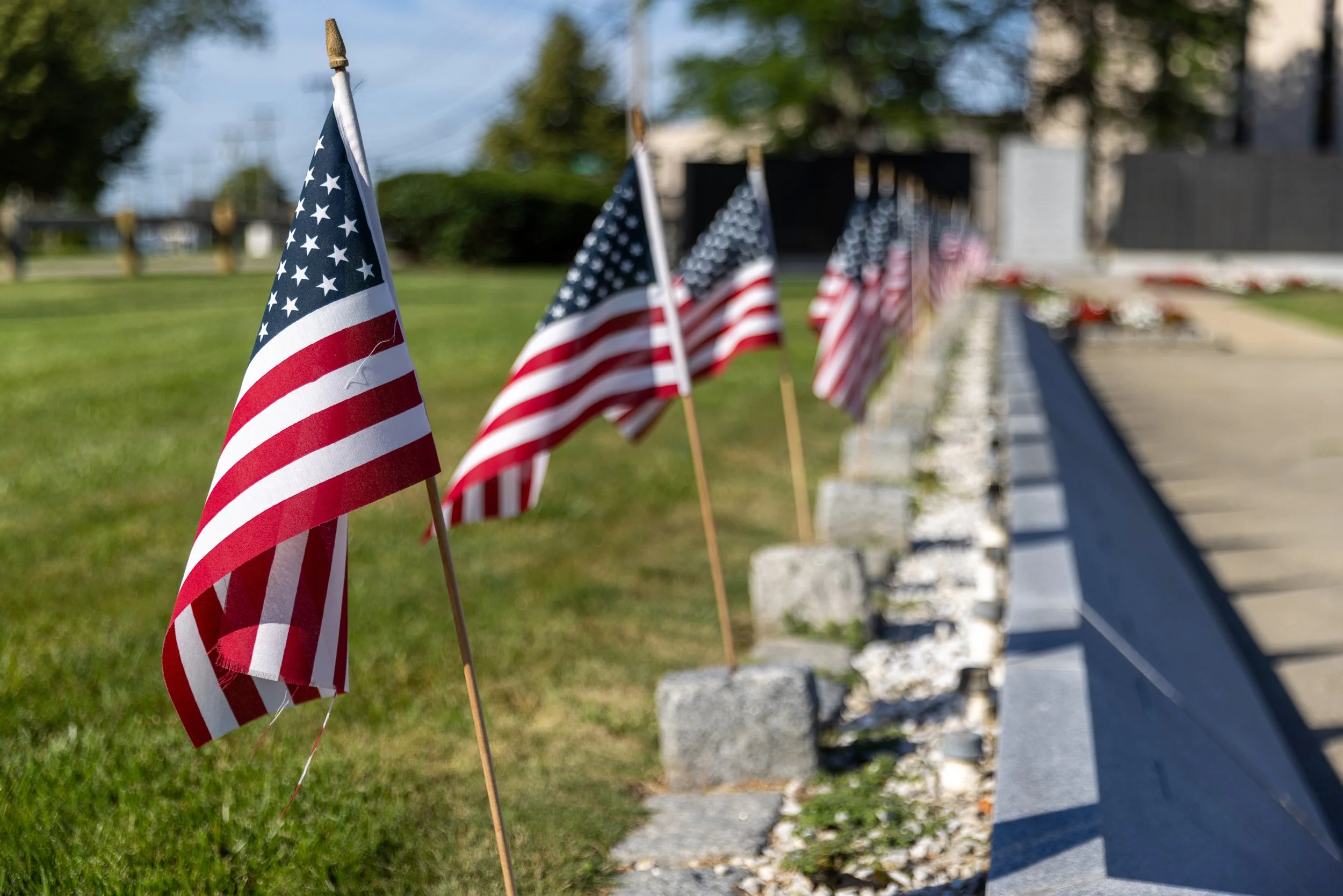
Small American flags line the granite markers at the National Submarine Memorial East in Groton. The memorial honors the 3,617 submariners and fifty-two U.S. submarines lost during World War II.
STORY BEHIND THIS PLACE
The photographs show this place as it exists today. Discover the decisions, people, and events that shaped it.