
Spokane Falls (Washington)
Explore photographs from the place behind the story — the landscapes, landmarks, and details that reveal how this place became what it is today.
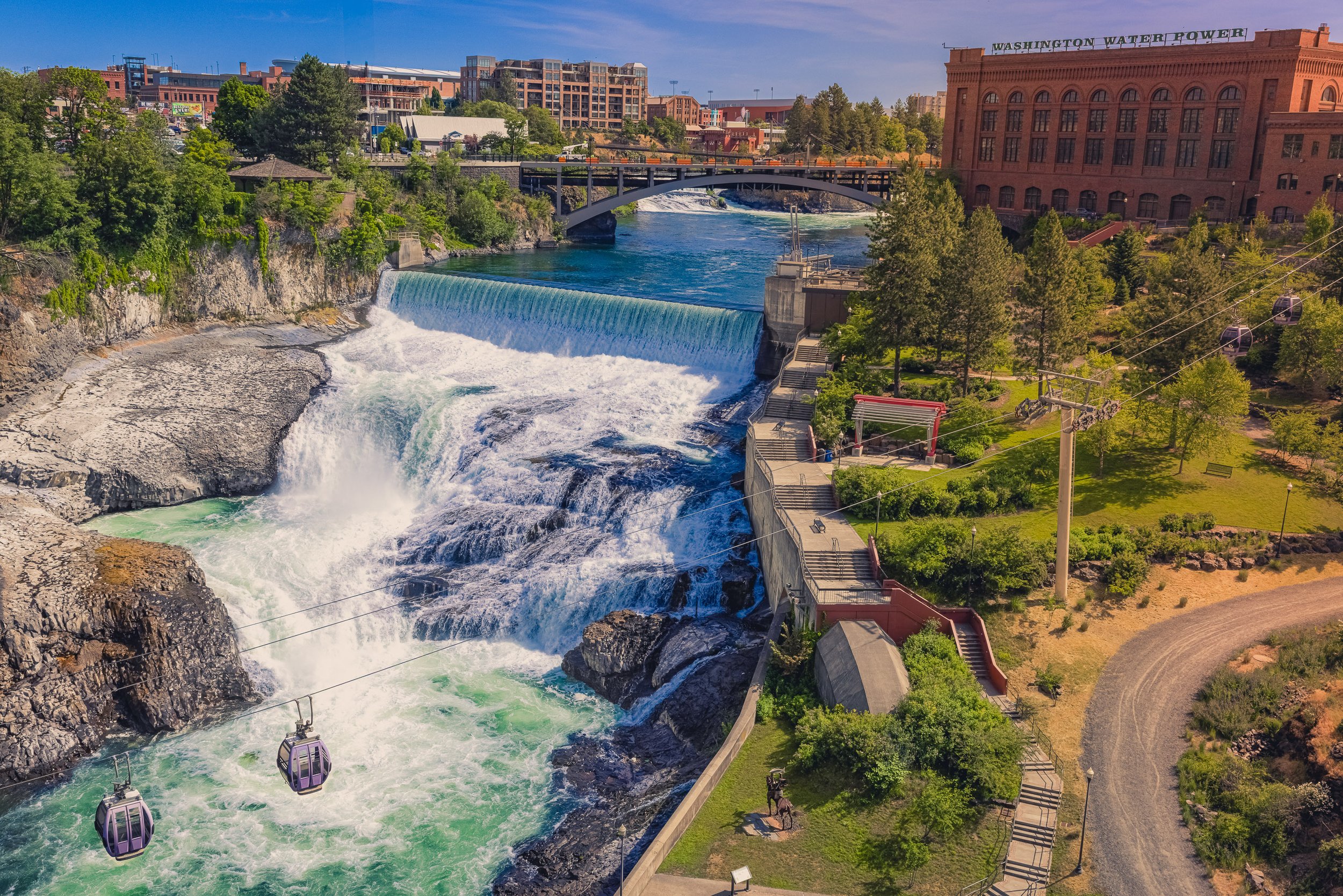
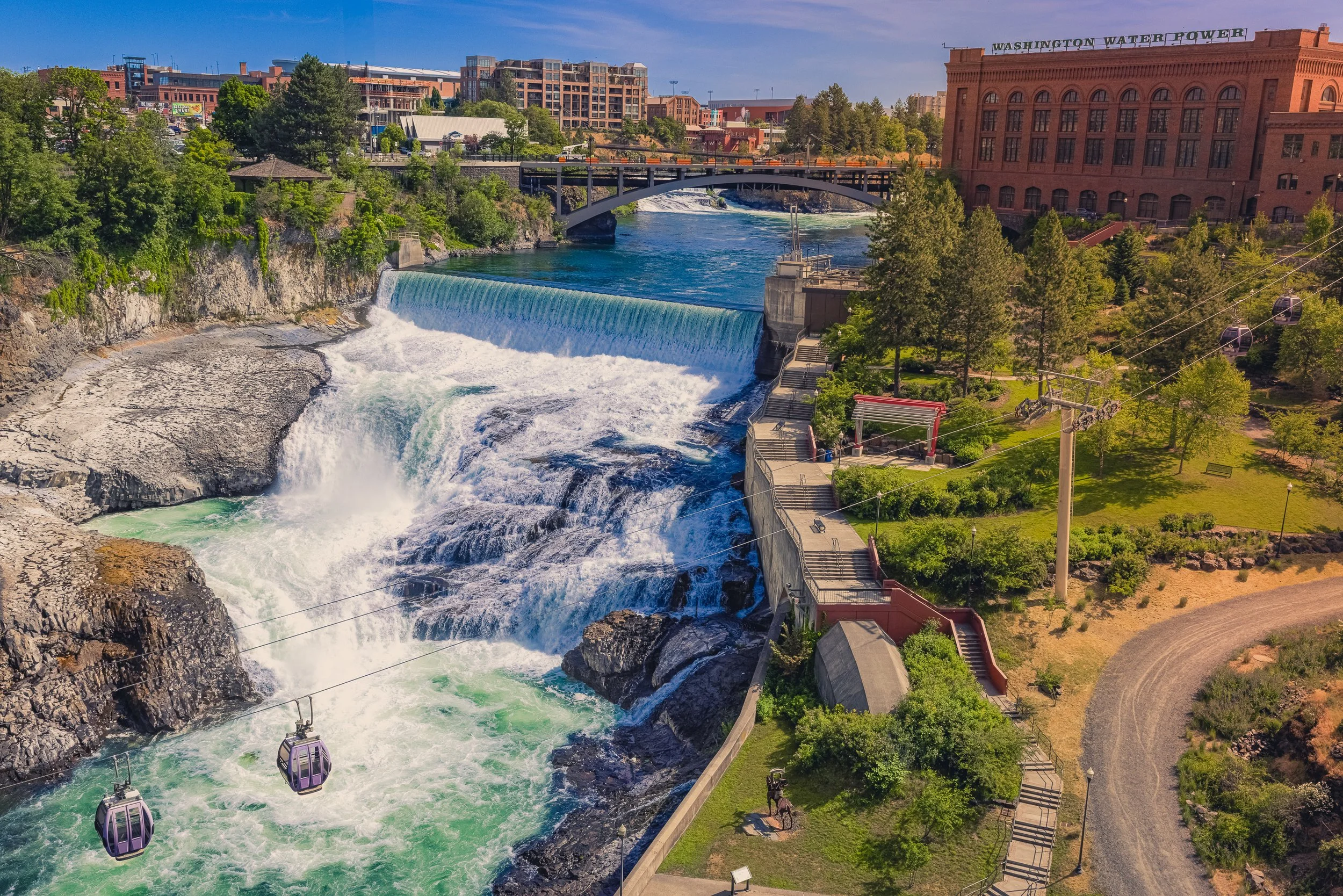
SkyRide gondolas pass over Lower Spokane Falls below Monroe Street Dam, with the Post Street Substation and Post Street Bridge upstream. The scene brings recreation, transportation, and electrical infrastructure together in a single downtown view.
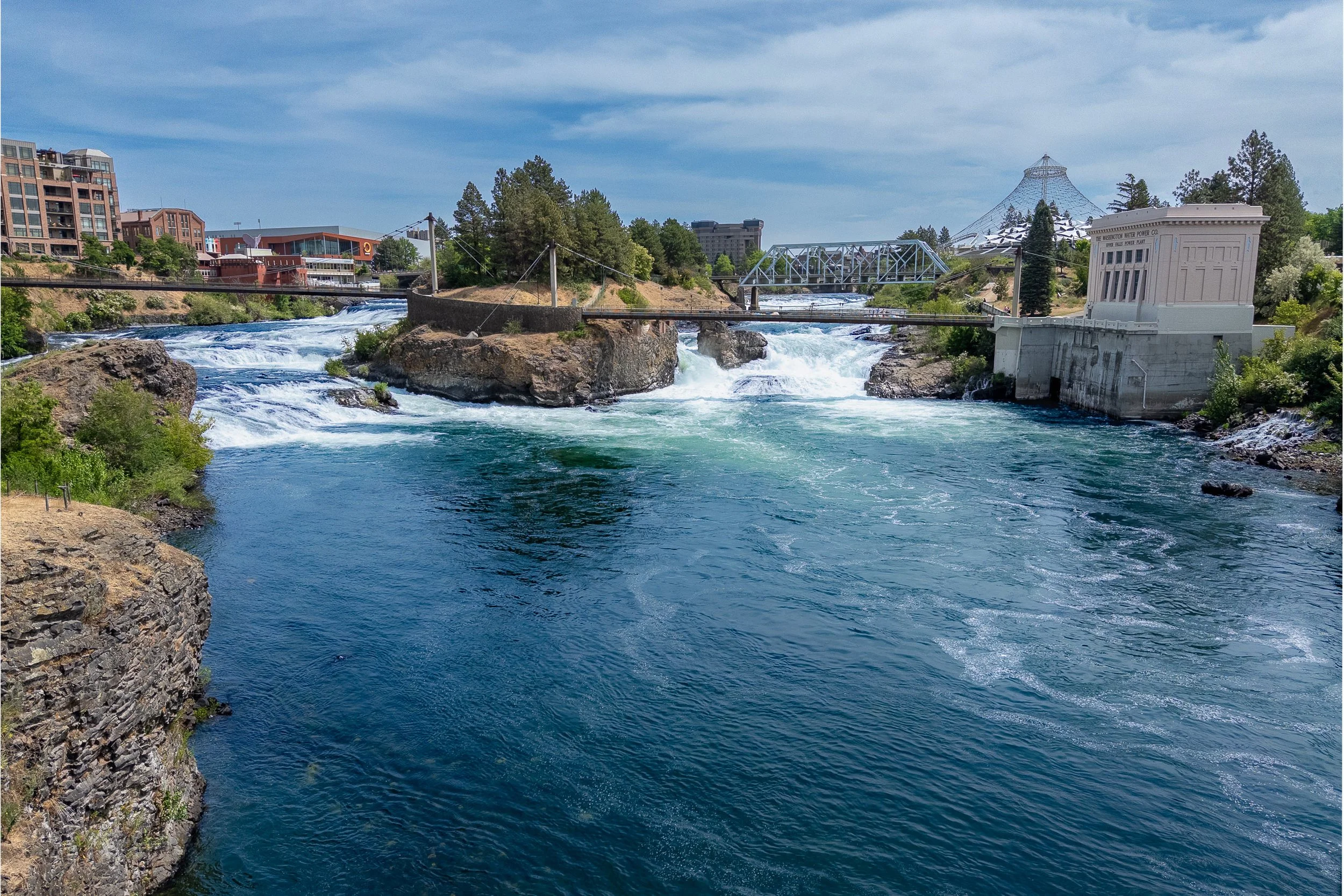
Upper Spokane Falls run beneath the suspension bridge beside the white Upper Falls Power Plant, with the Howard Street truss bridge and Pavilion beyond. The 1922 powerhouse predates the World’s Fair landmark by more than fifty years; today they share the same Riverfront Park view.
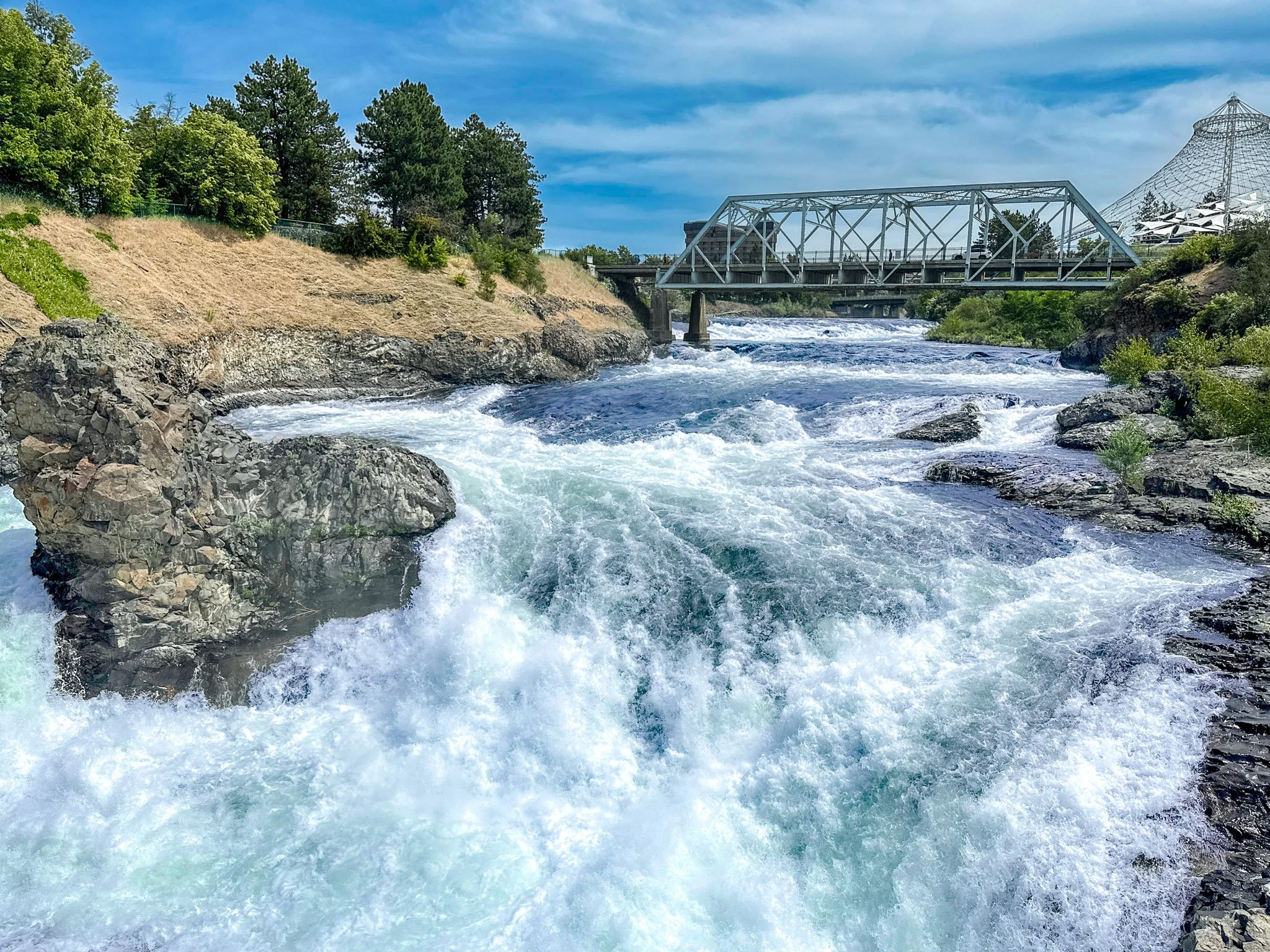
Upper Spokane Falls churn across exposed basalt near the Howard Street Mid-Channel Bridge, with the Pavilion rising beyond. Built in 1916, the truss is the last of Spokane’s steel truss bridges—a surviving piece of a route once used by streetcars, vehicles, and pedestrians.
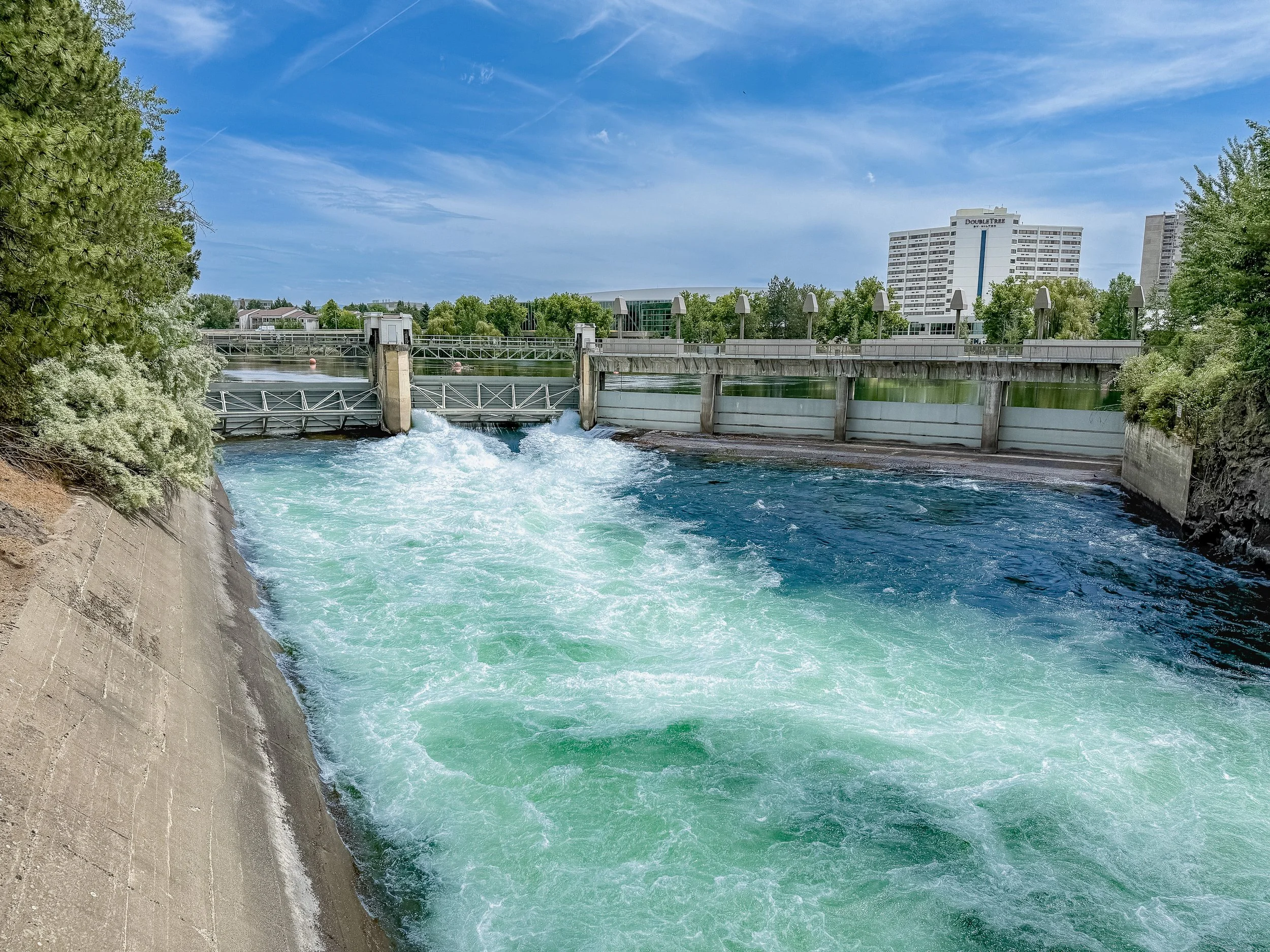
The gated spillway at Upper Falls Dam releases water toward the falls below. From this angle, the Spokane River looks engineered and controlled; downstream, the same flow becomes the whitewater seen from Riverfront Park’s pedestrian bridges.
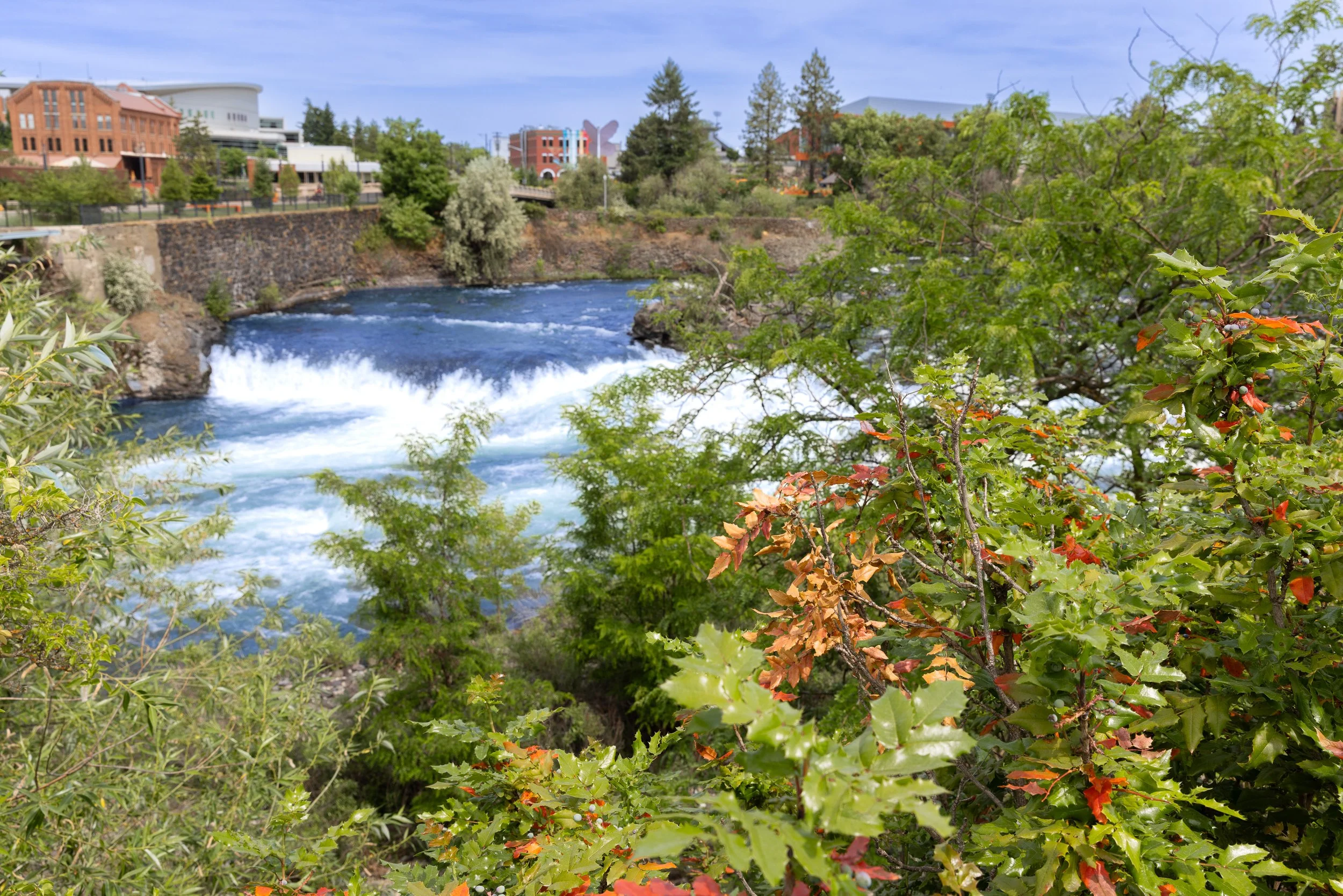
Spokane Falls appear through the trees, with downtown buildings rising beyond the opposite bank. The river often arrives first as sound here—the rush of water through the leaves—before the falls themselves come fully into view.

STORY BEHIND THIS PLACE
The photographs show this place as it exists today. Discover the decisions, people, and events that shaped it.