
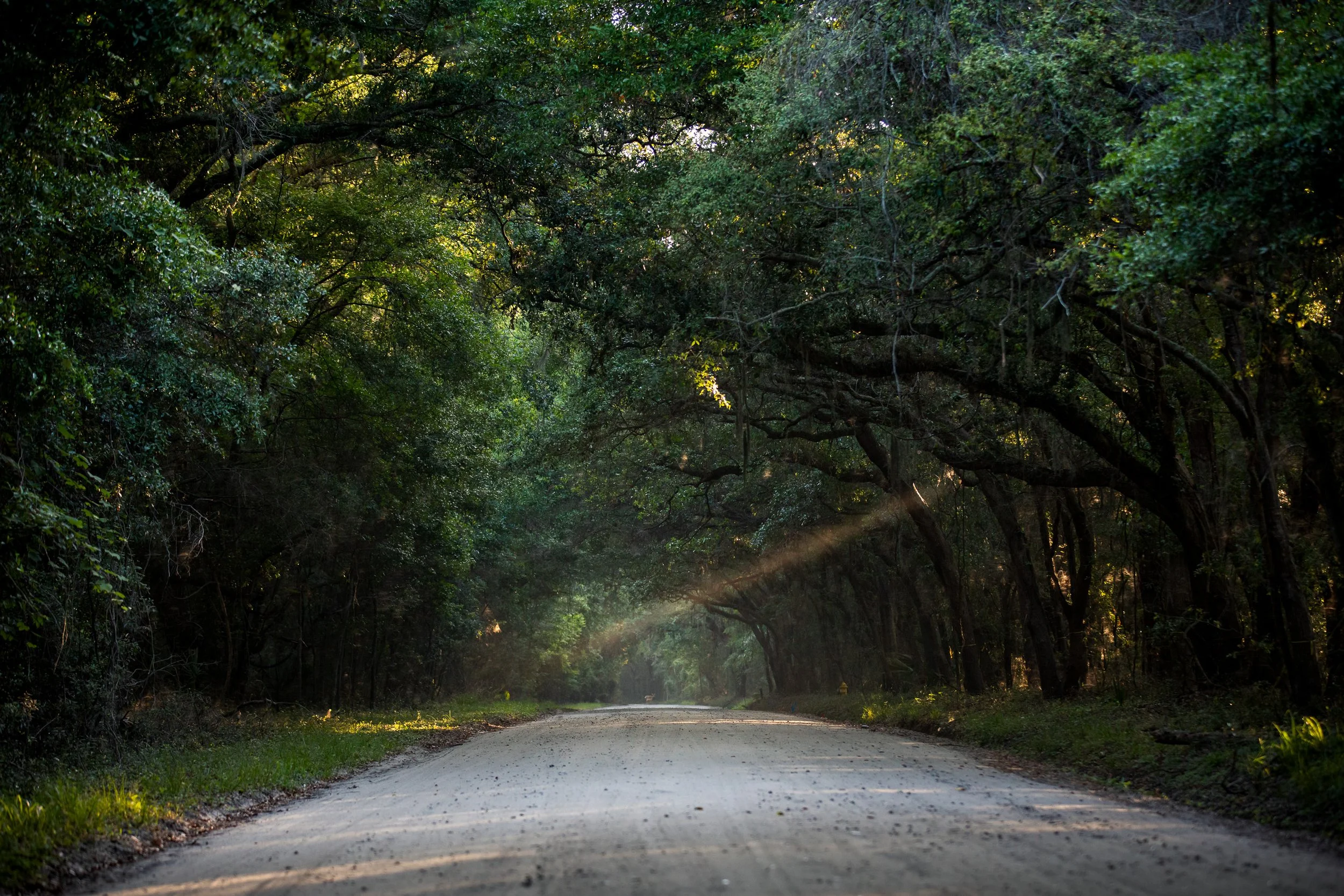
Hilton Head Island, South Carolina
Explore photographs from the place behind the story — the landscapes, landmarks, and details that reveal how this place became what it is today.
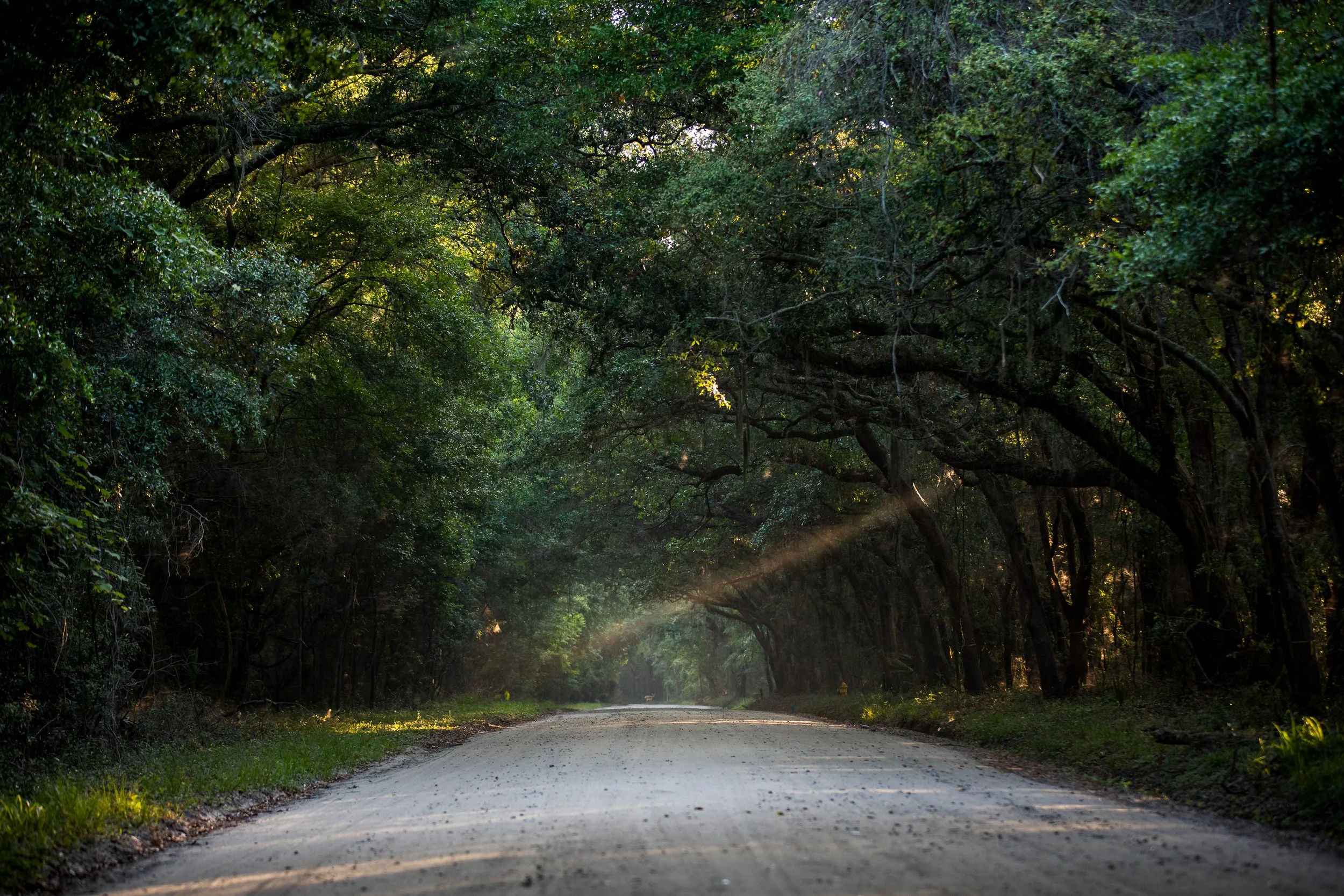
Sunlight filters through the live-oak canopy above Mitchelville Road on Hilton Head Island. The road’s unhurried appearance gives little indication that one of the island’s most consequential Civil War-era landscapes lies nearby.
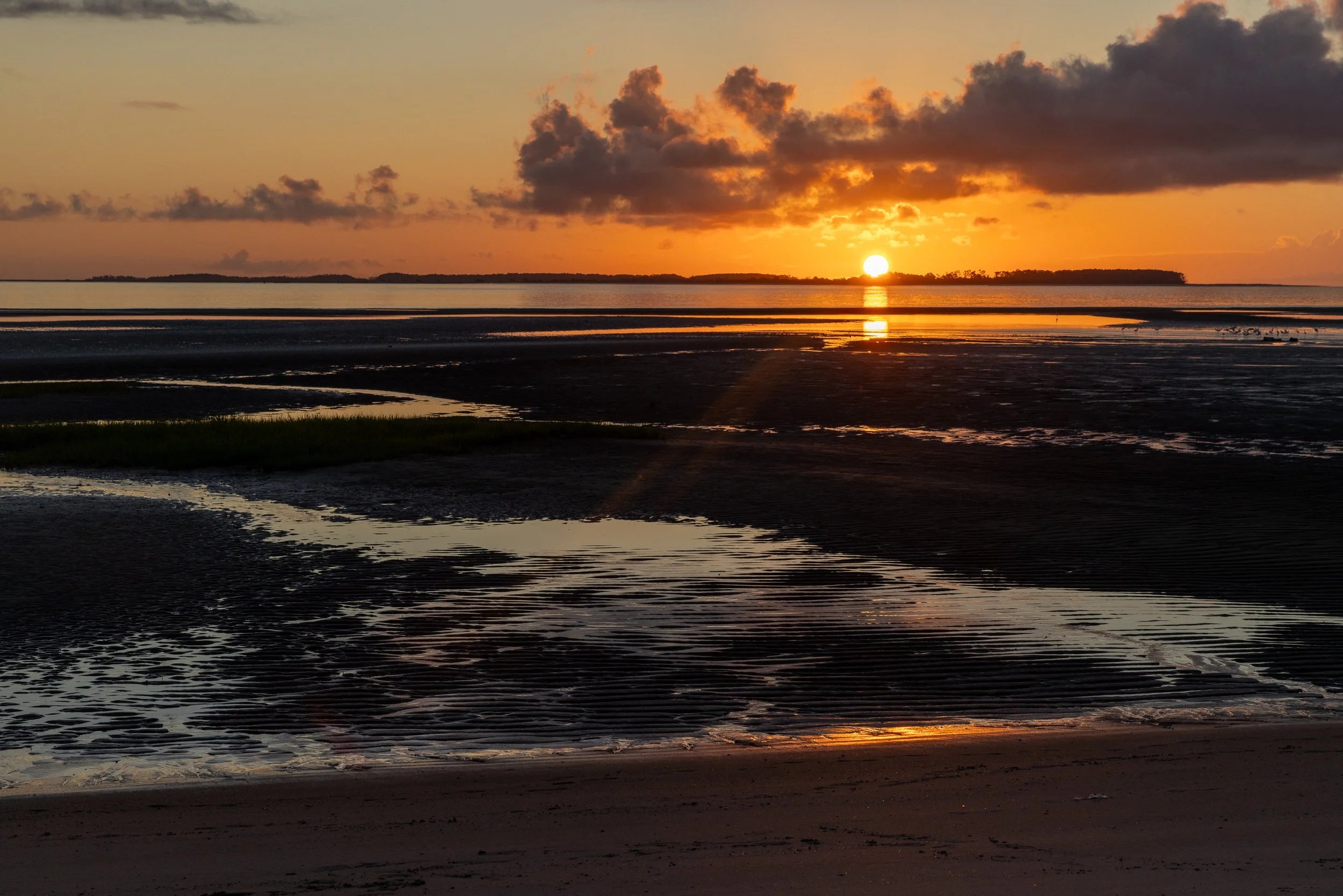
At sunrise, the tidal flats of Port Royal Sound catch the first light off Hilton Head Island. Beyond the horizon lies one of the South Atlantic coast’s deepest natural harbors—a quiet expanse whose geography has shaped centuries of movement and conflict.
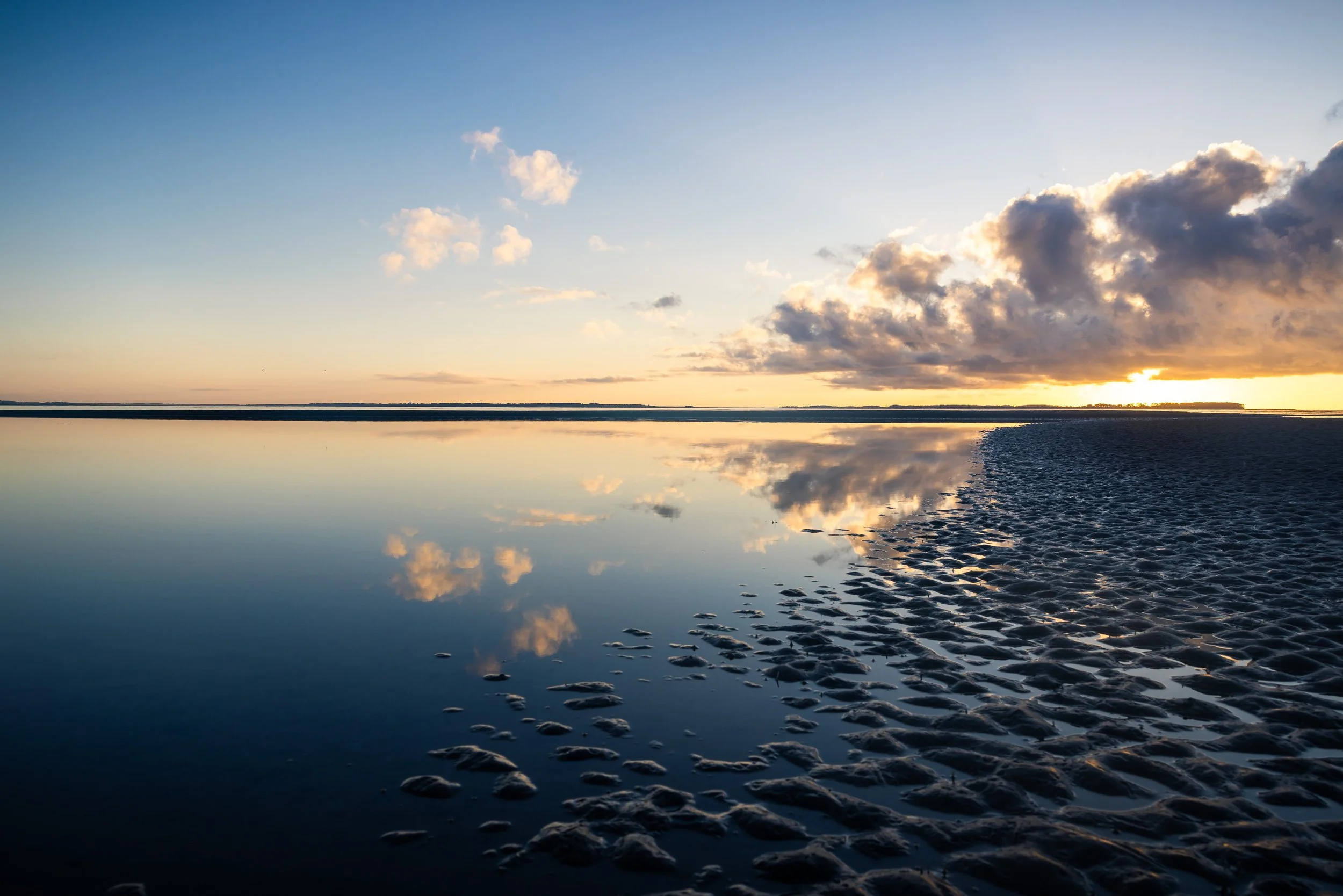
Before sunrise, shallow water turns the flats of Port Royal Sound into a near-perfect mirror. Hilton Head’s six-to-eight-foot tides redraw this shoreline twice each day, replacing open water with rippled sand and back again.
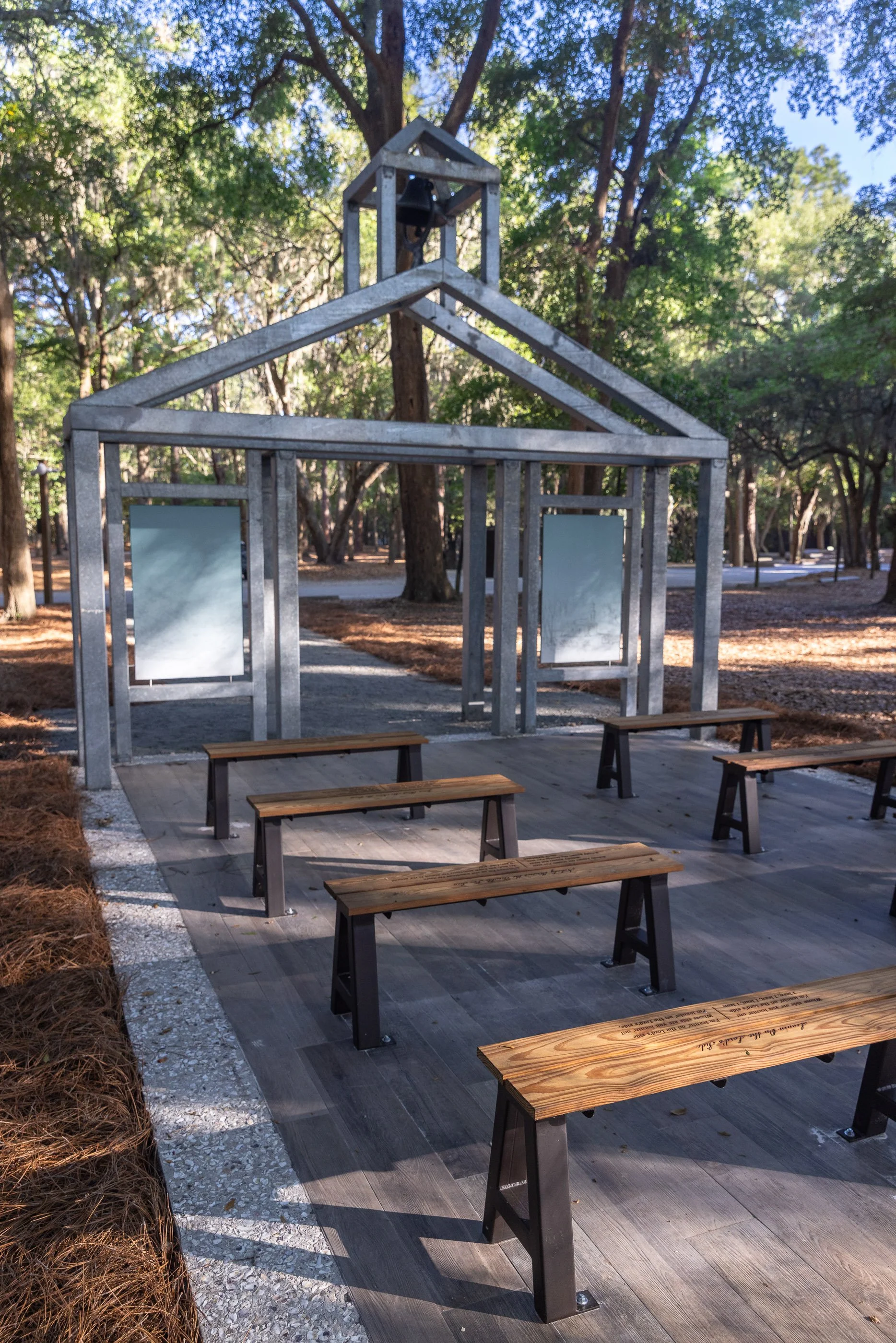
"Ghosted Structures" trace the church entrance at Historic Mitchelville Freedom Park on Hilton Head Island. The open structure represents First African Baptist Church, founded in 1862 with 120 members in a town built by formerly enslaved people.
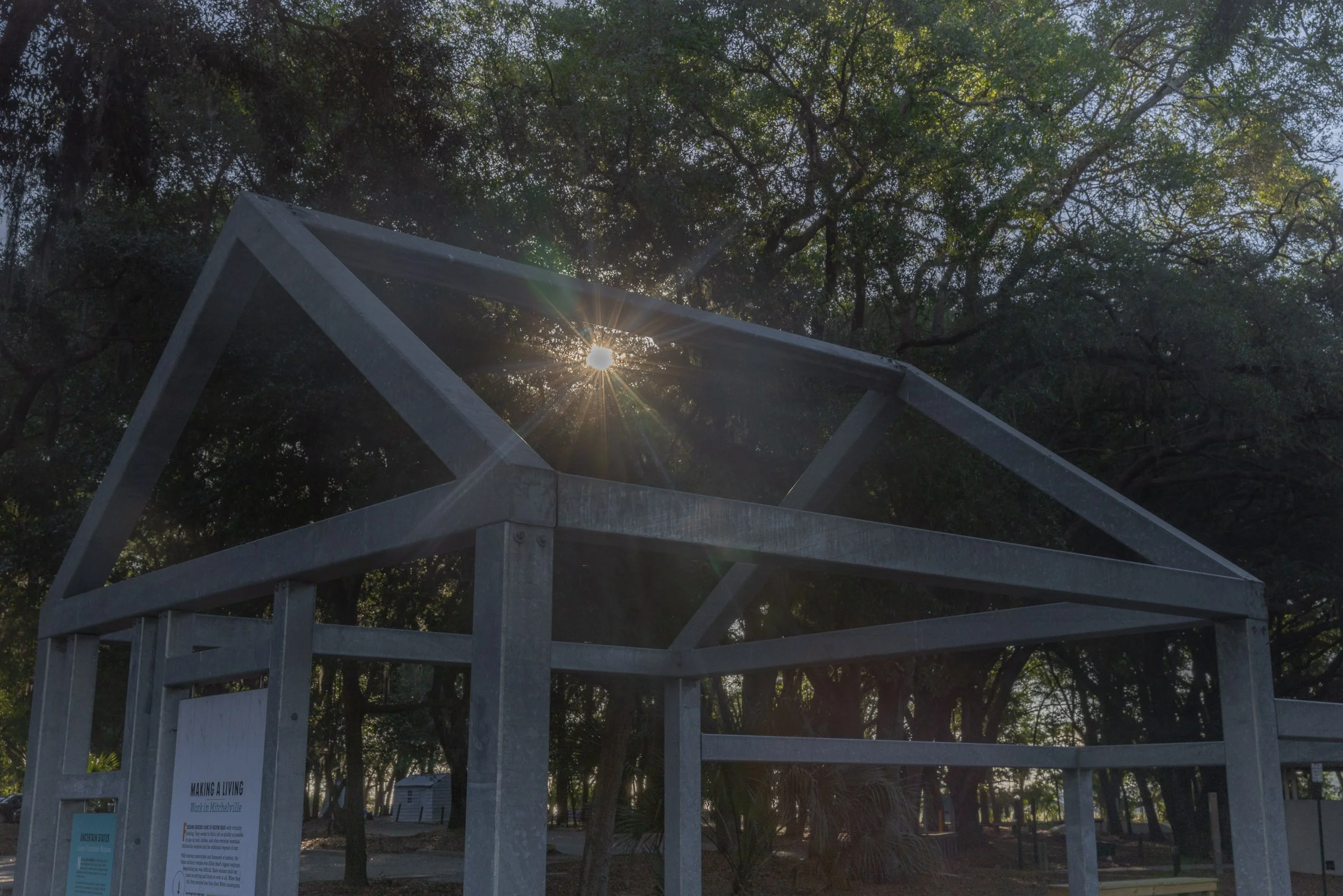
Morning light passes through a Ghosted Structure at Historic Mitchelville Freedom Park. Rather than reconstructing the vanished buildings, the installation outlines their scale and leaves visitors to supply the walls, rooms, and lives once held inside.
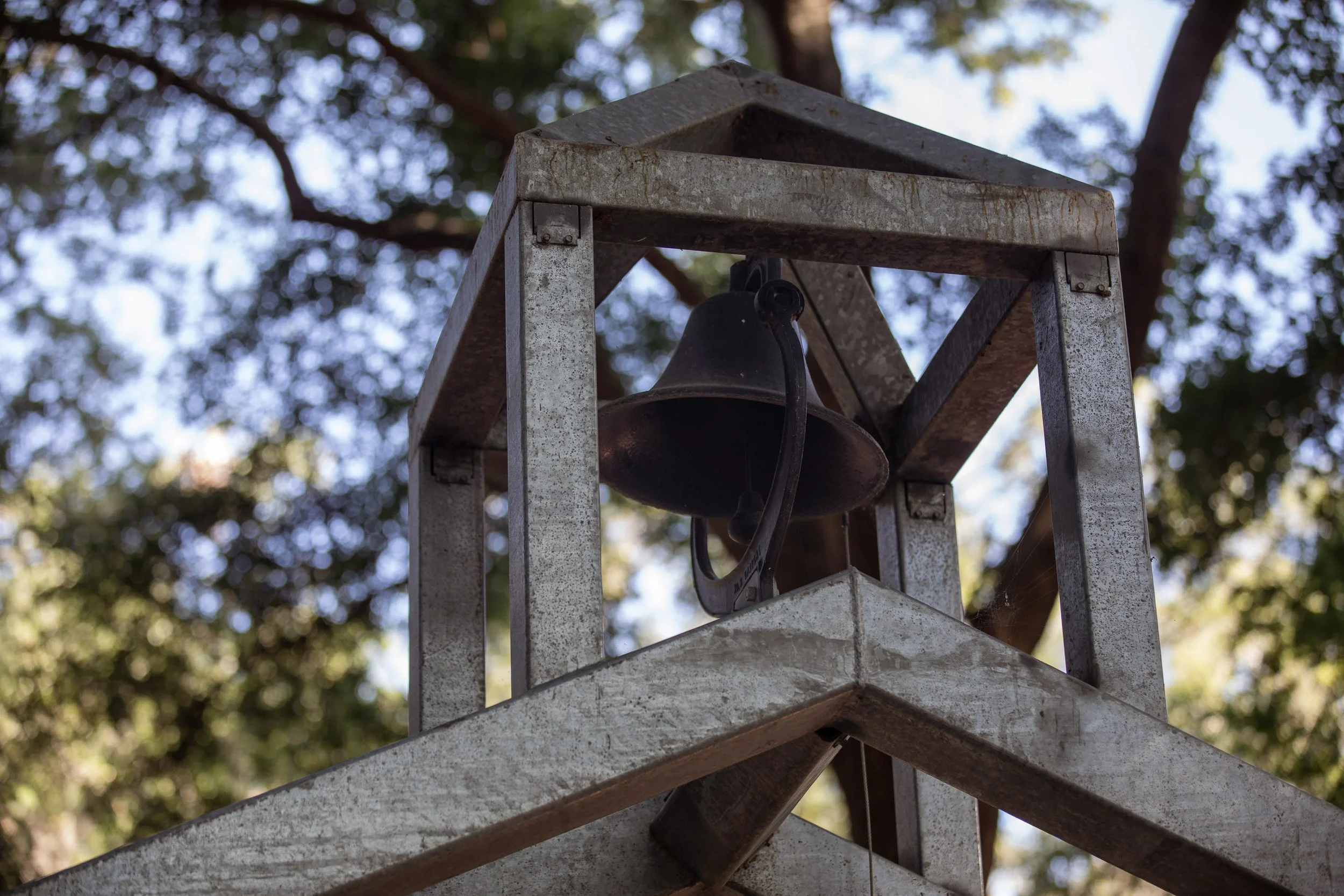
A bell hangs above the church at Historic Mitchelville Freedom Park. The structure recalls First African Baptist Church, founded in 1862 before emancipation was proclaimed nationwide and while the Civil War was still being fought.
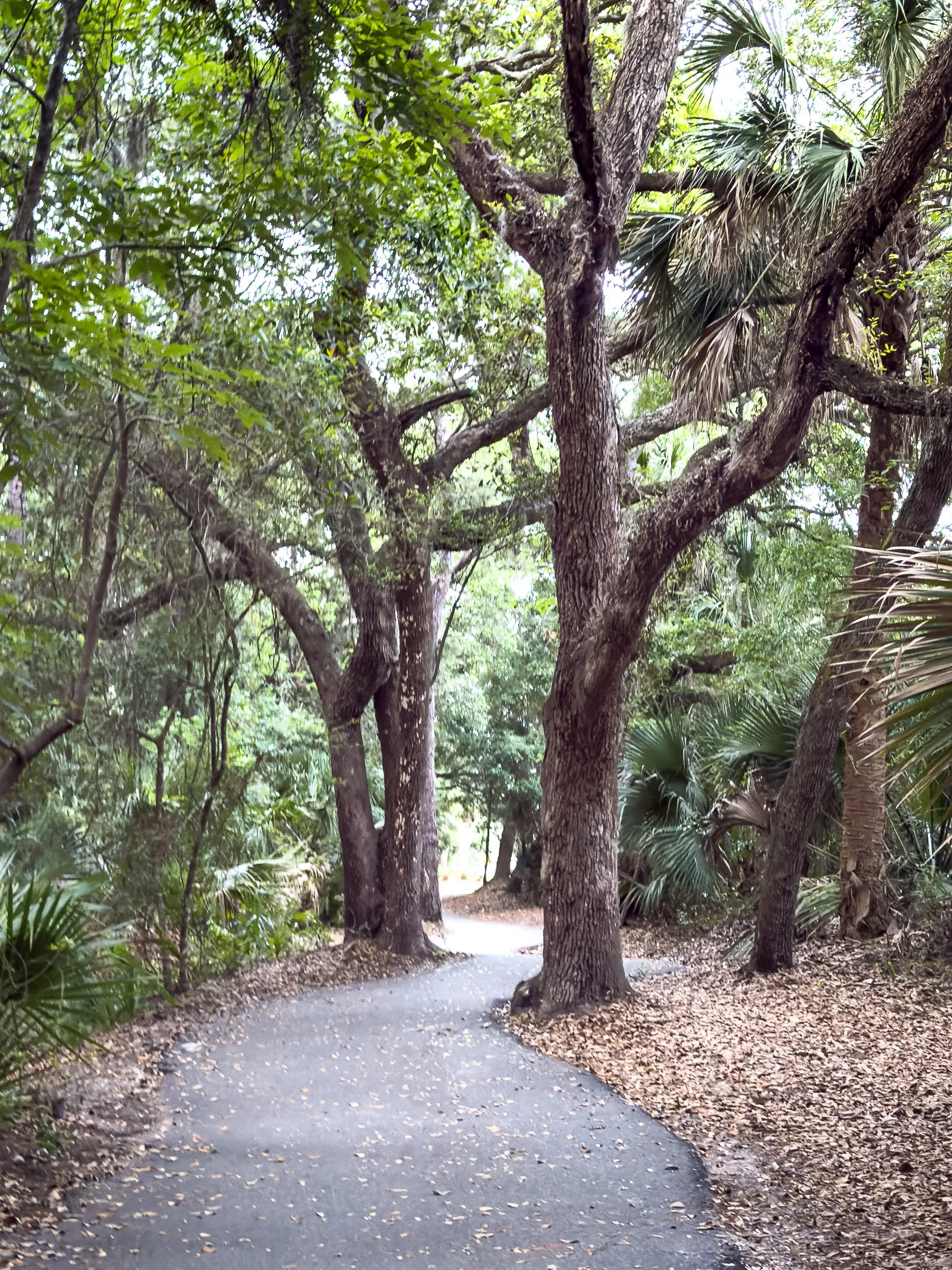
A paved walking/biking trail curves between mature trees inside Sea Pines on Hilton Head Island. Its wandering route reflects an early planning principle that still shapes the community: move people through the landscape without erasing the landscape first.
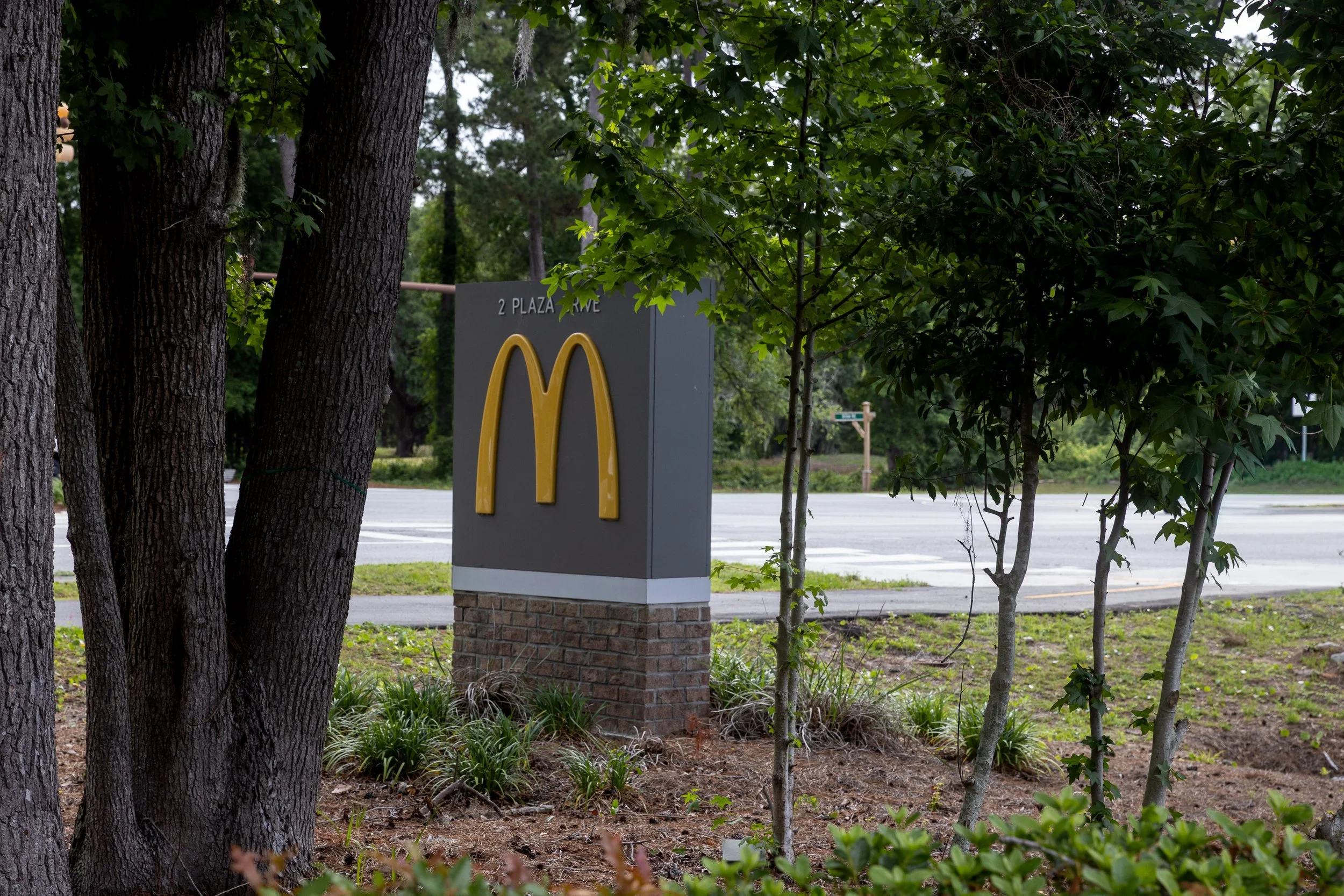
Even McDonald’s keeps a low profile beneath Hilton Head Island’s trees. The familiar golden arches are reduced to a modest roadside marker, part of a visual restraint many visitors experience without consciously noticing.
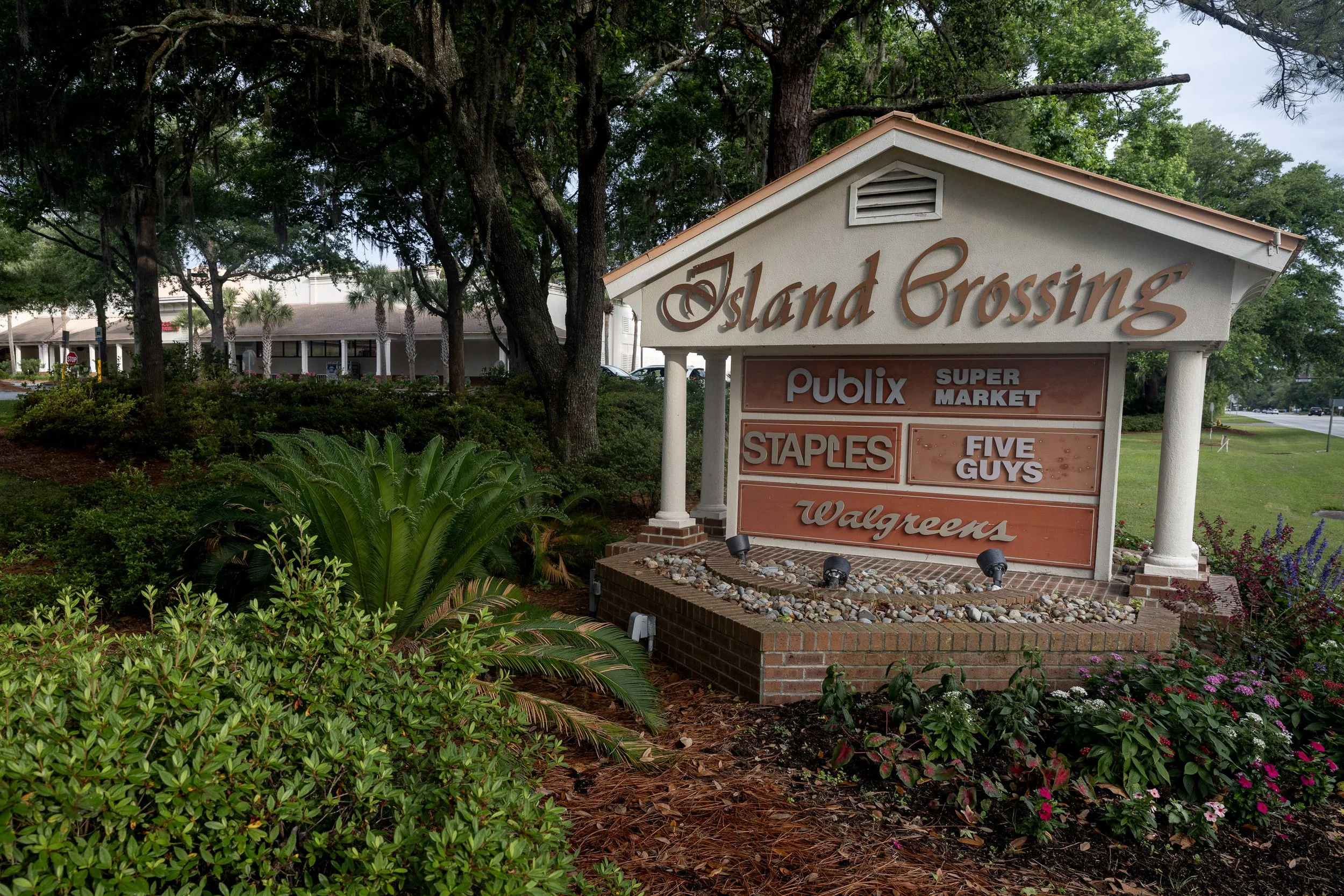
The entrance sign for Island Crossing sits low among trees and landscaping on Hilton Head Island. Here, wayfinding is designed to blend into the setting—one reason even busy commercial areas can seem to arrive only after you have nearly passed them.
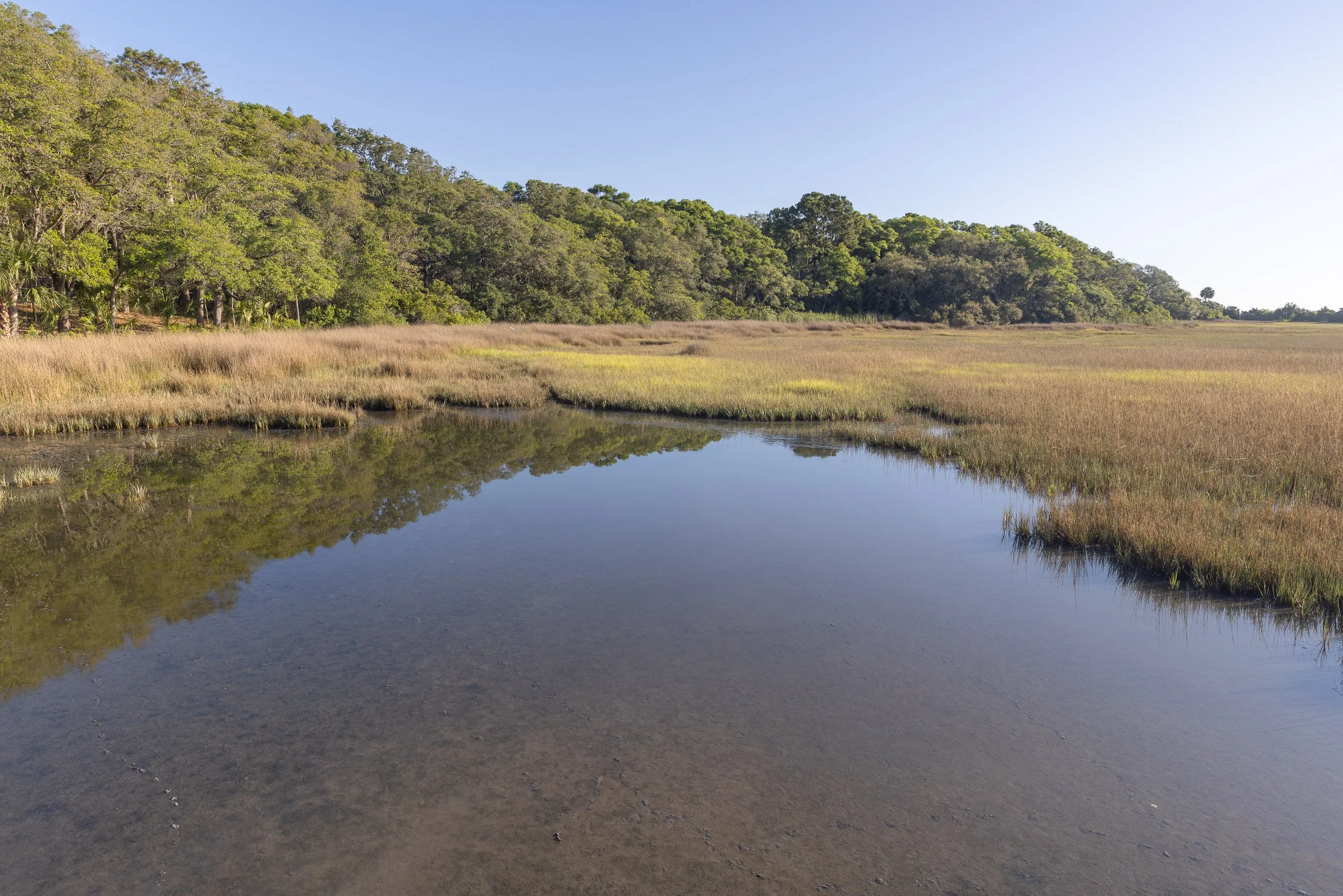
Salt marsh and tidal creek meet the tree line on Hilton Head Island. The scene changes hour by hour as the tide covers feeding grounds, exposes mudflats, and makes the boundary between land and water blend together.
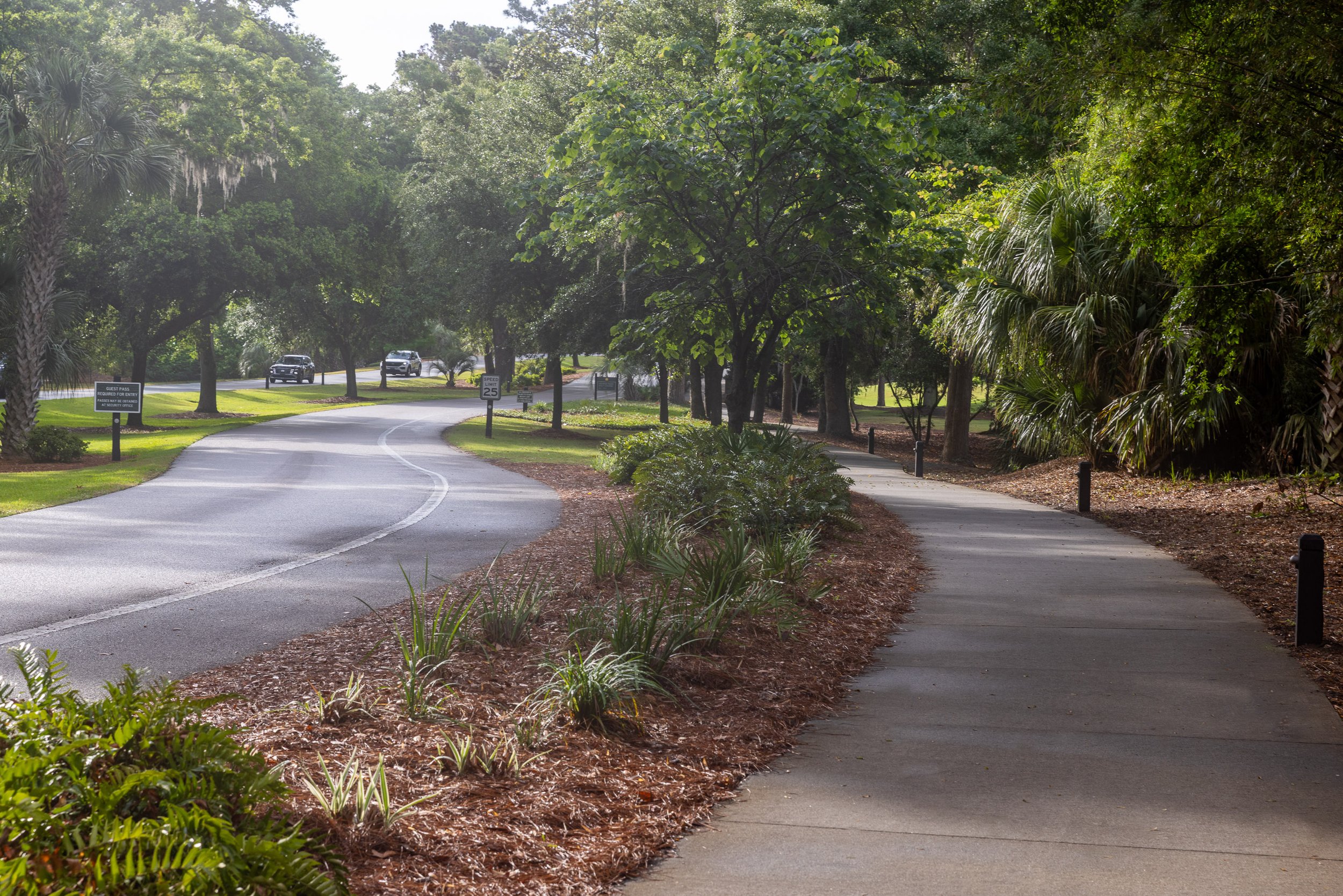
A common sight in Hilton Head - a roadway and dedicated bike path curve side by side through the island. The separation feels ordinary now, but it reveals how movement was planned into the landscape—cars, bicycles, pedestrians, and trees each given their own space.
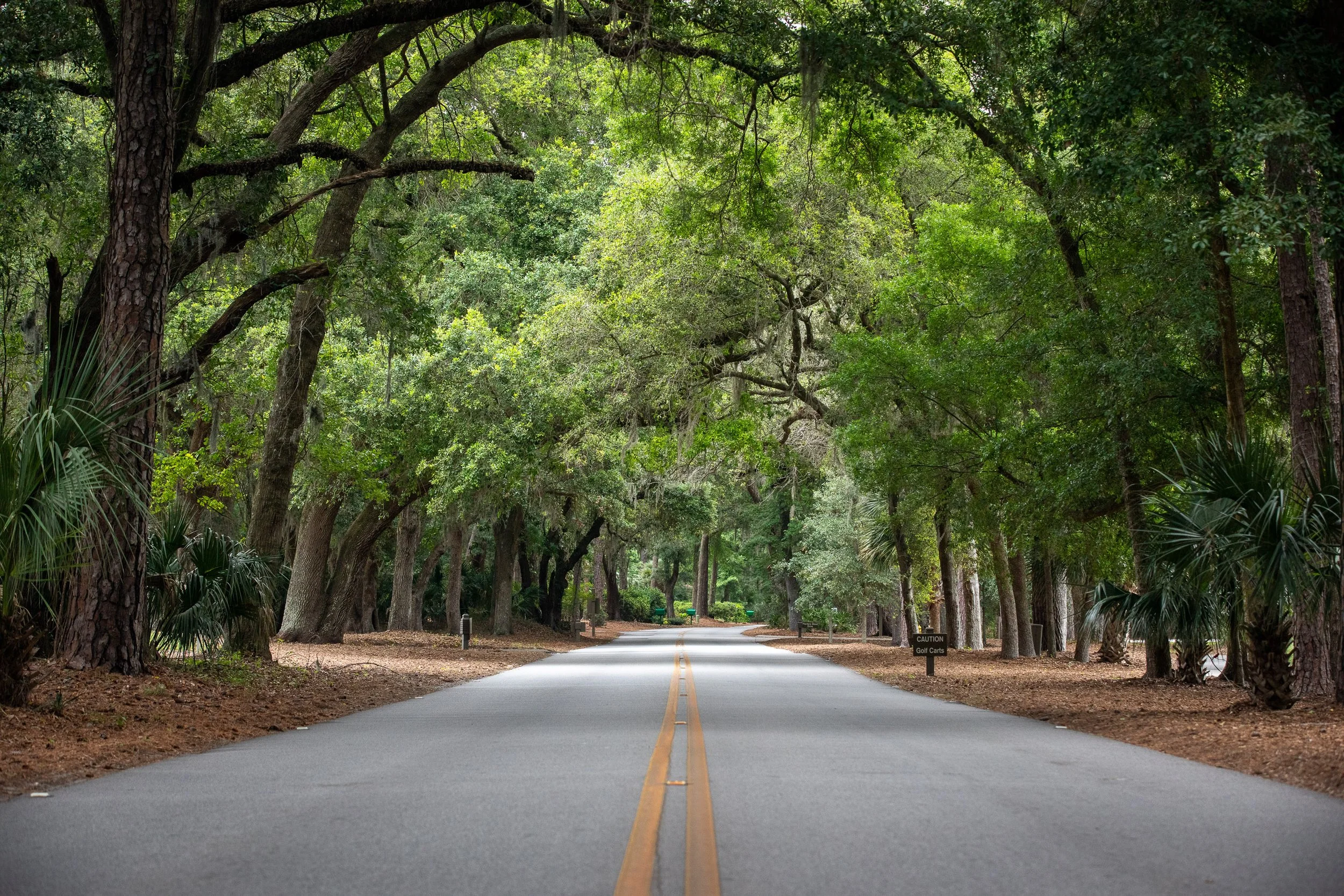
Live oaks and Spanish moss close over a road inside Sea Pines on Hilton Head Island. The canopy survived because early planners repeatedly bent streets around mature trees, turning what might have been obstacles into the community’s defining feature.
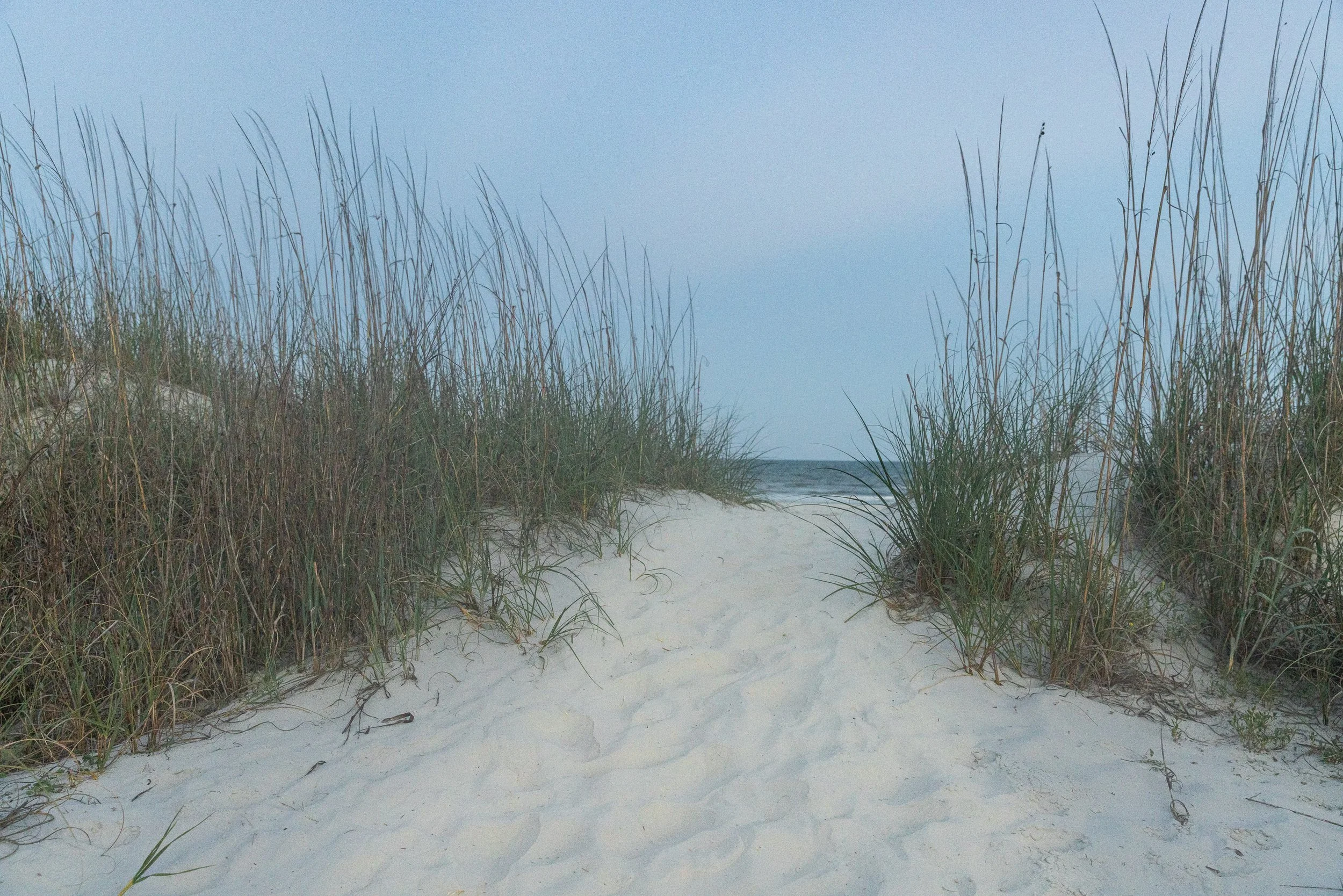
A narrow beach access opens through sea oats toward the Atlantic on Hilton Head Island. The grasses are not ornamental: their spreading roots catch windblown sand and help hold the island’s small dunes together.
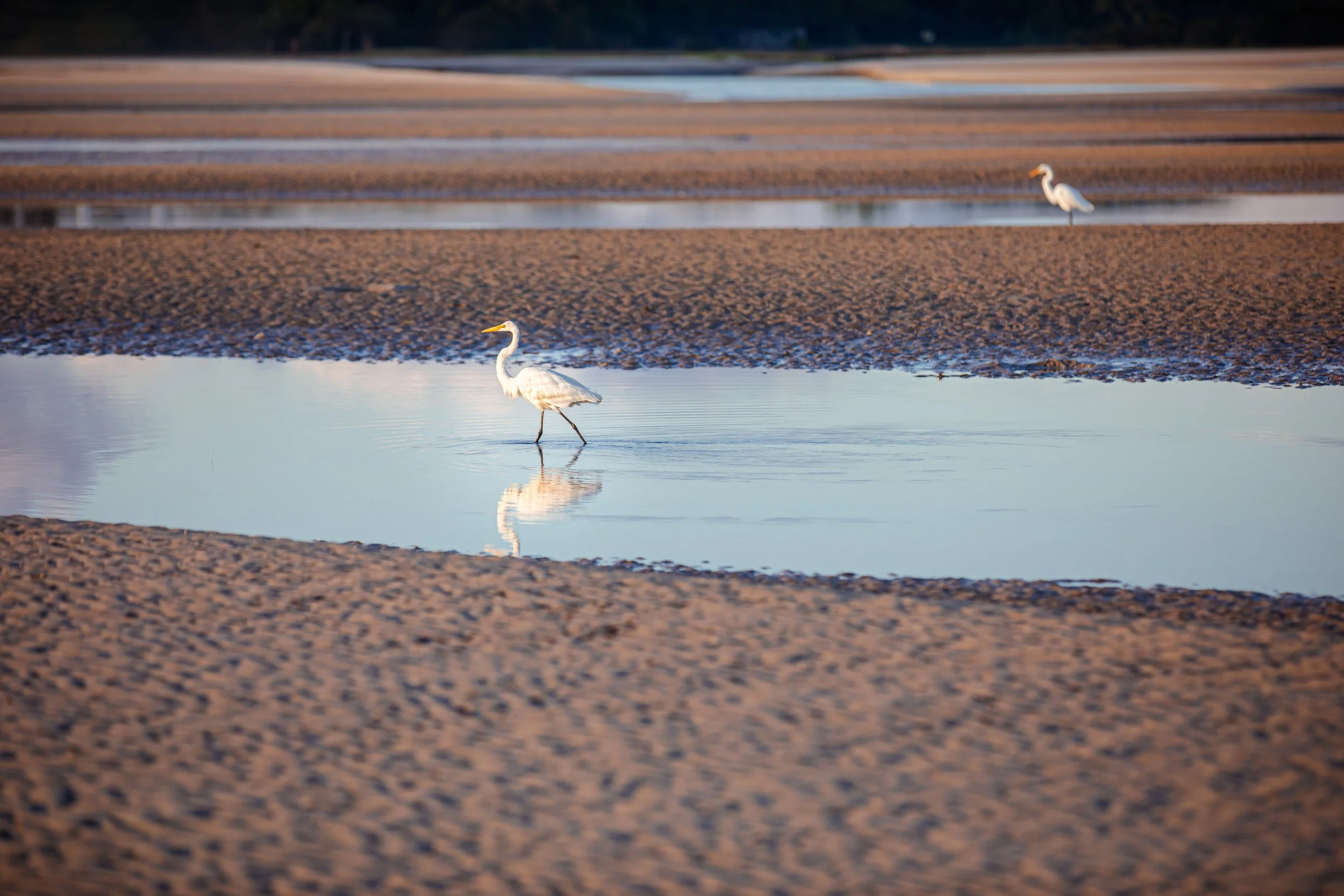
Great egrets hunt in a tidal channel at Fish Haul Beach on Hilton Head Island. When Port Royal Sound retreats, the exposed flats become a feeding ground—proof that the landscape is busiest when it appears almost empty.
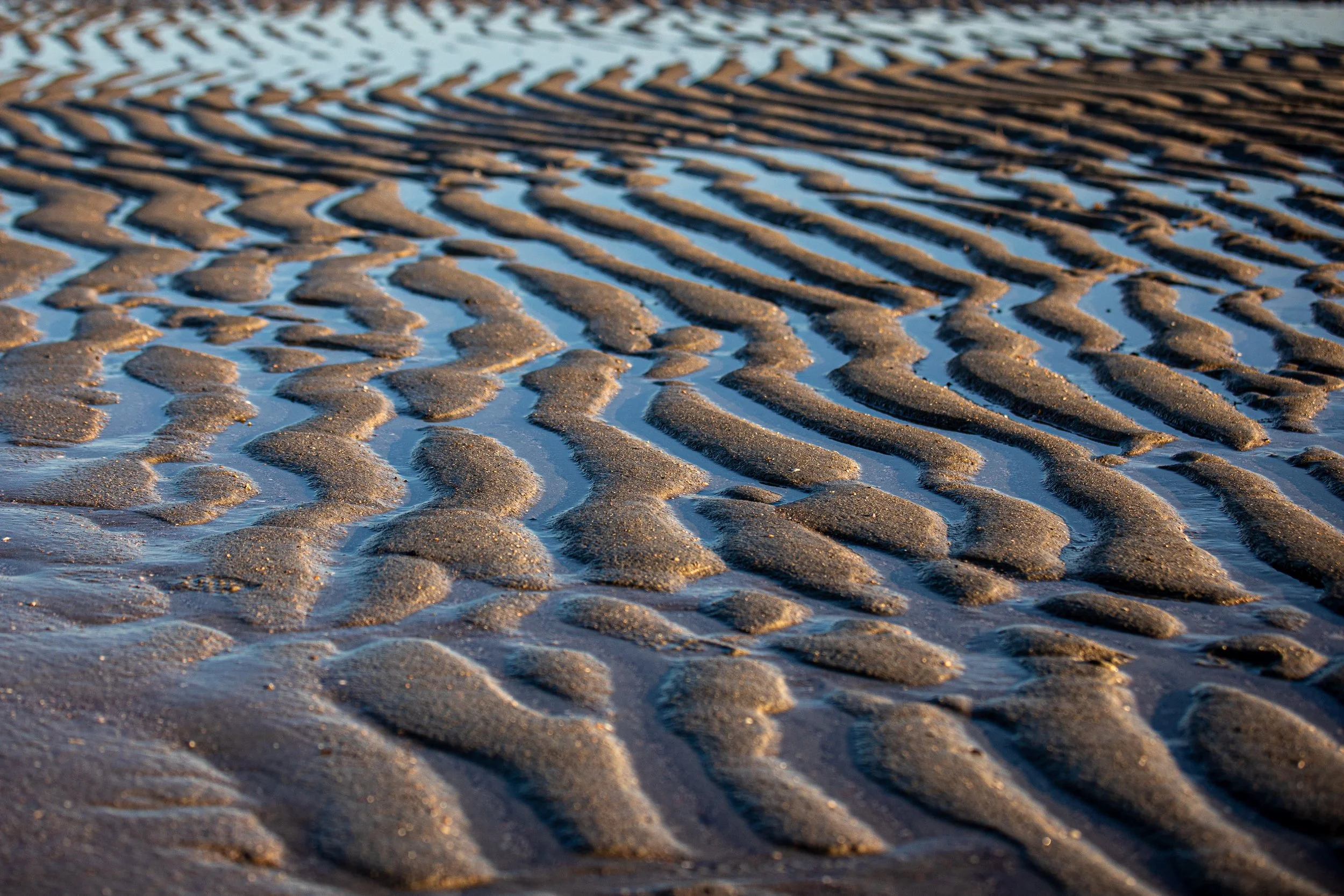
Low tide leaves repeating ripples across the sand on Hilton Head Island’s Atlantic shore. Wind, waves, and retreating water draw the pattern together; the next tide will erase it and begin the process again.
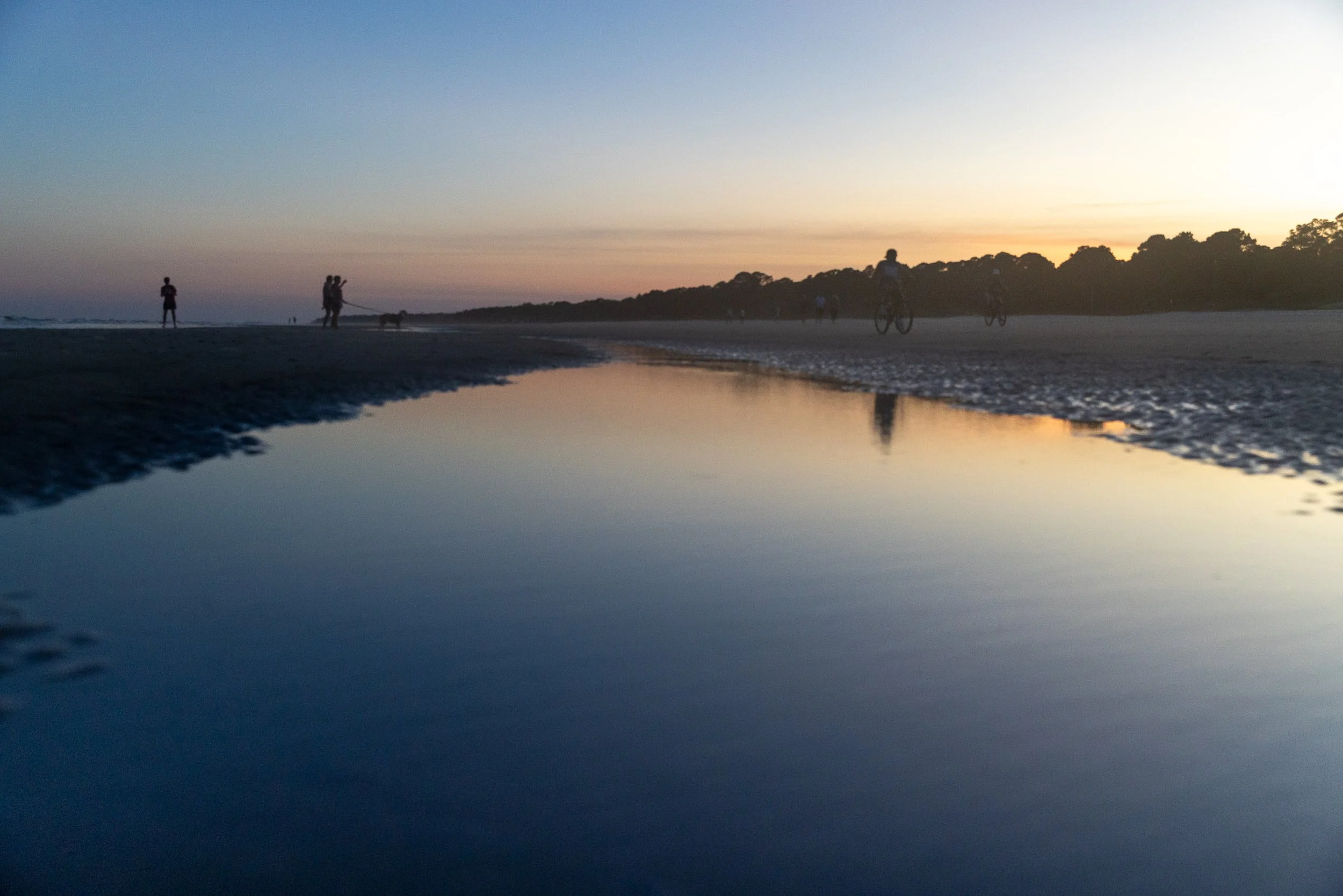
Walkers and cyclists cross Hilton Head Island’s broad beach at the end of the day. At low tide, the hard-packed shore becomes an unexpected shared route—part promenade, part bicycle path, and still unmistakably the edge of the Atlantic.
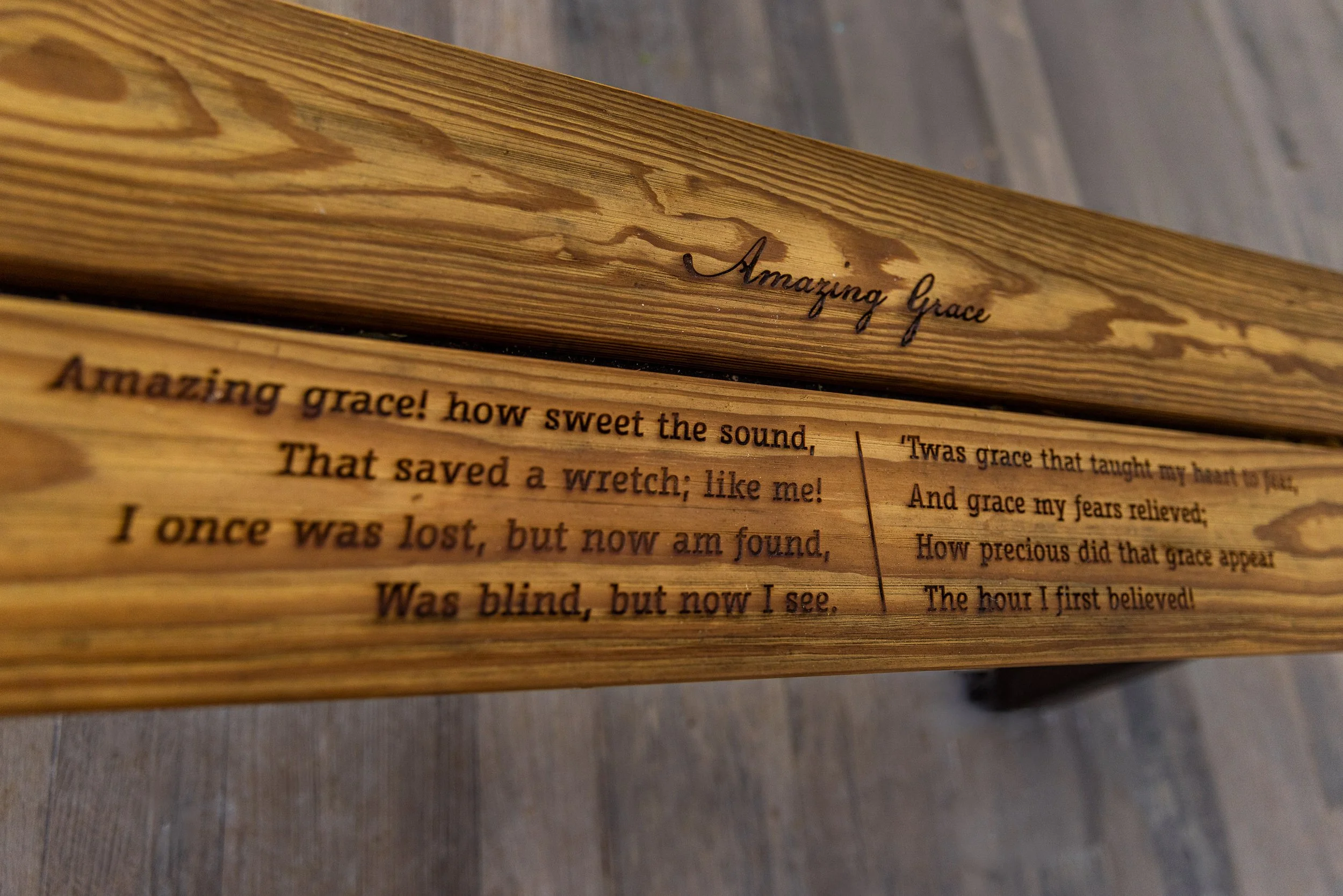
"Amazing Grace” is inscribed across a wooden bench in the church at Historic Mitchelville Freedom Park. John Newton, who wrote the words in 1772, had commanded ships carrying enslaved Africans before becoming a minister and, decades later, publicly condemning the trade.
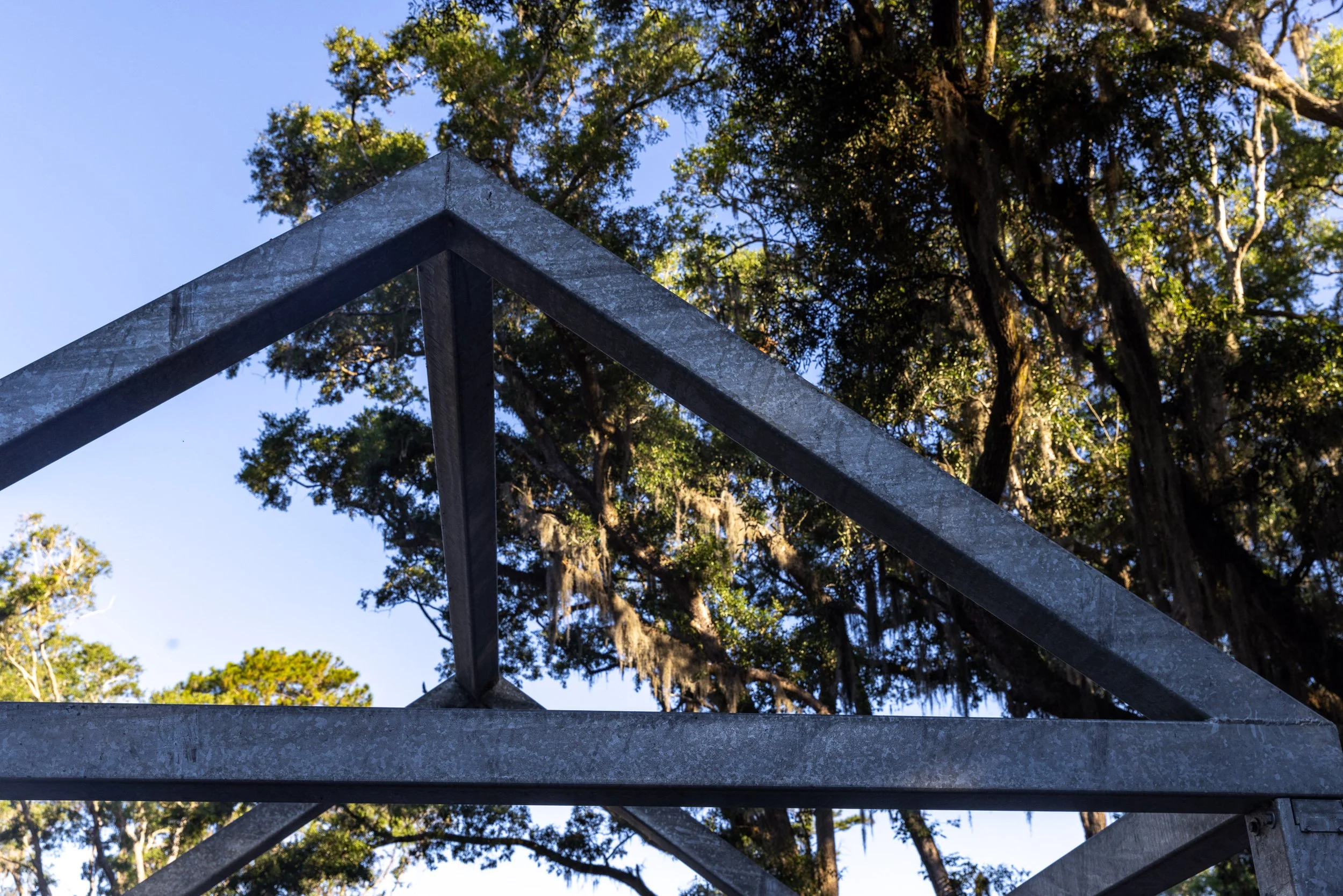
Steel rooflines frame live oaks and Spanish moss at Historic Mitchelville Freedom Park. The Ghosted Structures make absence visible, using little more than an outline to ask what stood here, who built it, and why so much disappeared.

STORY BEHIND THIS PLACE
The photographs show this place as it exists today. Discover the decisions, people, and events that shaped it.