
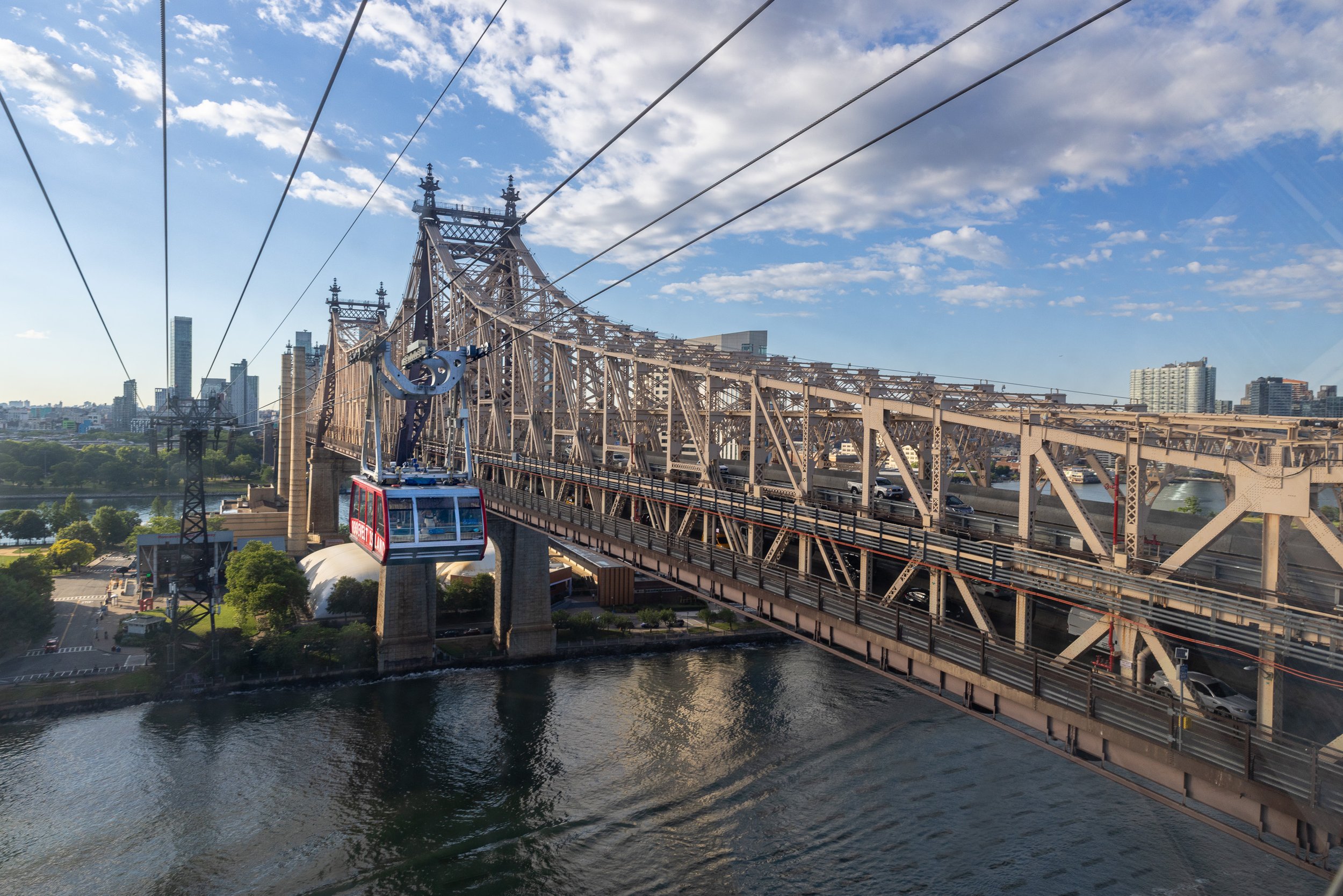
Roosevelt Island
Explore photographs from the place behind the story — the landscapes, landmarks, and details that reveal how this place became what it is today.
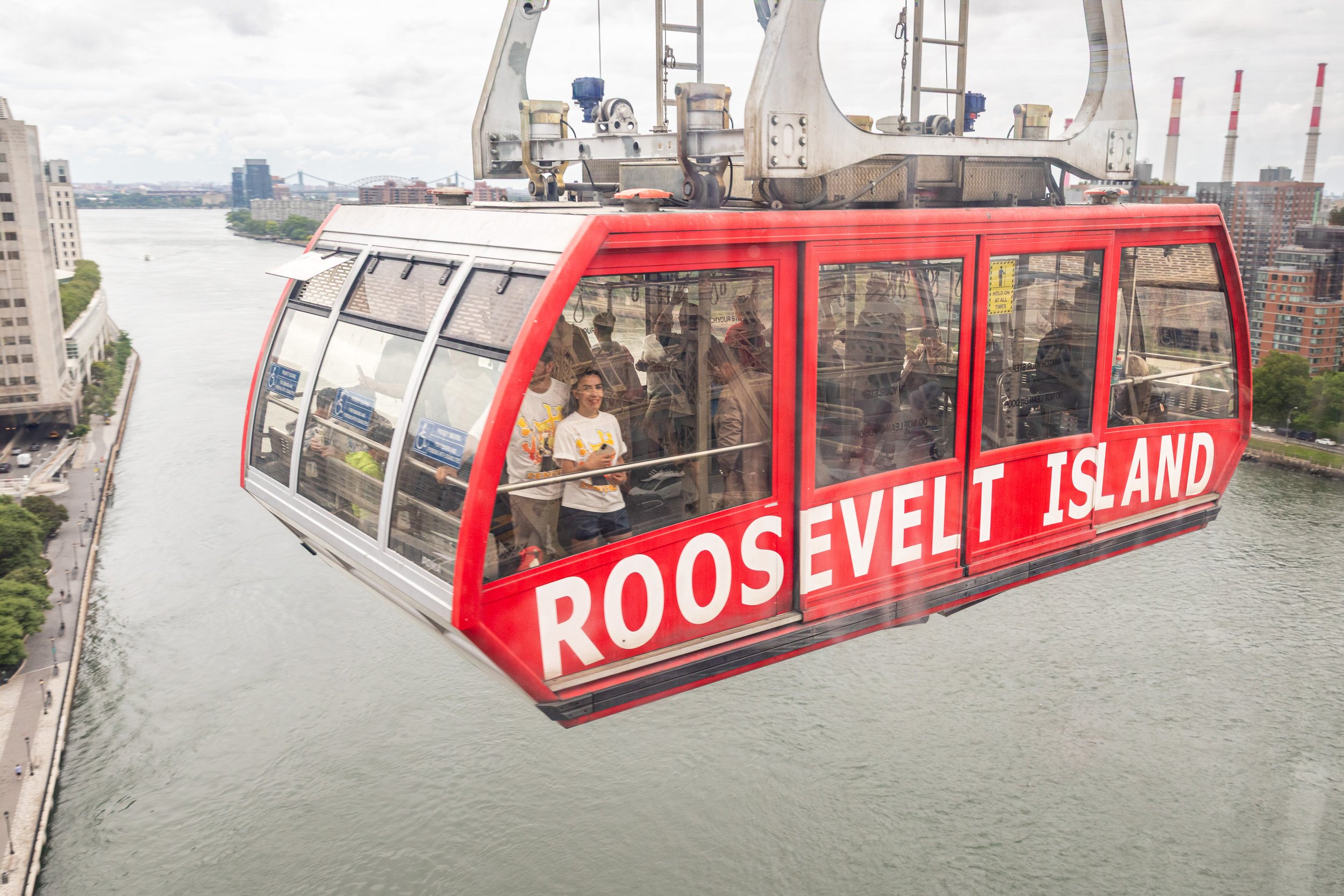
The Roosevelt Island Tramway carries passengers high above the East River between Manhattan and Roosevelt Island. Opened in 1976 as a temporary solution while the subway was delayed, it became one of the island’s most enduring connections to the city.
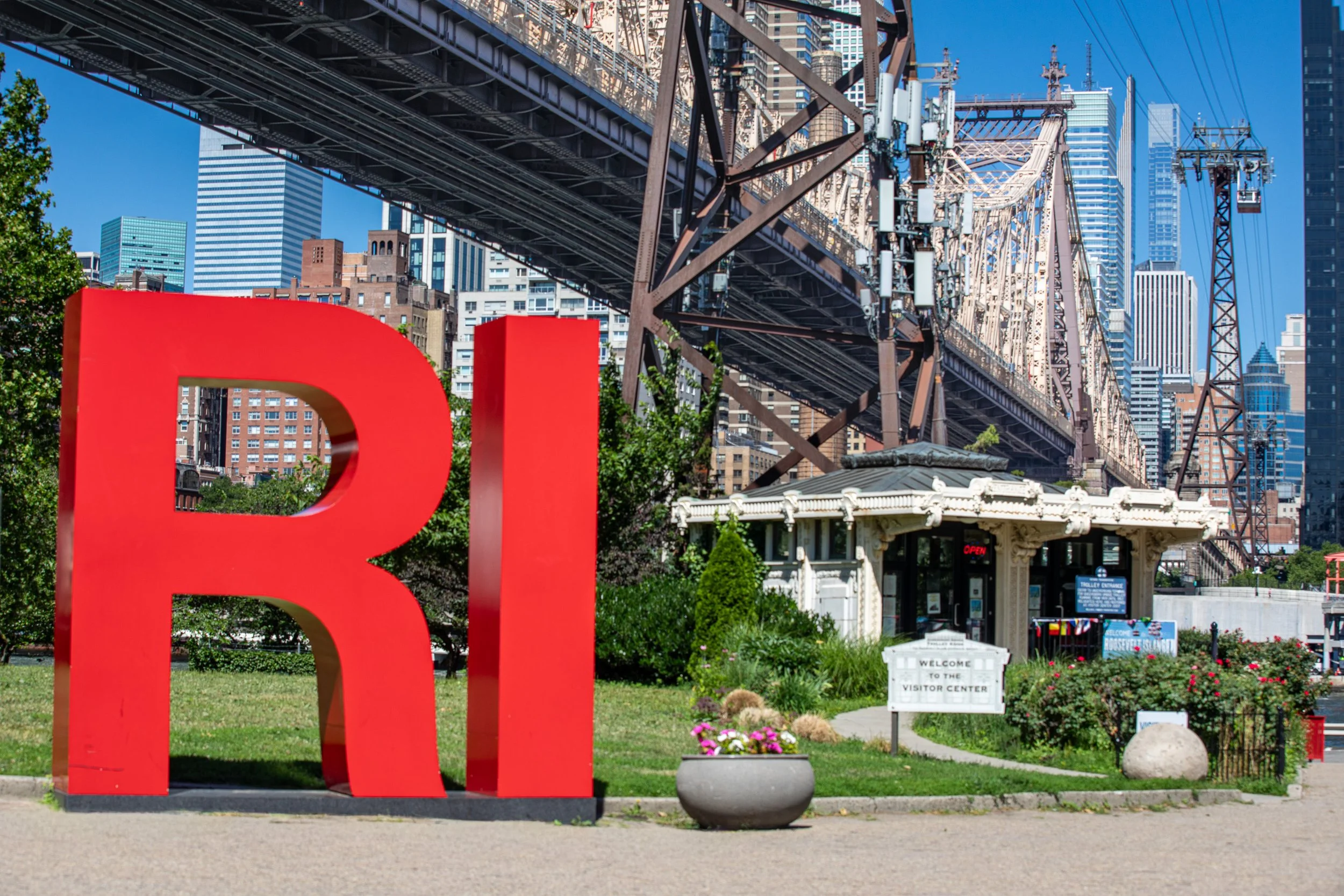
The giant RI letters greet visitors beside the tram terminal, beneath the Queensboro Bridge. When that bridge opened in 1909, it crossed directly over the island — but gave the people below no way to reach it.
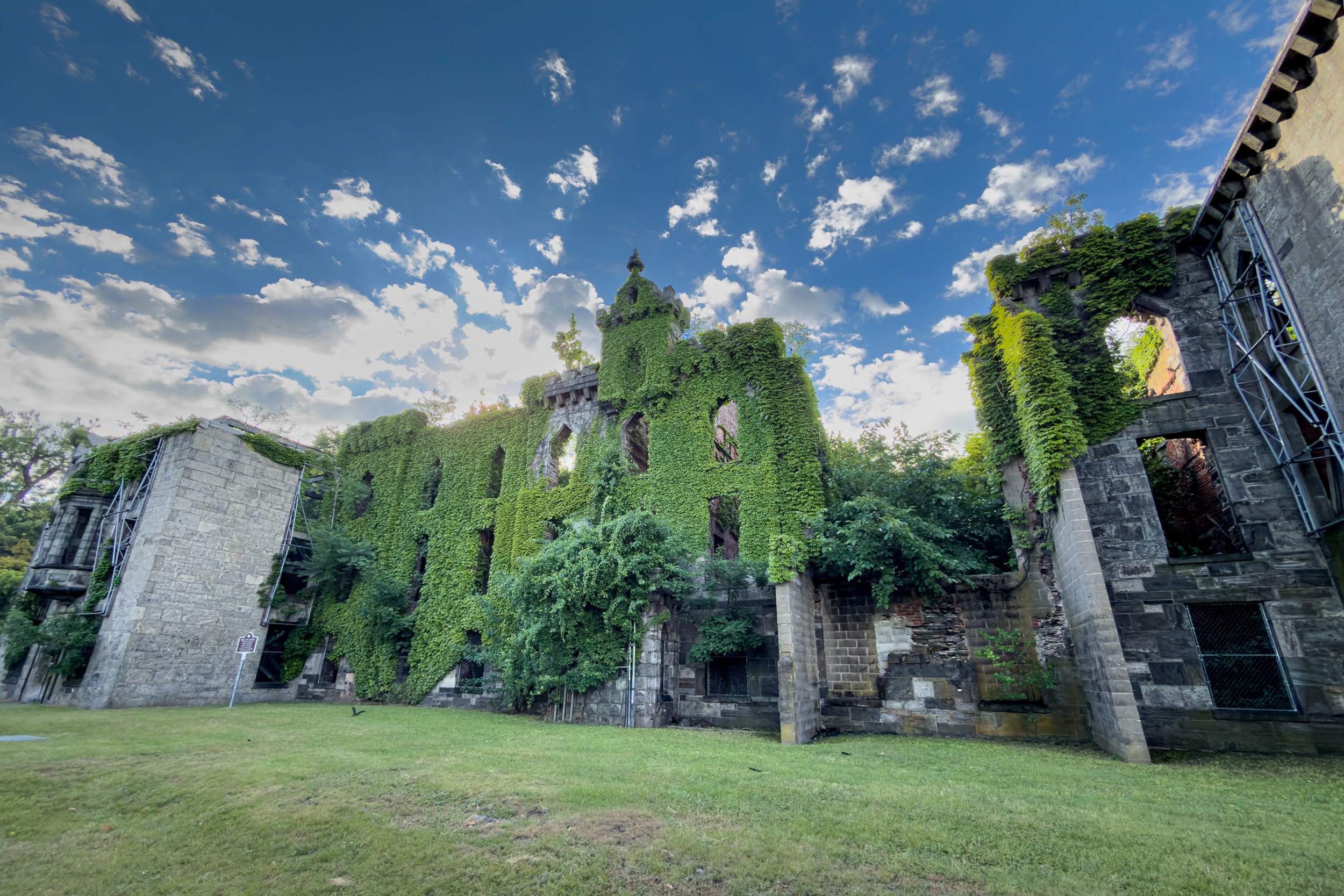
Built in 1856, the former Smallpox Hospital survives as a roofless stone ruin at the island’s southern end. Its walls are among the most visible remnants of the period when New York concentrated hospitals and other institutions on the island.
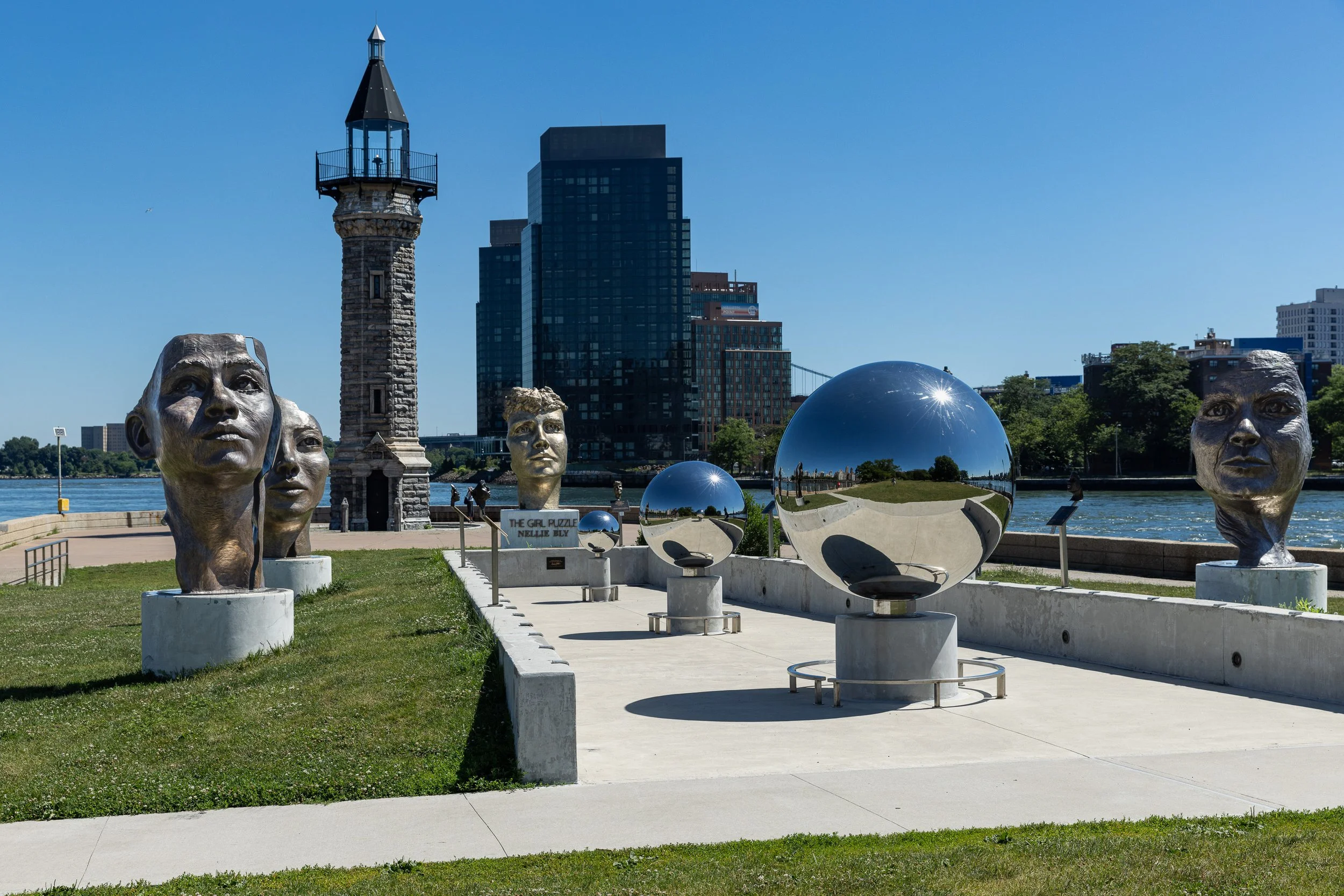
Amanda Matthews’s The Girl Puzzle stands beside the island’s 1872 lighthouse. The memorial honors Nellie Bly and women and girls she advocated for, including those she encountered during her undercover investigation of the island’s asylum.
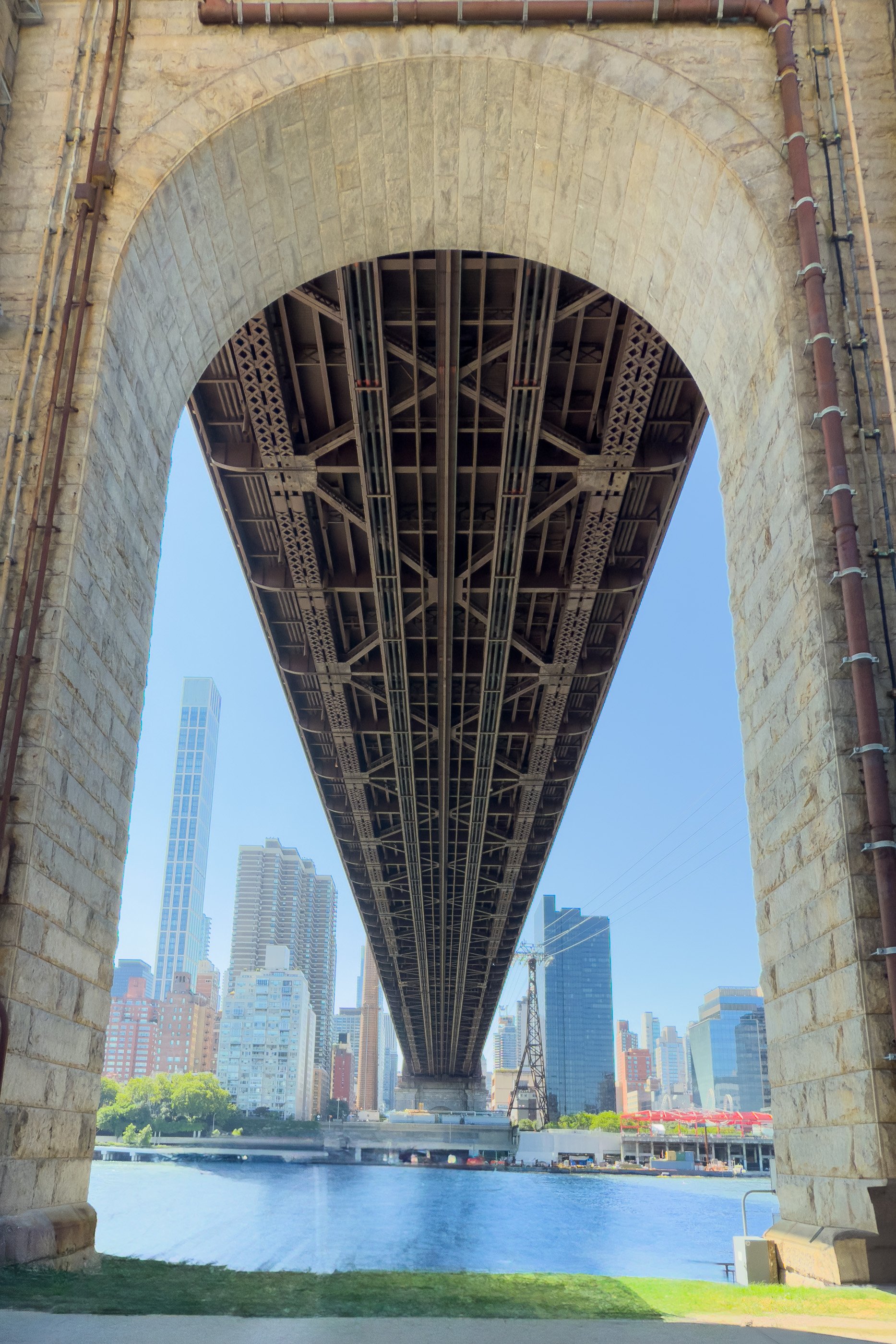
The Queensboro Bridge still passes directly over Roosevelt Island. For its first decade, there was no connection between the bridge and the island below; a ten-story elevator building eventually solved that unusual problem.
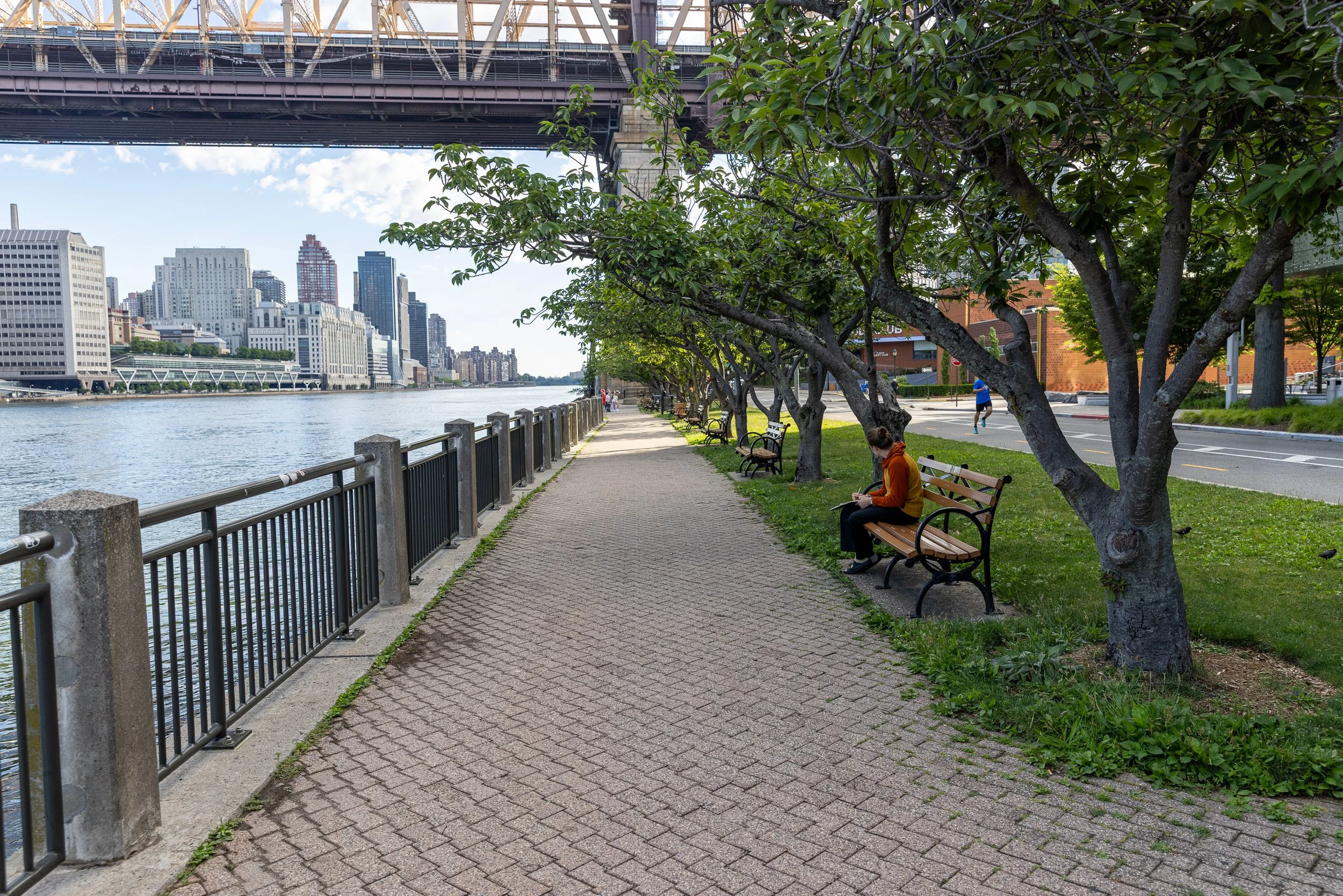
Roosevelt Island’s 1969 master plan imagined a town built around walking, with a Main Street and a promenade following the shoreline. Much of that pedestrian-first design is still visible along the waterfront today.
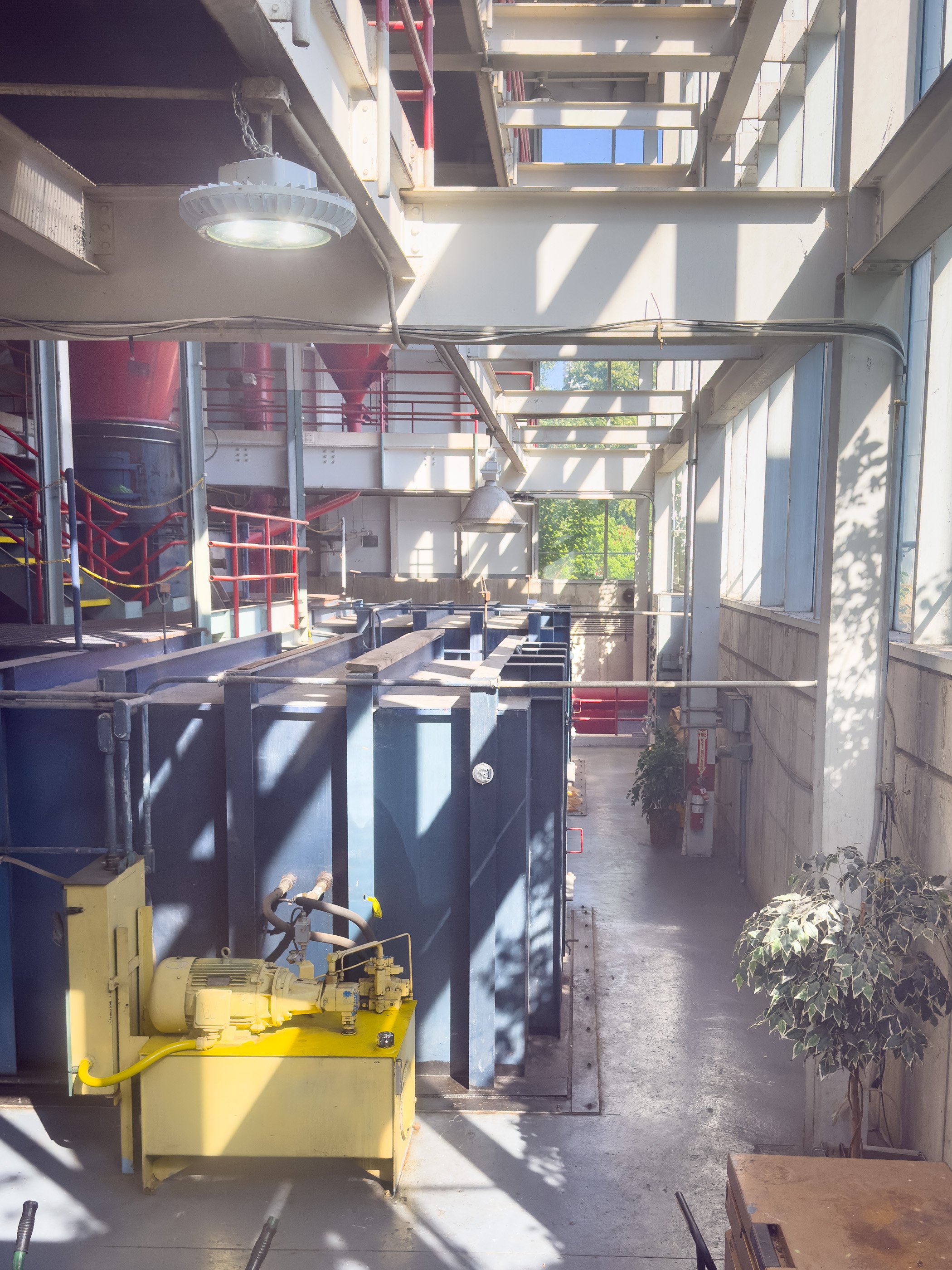
Roosevelt Island has used pneumatic trash collection since 1975. Household waste travels through underground pipes to this collection facility at the island’s north end — eliminating the need for conventional residential garbage collection along much of the island.
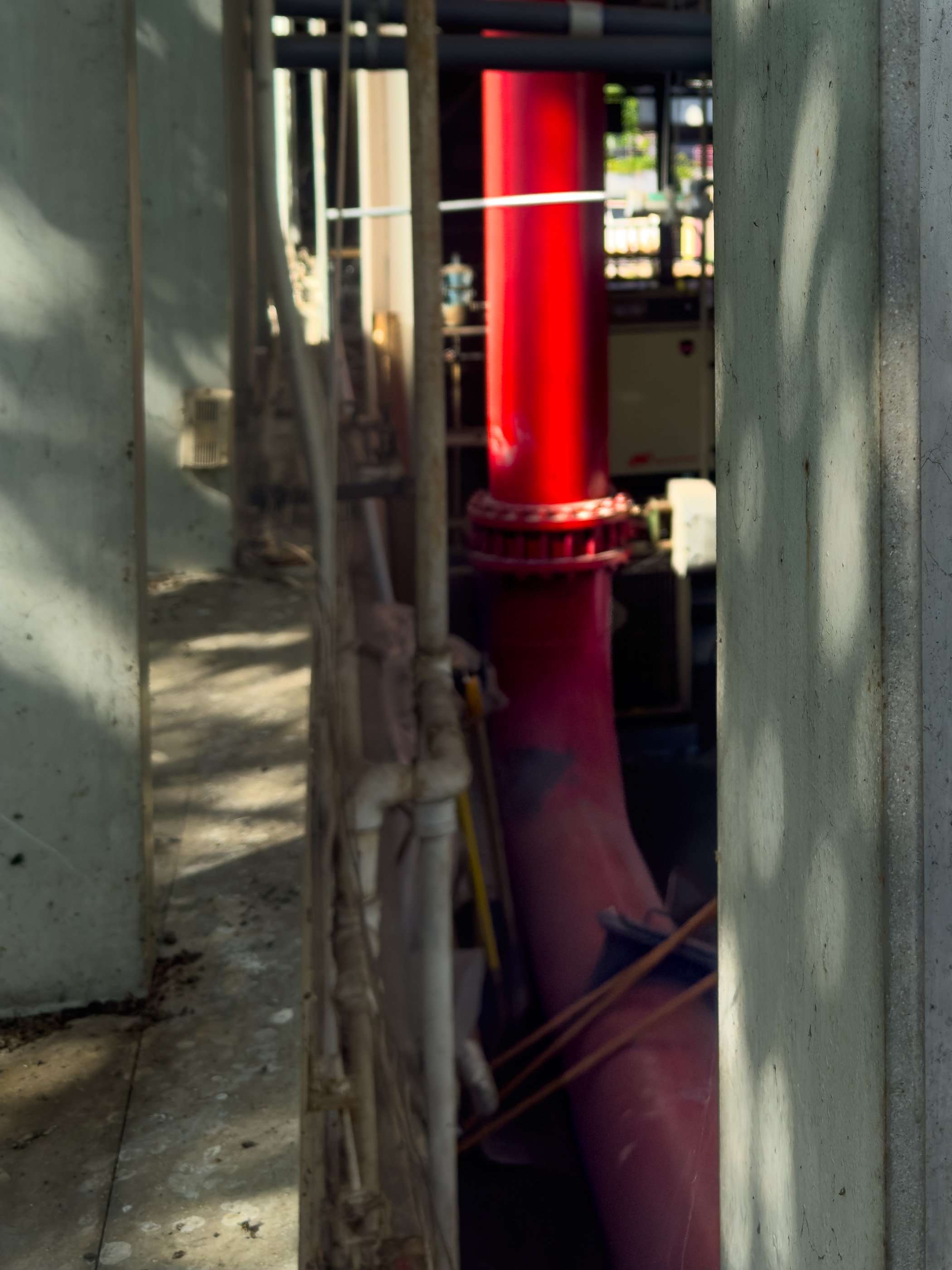
What looks like industrial plumbing is part of the island’s pneumatic waste network. Trash dropped into apartment-building chutes is pulled through large underground pipes before arriving at the collection facility.
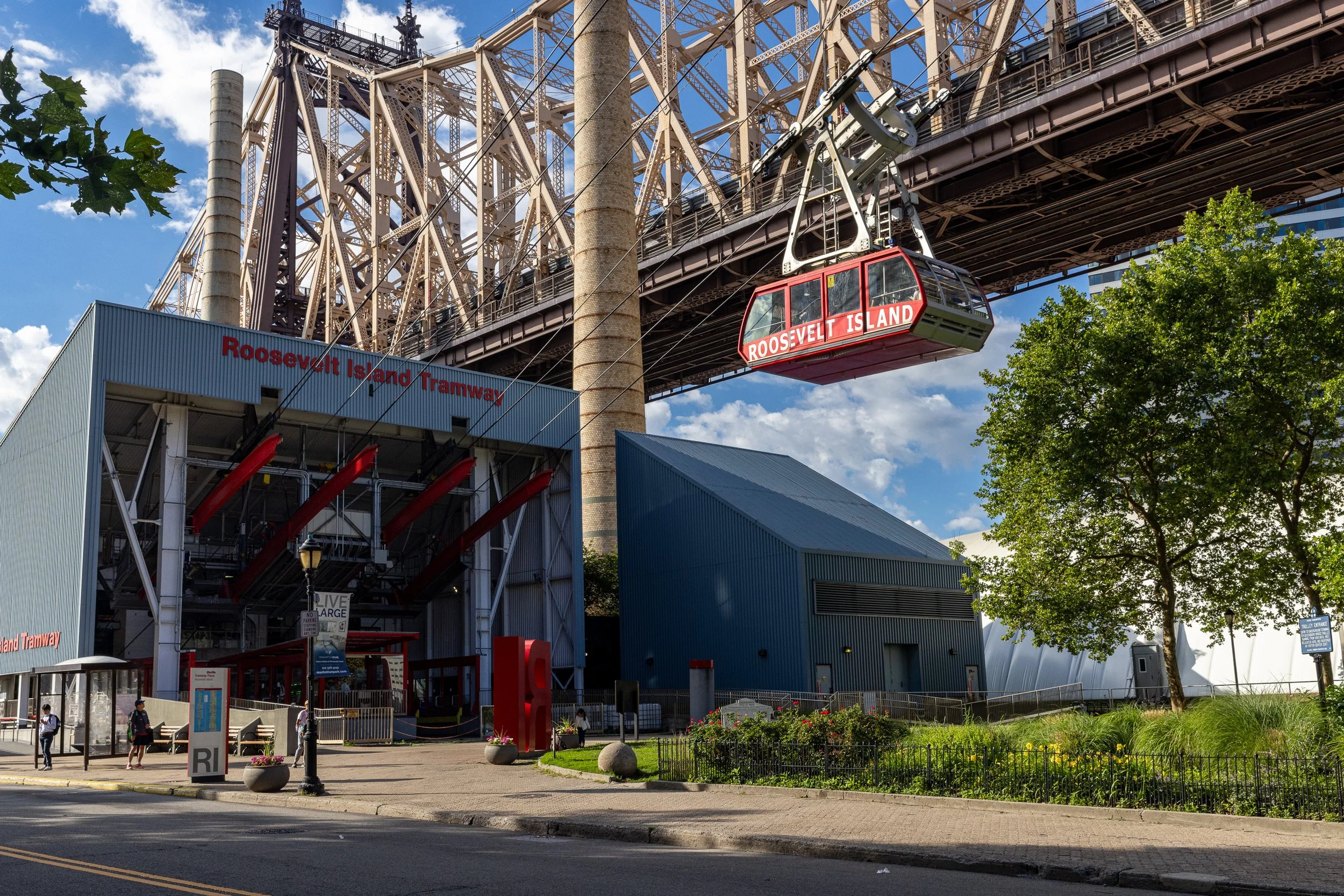
Today’s tram terminal stands on the site of the elevator building that once connected Roosevelt Island to the Queensboro Bridge overhead. One unusual transportation solution eventually gave way to another in almost exactly the same place.
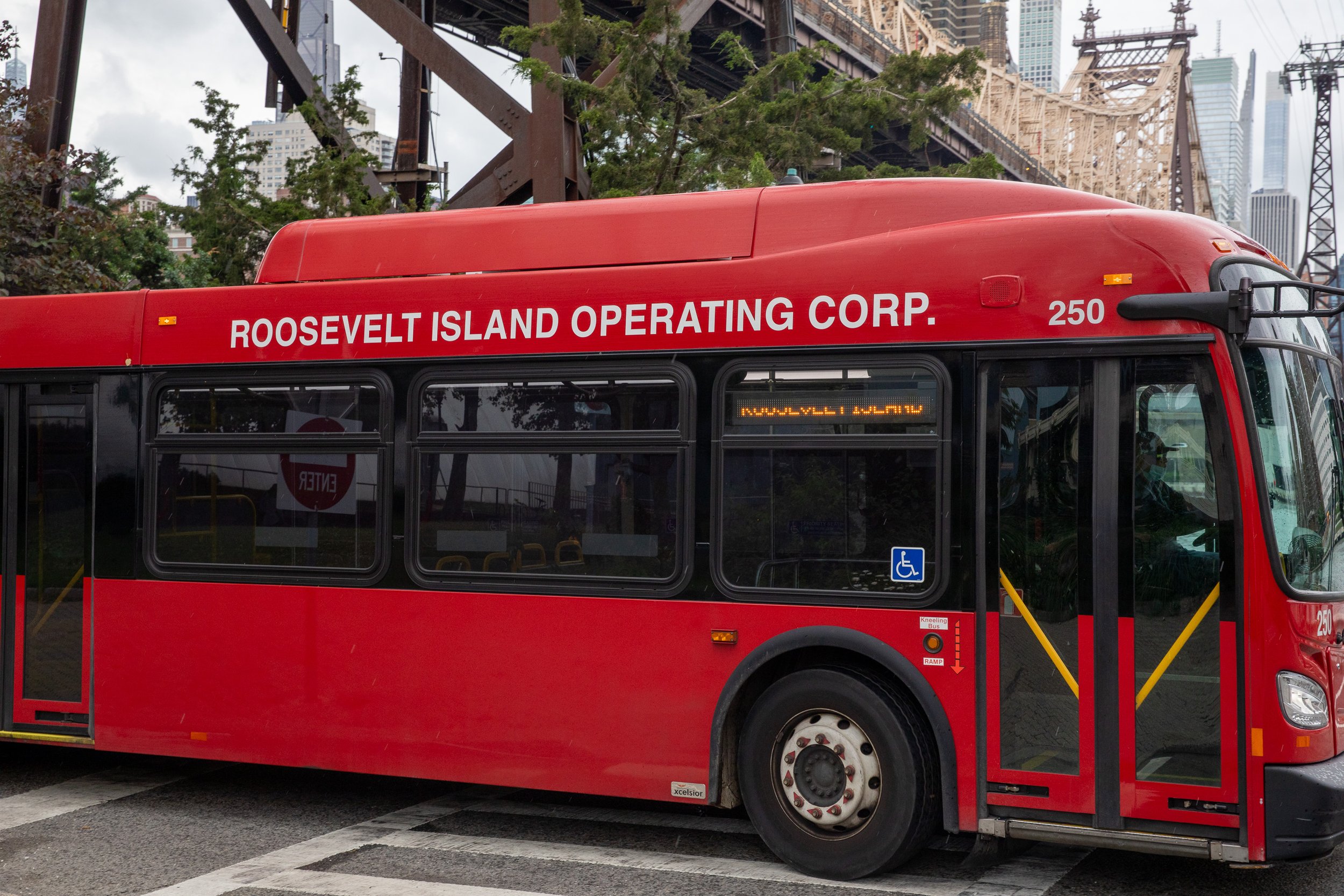
The island’s free Red Bus runs from one end of the two-mile community to the other. Buses, walking and the tram remain central to a place originally planned around pedestrians rather than private cars.
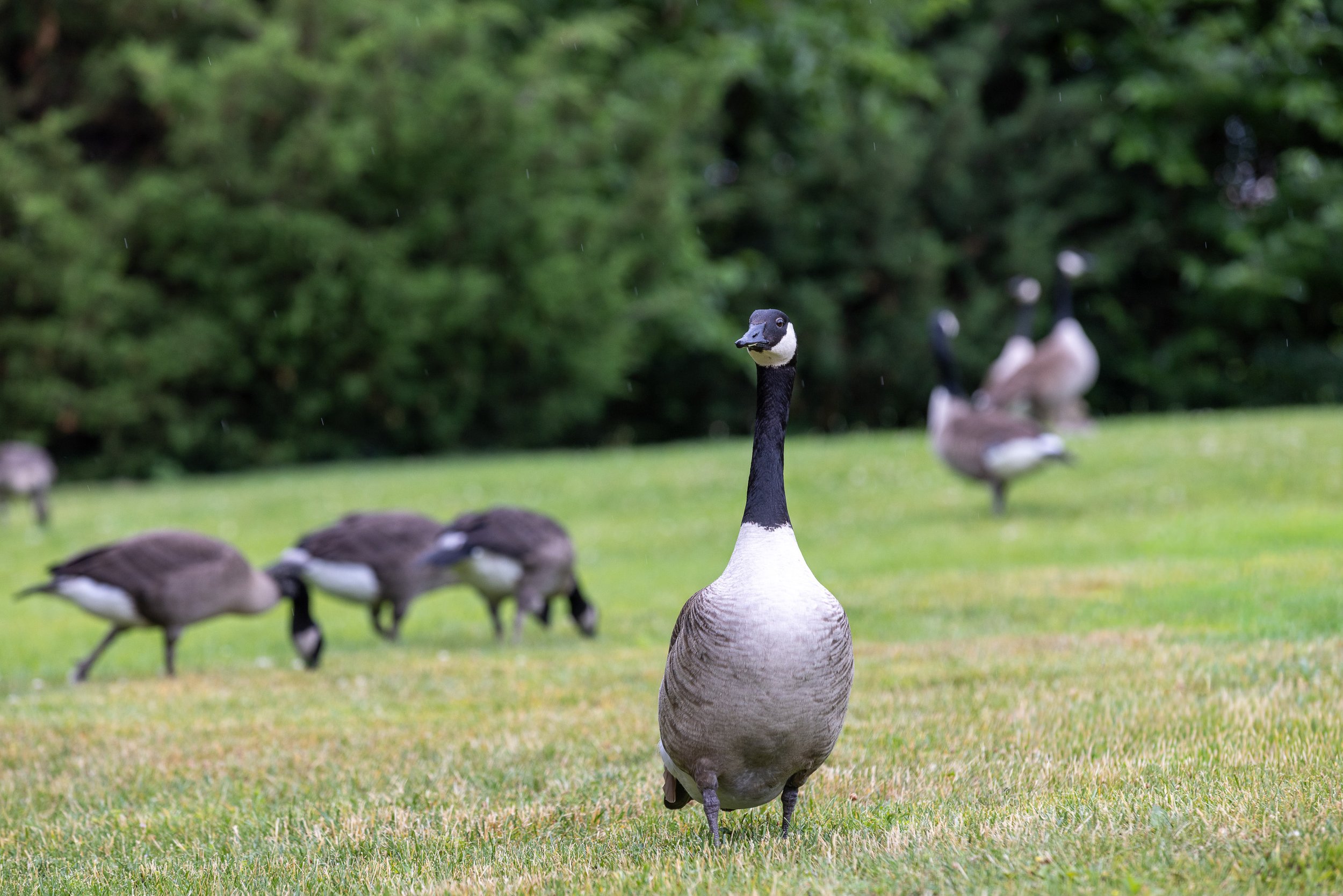
Canada geese graze on the broad lawns throughout Roosevelt Island’s residential neighborhoods. The open space is part of what makes the island feel unexpectedly different from the city surrounding it.
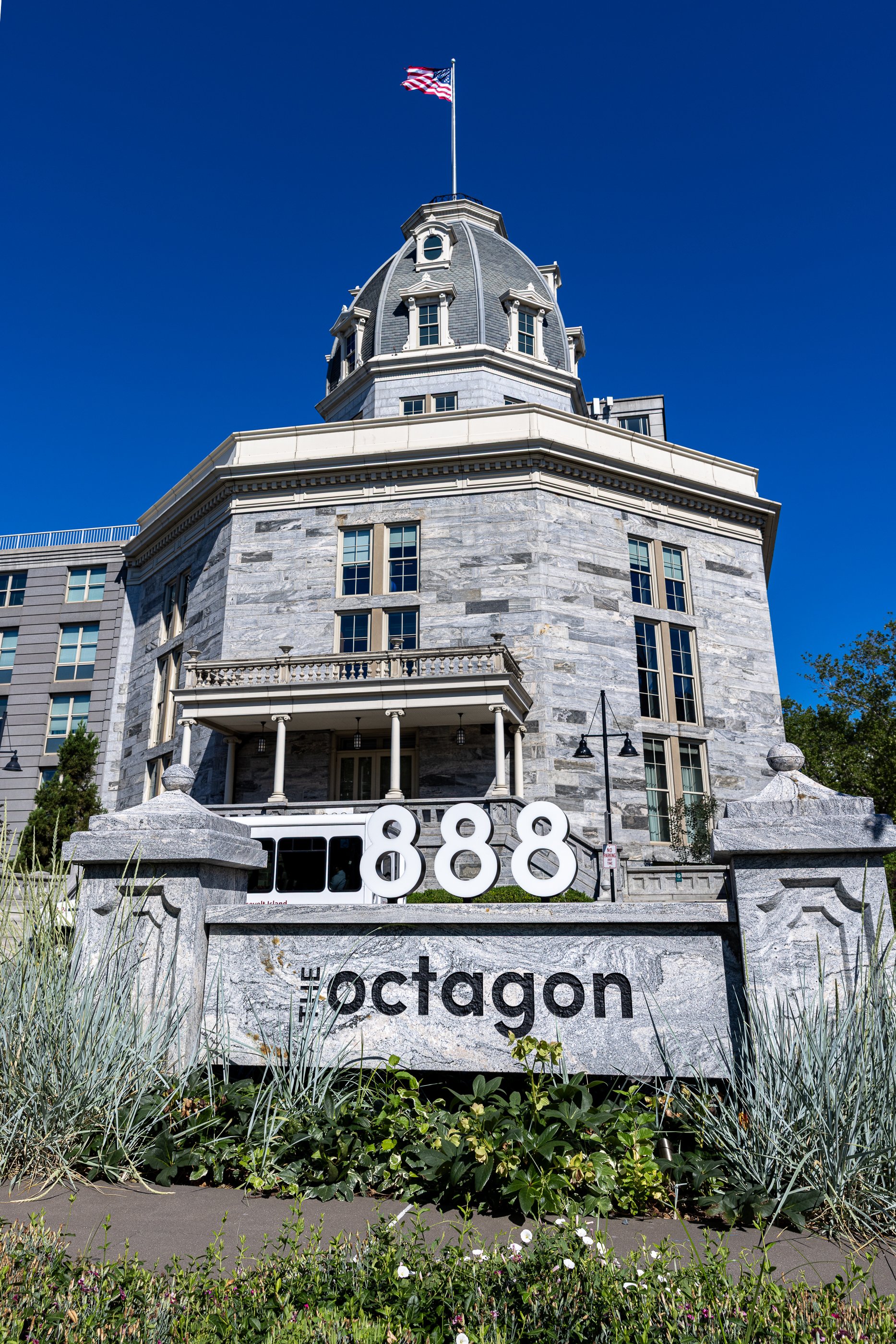
The Octagon apartment complex incorporates the surviving entrance and administration building of the former asylum. The old octagonal stone structure remains at the center of a very different use — and even gave the modern complex its name.
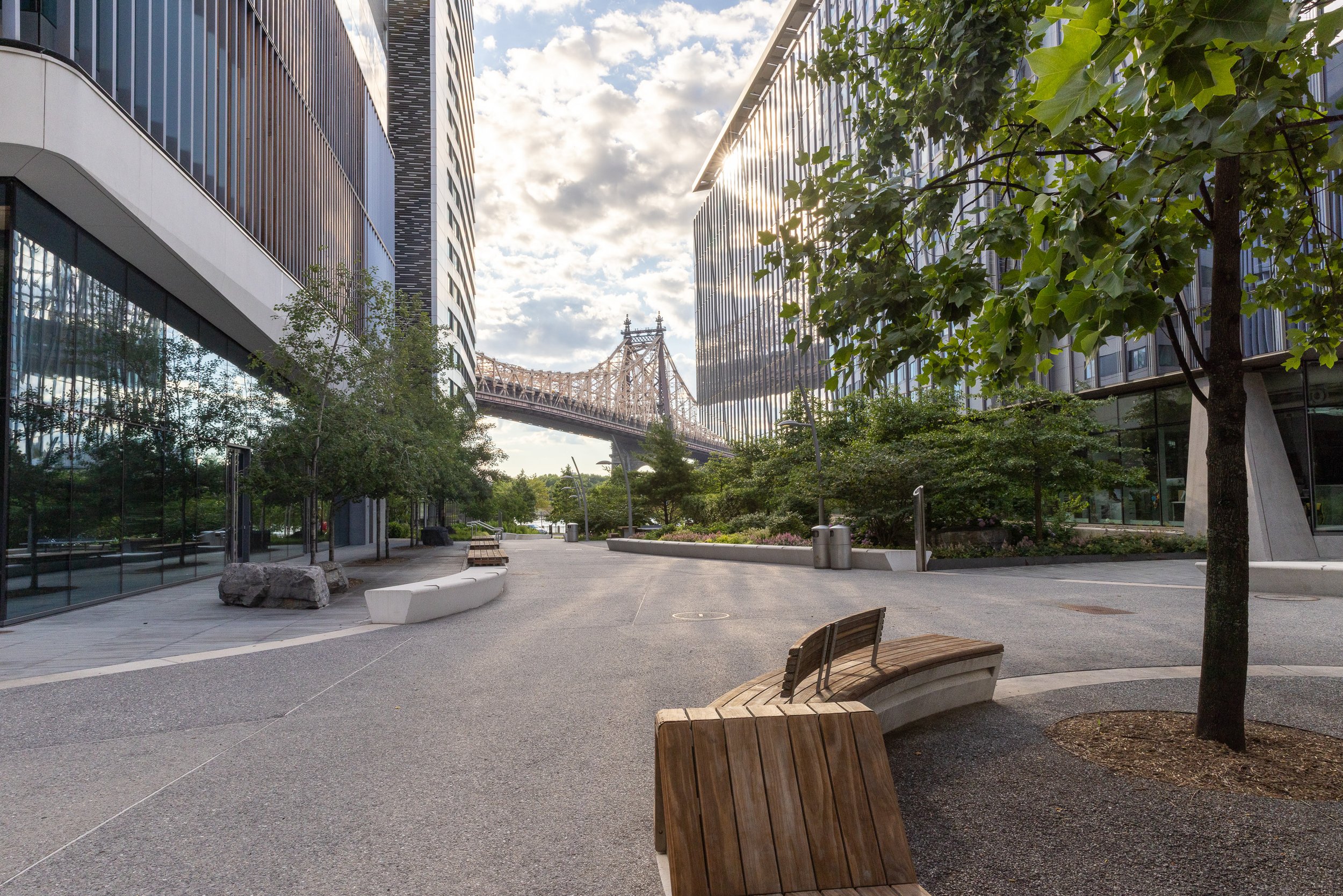
Cornell Tech opened its graduate technology campus here in 2017. Its pedestrian campus stretches south from the bridge toward the island’s tip, adding a very different kind of institution to a place shaped by institutions for nearly two centuries.
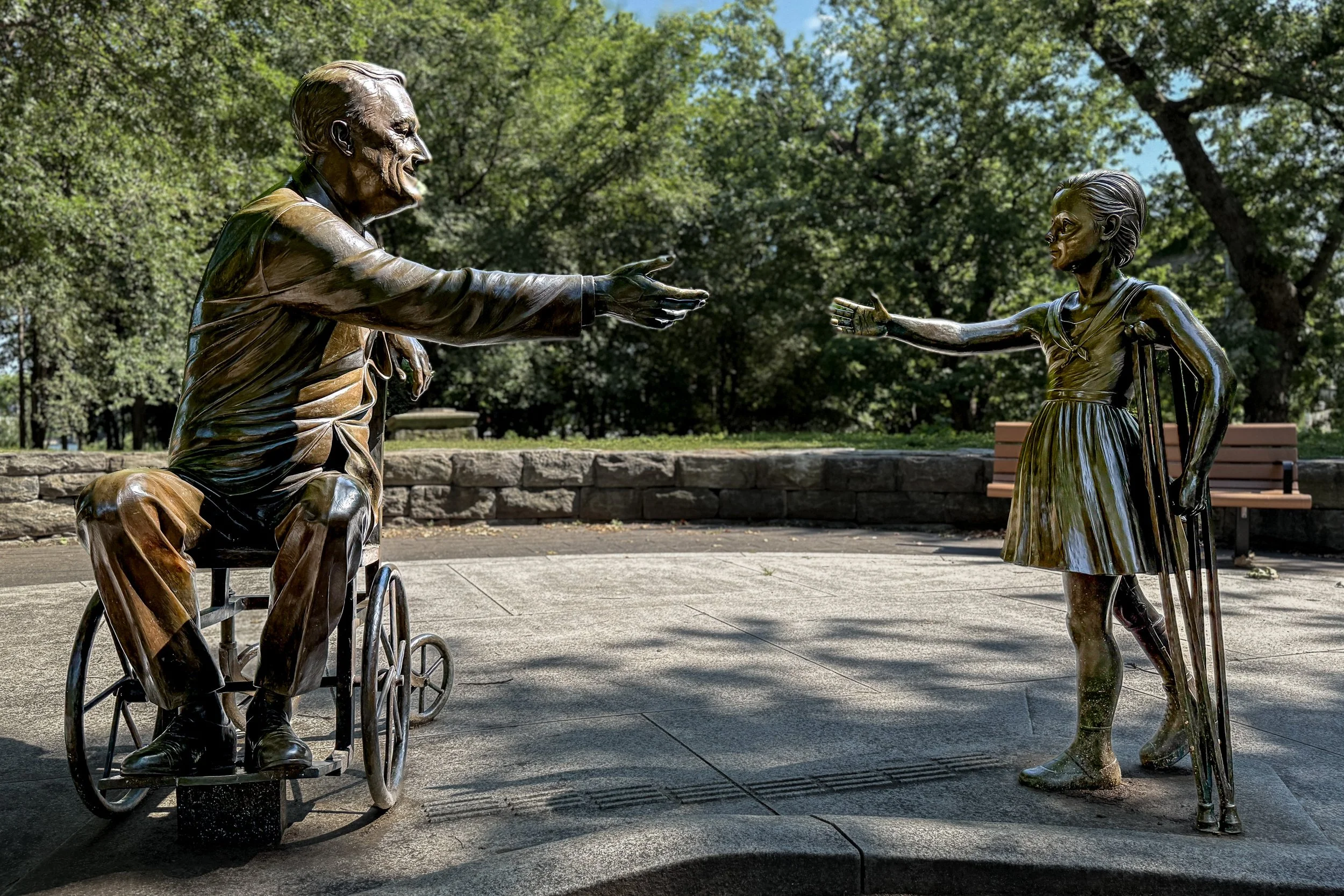
Disabled residents spent more than a decade working to create this memorial to Franklin D. Roosevelt. It shows him in a wheelchair reaching toward a girl on crutches — an image of Roosevelt the public rarely saw during his presidency.
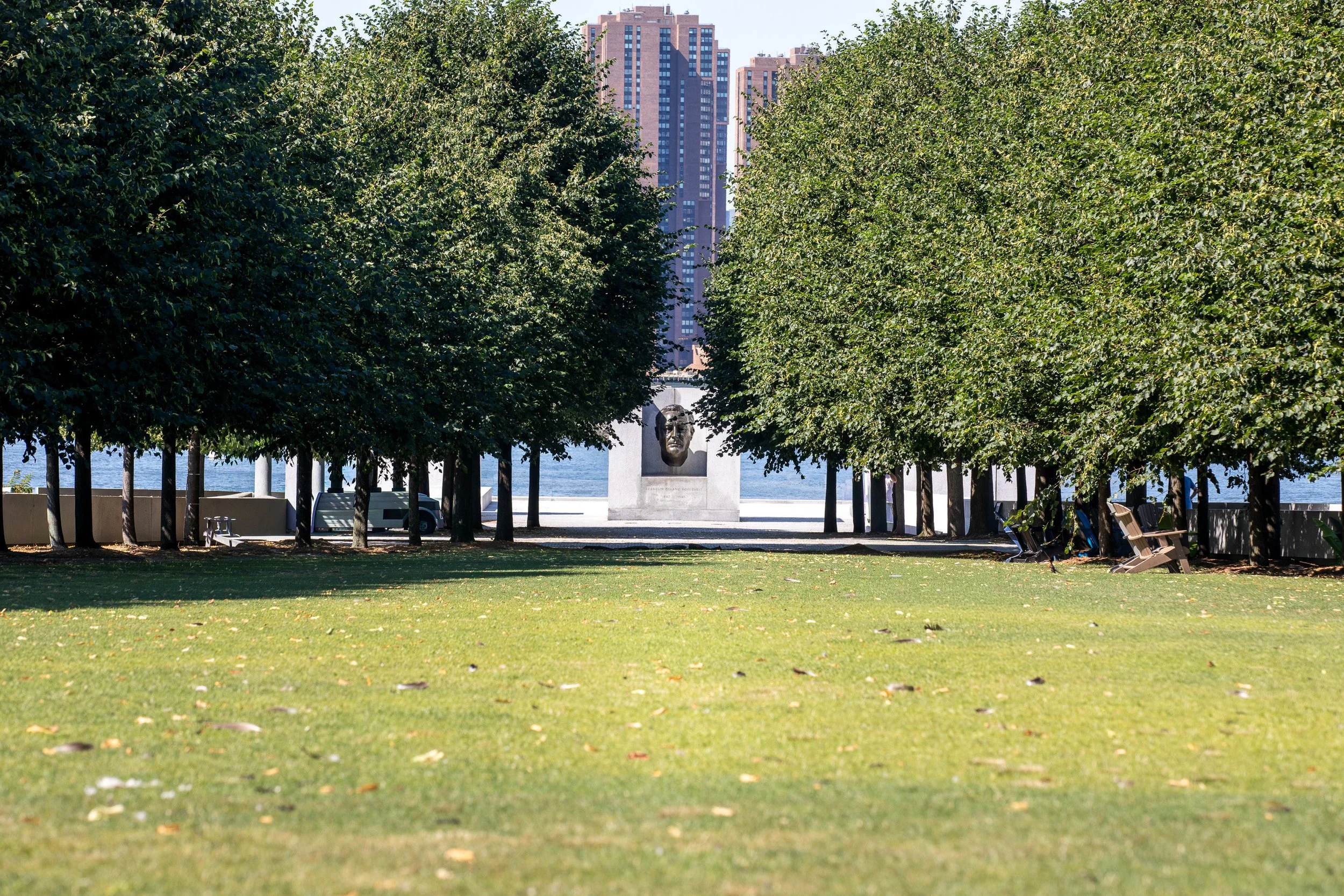
Louis Kahn’s Four Freedoms Park narrows between rows of linden trees toward a bronze portrait of Roosevelt, with the city beyond. The carefully controlled view leads visitors toward the final space at the island’s southern tip.
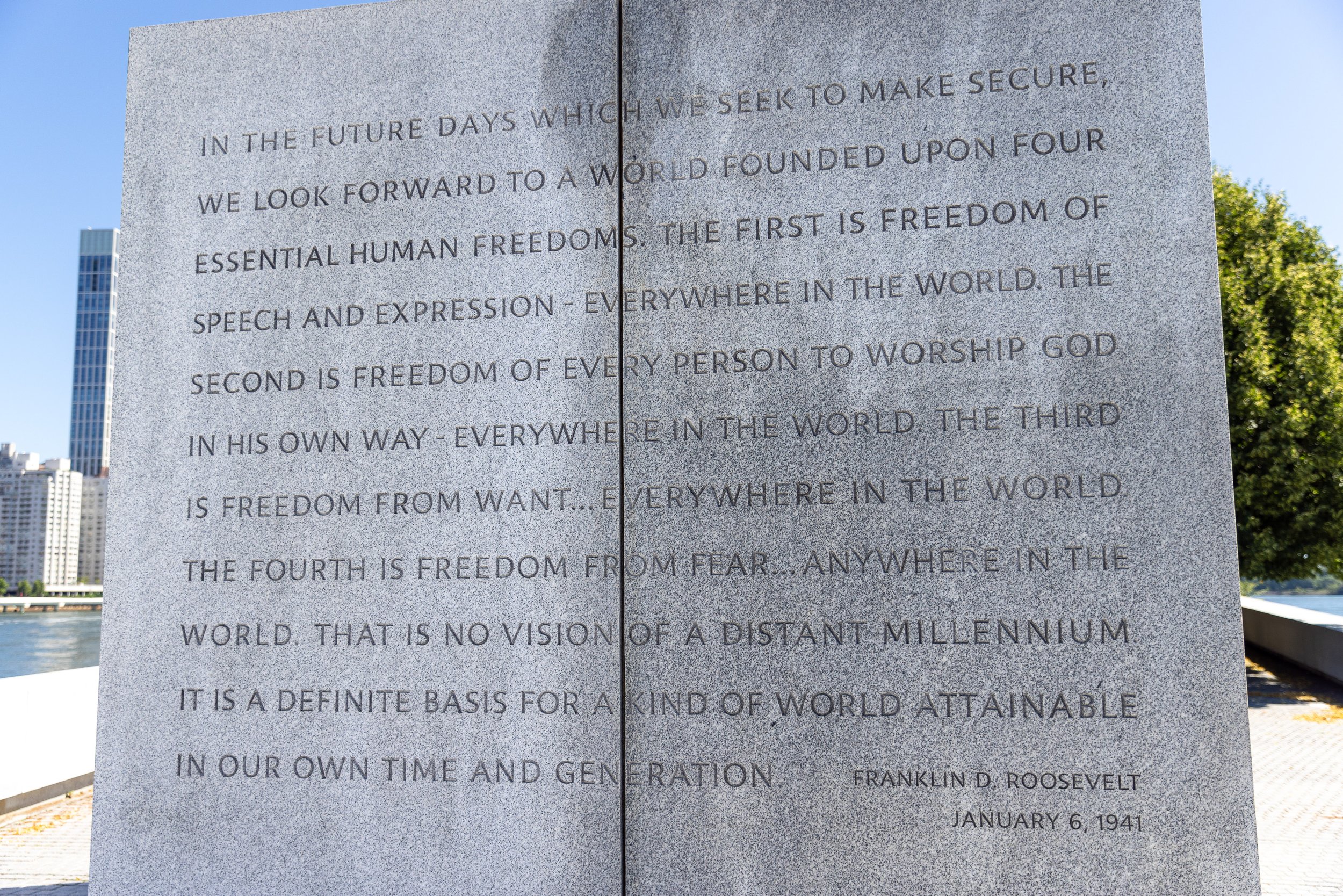
The words of Roosevelt’s 1941 Four Freedoms speech are carved into granite at the island’s southern end. Their setting adds another layer to an island long used for prisons, hospitals and other institutions separated from the rest of New York by water.
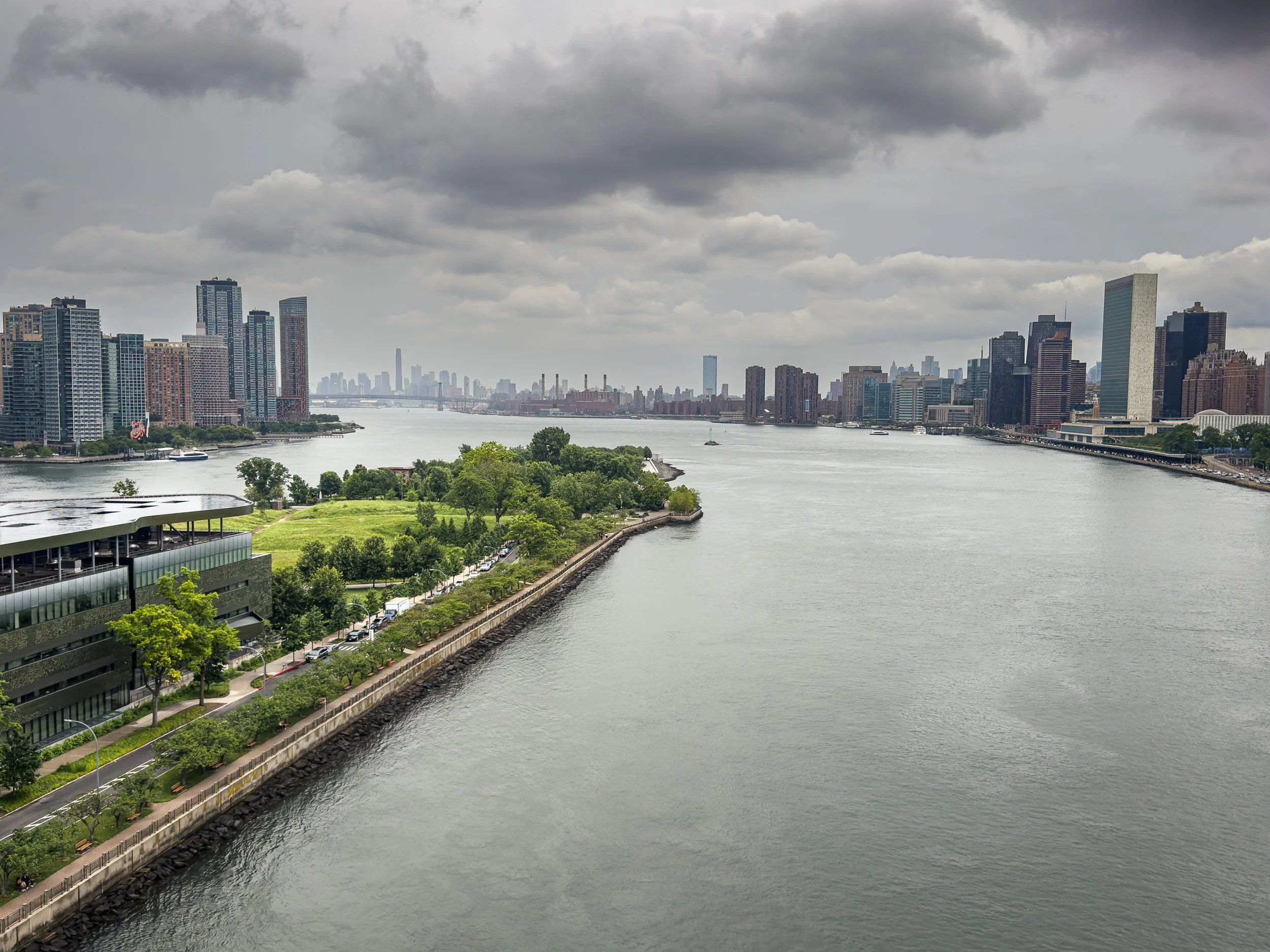
Seen from above the river, Roosevelt Island’s unusual geography becomes obvious: a narrow strip of land squeezed between Manhattan and Queens. It is roughly two miles long but never more than about 800 feet wide.
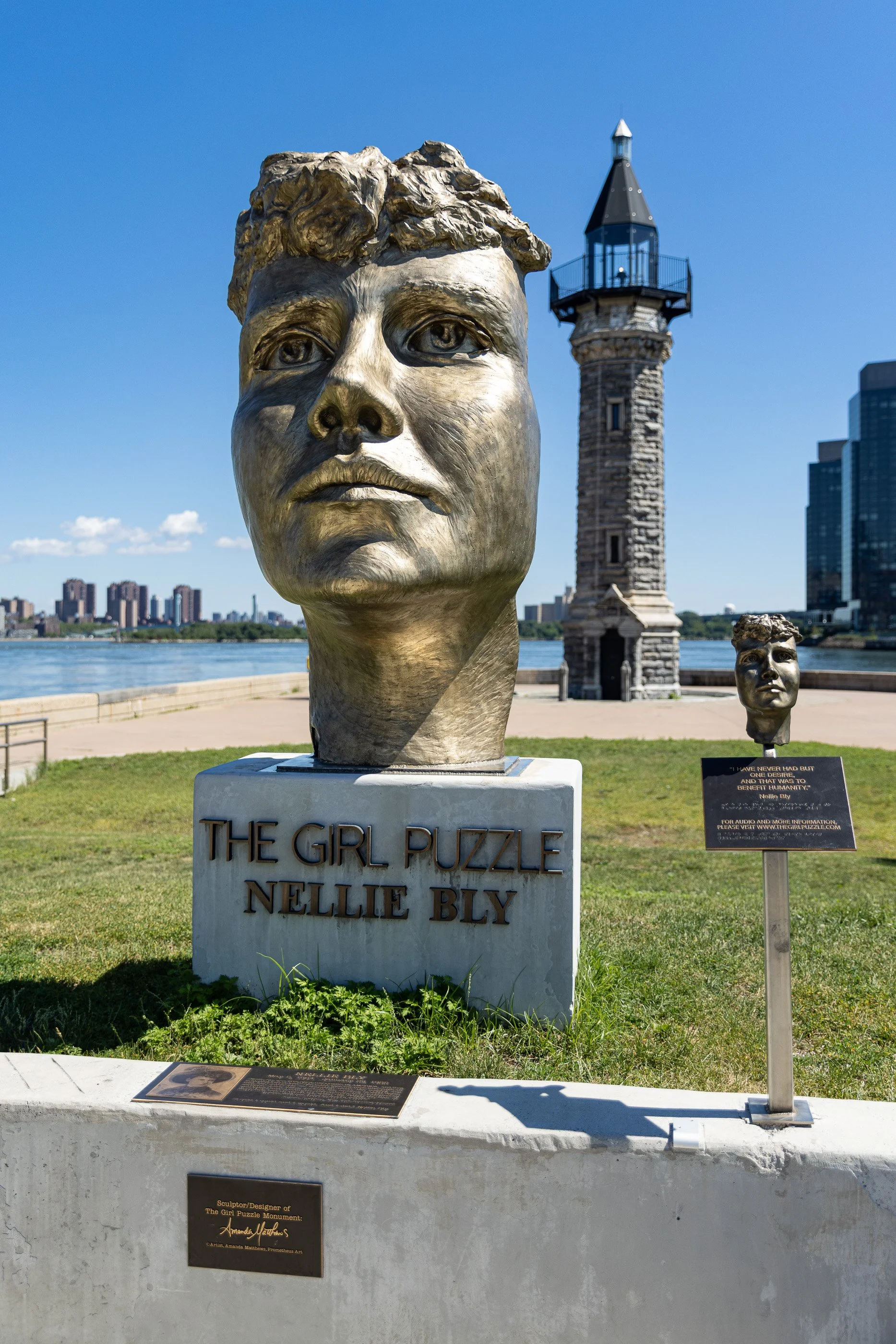
Nellie Bly is the central figure in Amanda Matthews’s The Girl Puzzle. In 1887, the twenty-three-year-old reporter had herself committed to the island’s asylum and spent ten days documenting conditions inside.
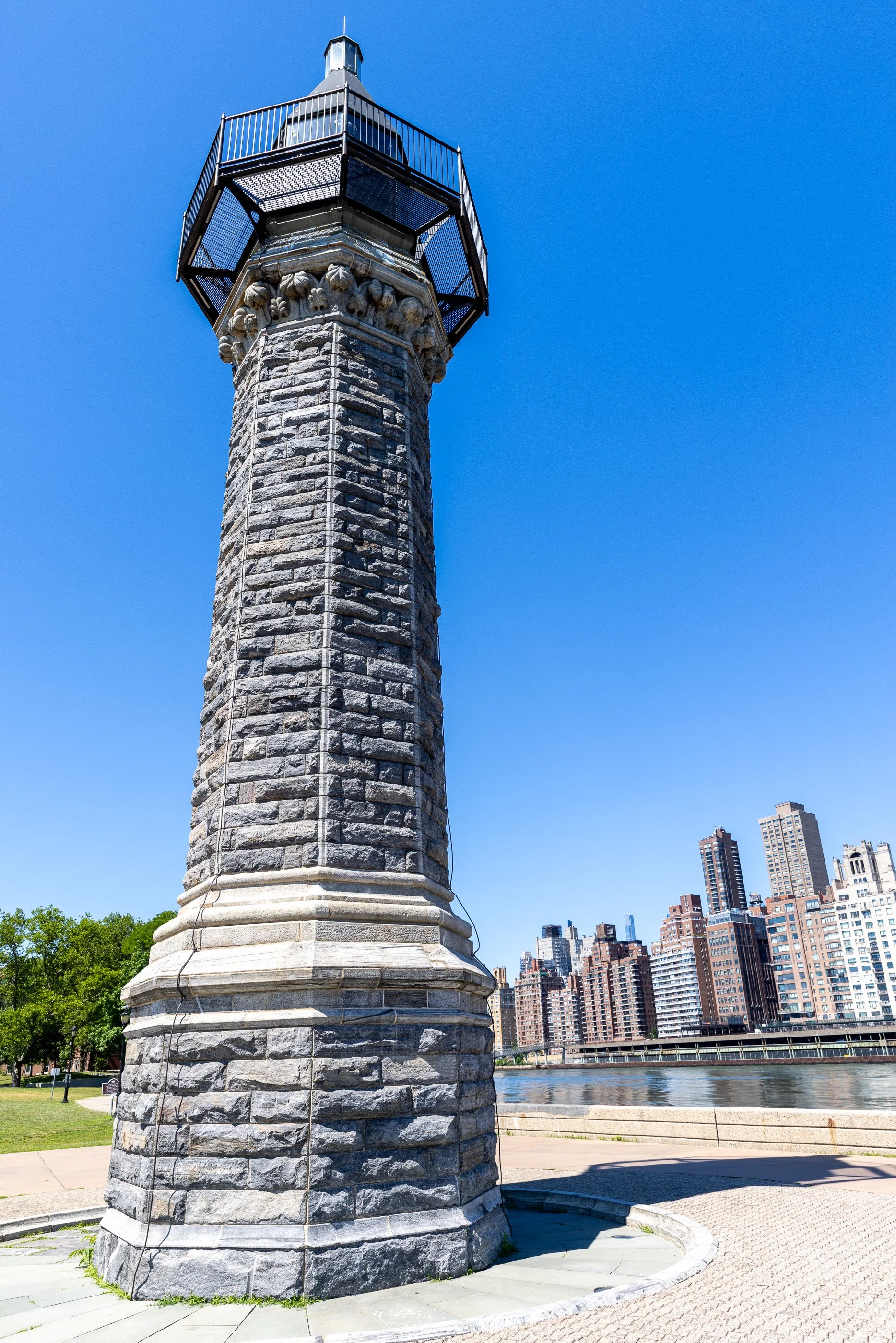
The lighthouse has stood at the island’s northern tip since 1872. Built from gray gneiss quarried on the island, it survives from the Blackwell’s Island years, when this end of the island was dominated by city institutions.
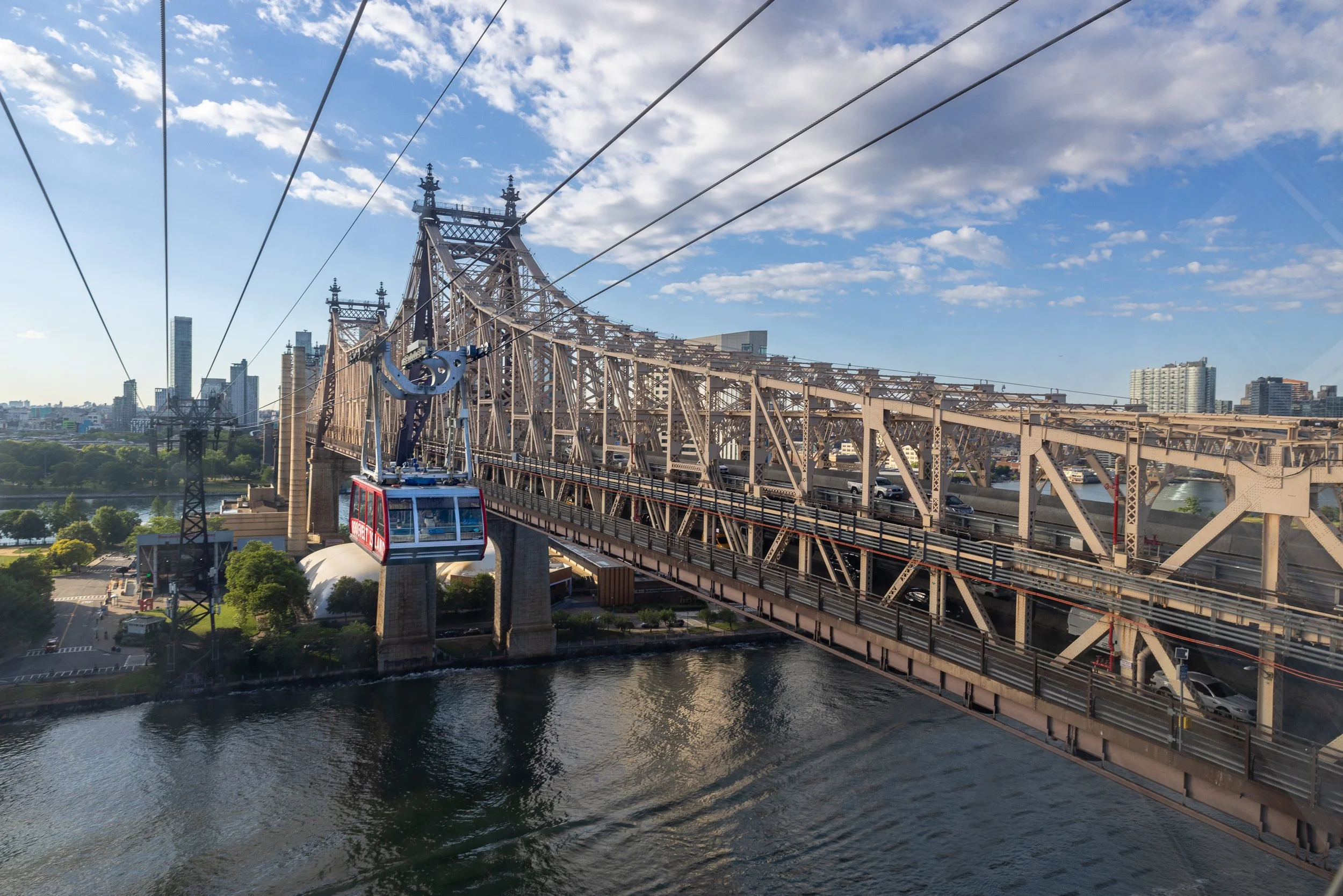
The tram and Queensboro Bridge run almost side by side as they approach the island. The bridge arrived first in 1909; the aerial tram followed in 1976 as a supposedly temporary solution to a subway that was still years away.
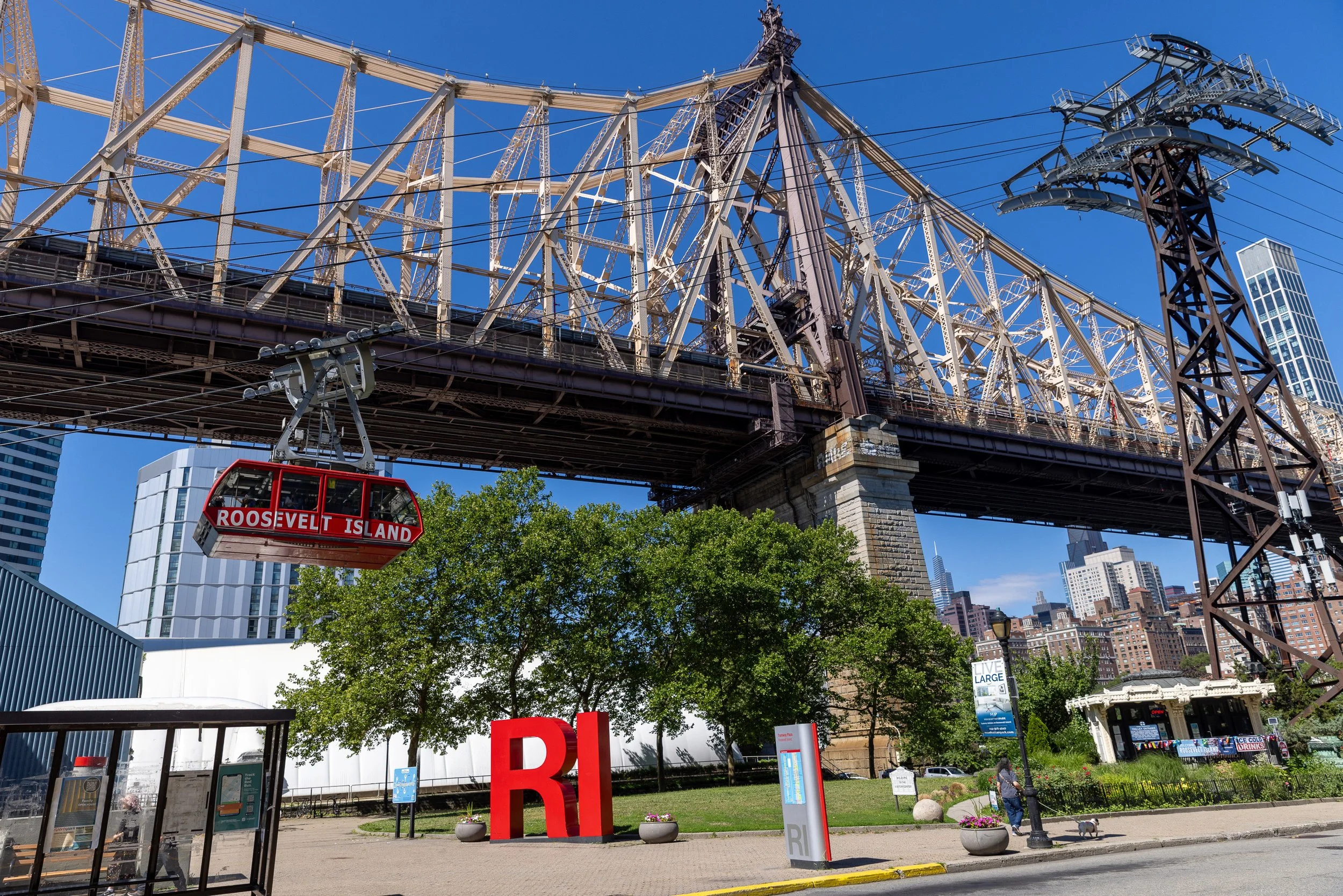
The giant RI letters sit beneath the Queensboro Bridge and beside the Roosevelt Island Tramway. The bridge passes directly overhead without stopping; the tram delivers passengers almost to these letters.
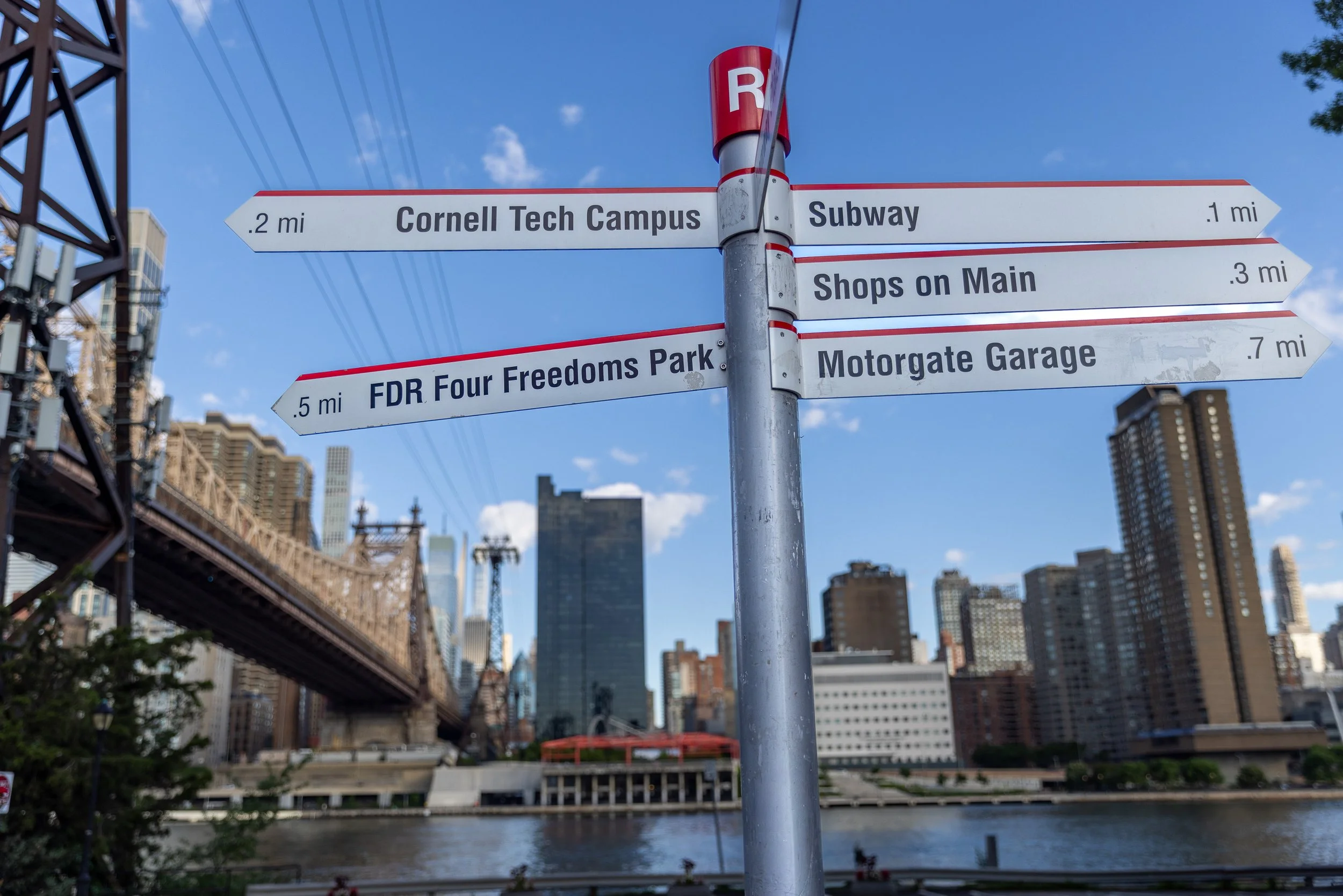
A signpost points toward the subway, Main Street, Cornell Tech, Motorgate and Four Freedoms Park. On an island only two miles long, almost everything is walkable — one of the original plan’s most enduring ideas.
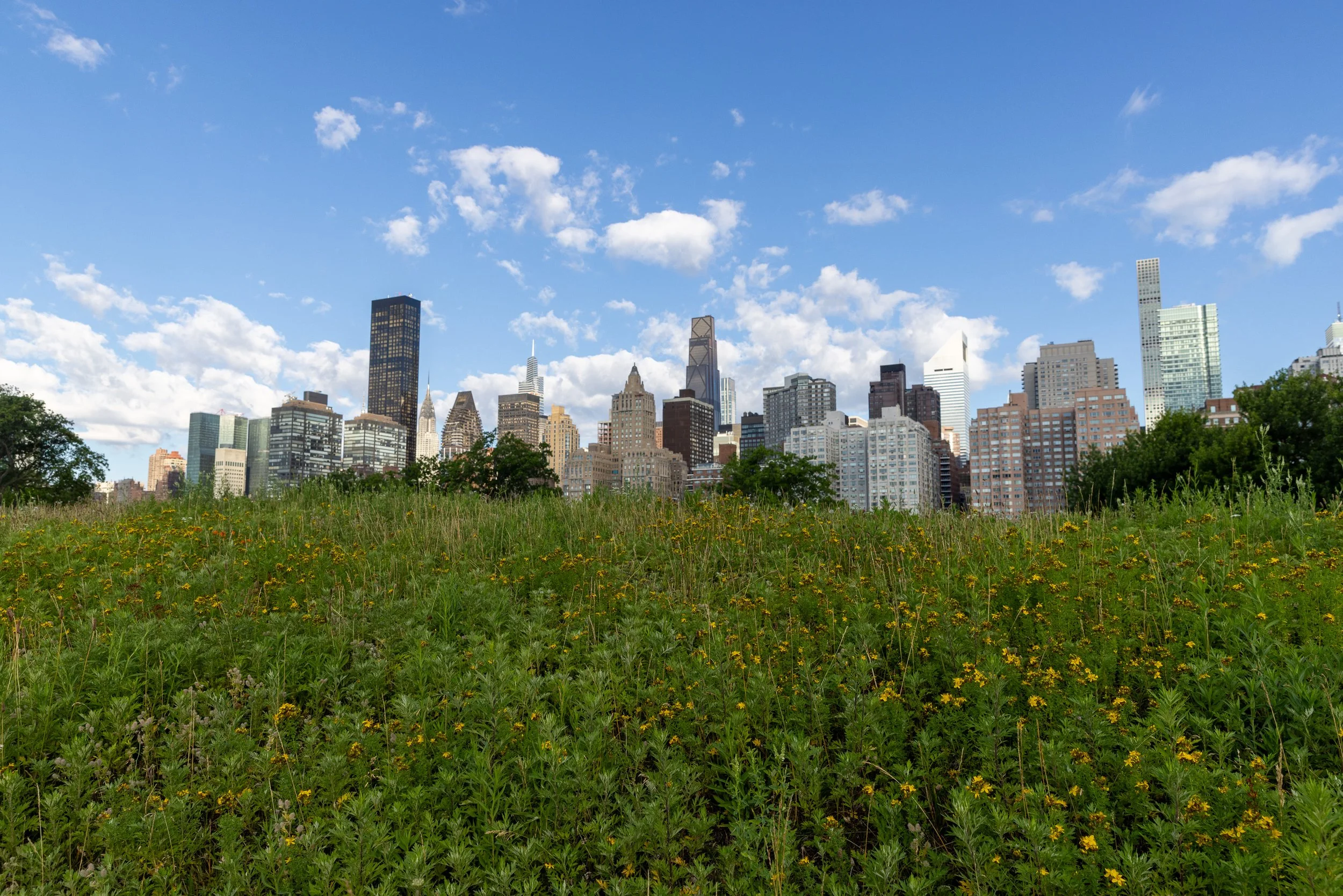
Just south of Cornell Tech, a meadow of wildflowers and tall grasses opens toward the Manhattan skyline. It is one of Roosevelt Island’s stranger contrasts — a quiet patch of open ground within sight of some of the densest cityscape in the country.
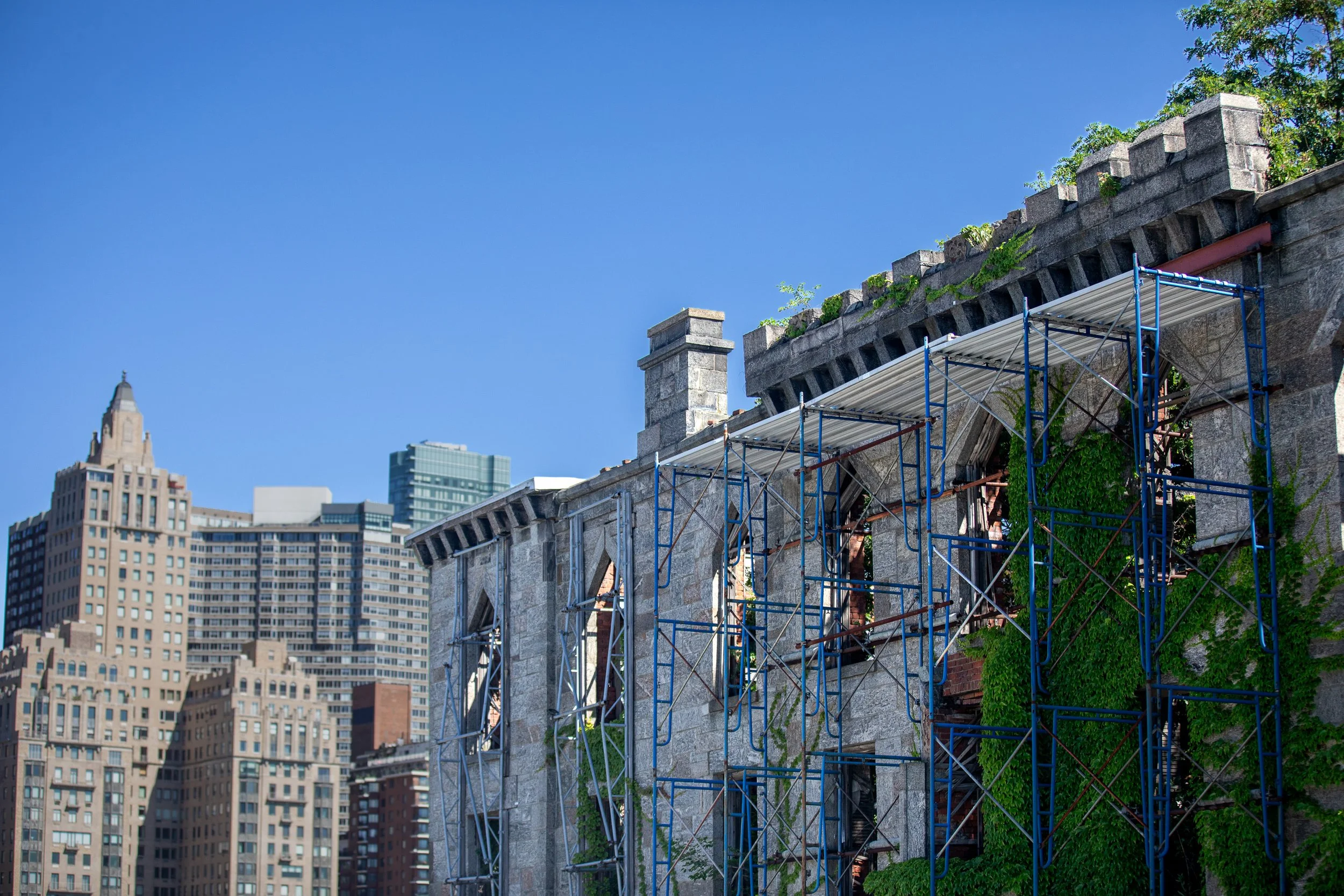
Steel bracing now helps stabilize the surviving walls of the former Smallpox Hospital. Built in 1856, the stone ruin remains one of the clearest physical traces of the island’s nineteenth-century institutional past.
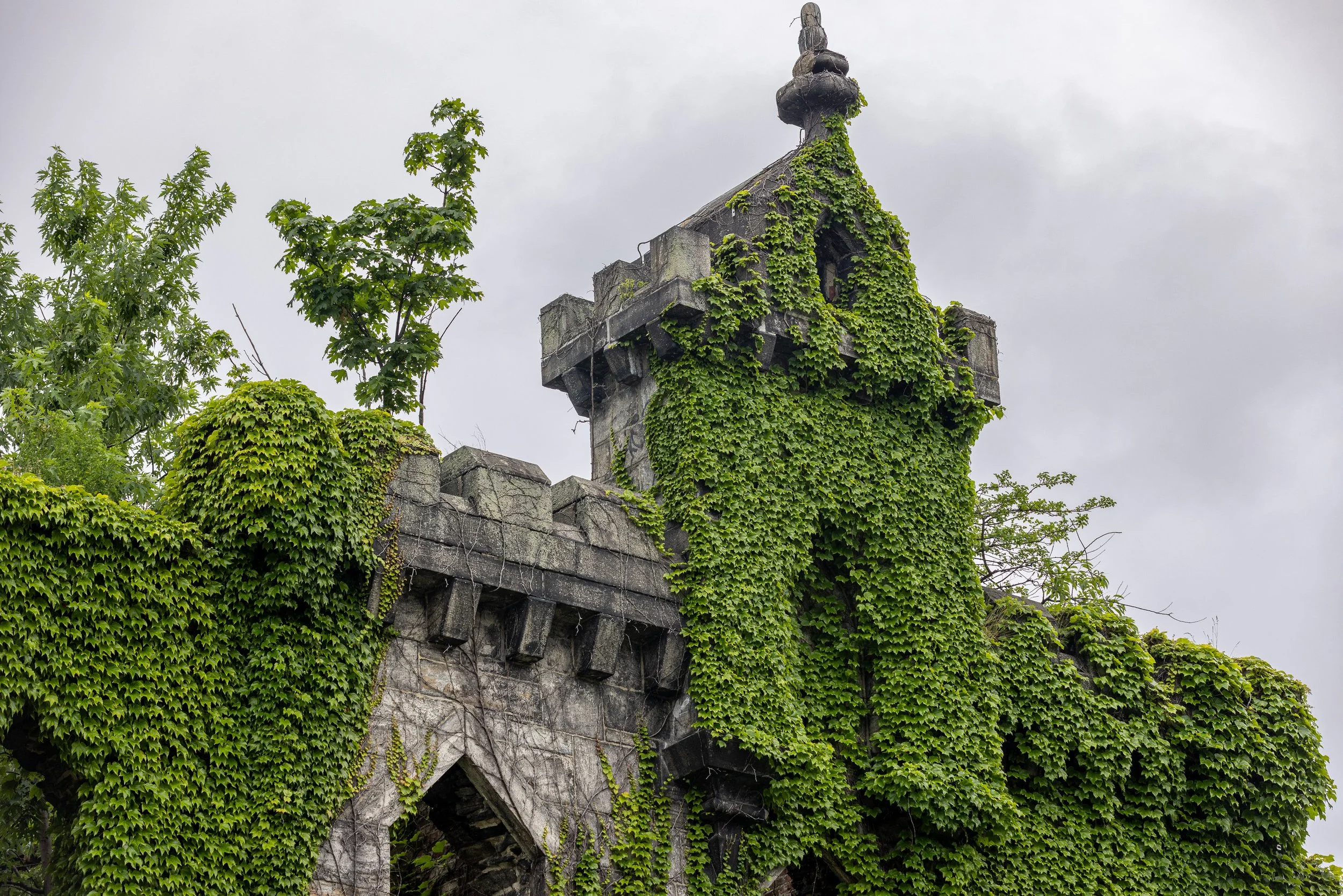
Ivy covers part of the roofless Smallpox Hospital ruin. The building has been empty for decades, but its surviving stone walls preserve a visible piece of the era when the island housed many of New York City’s institutions.
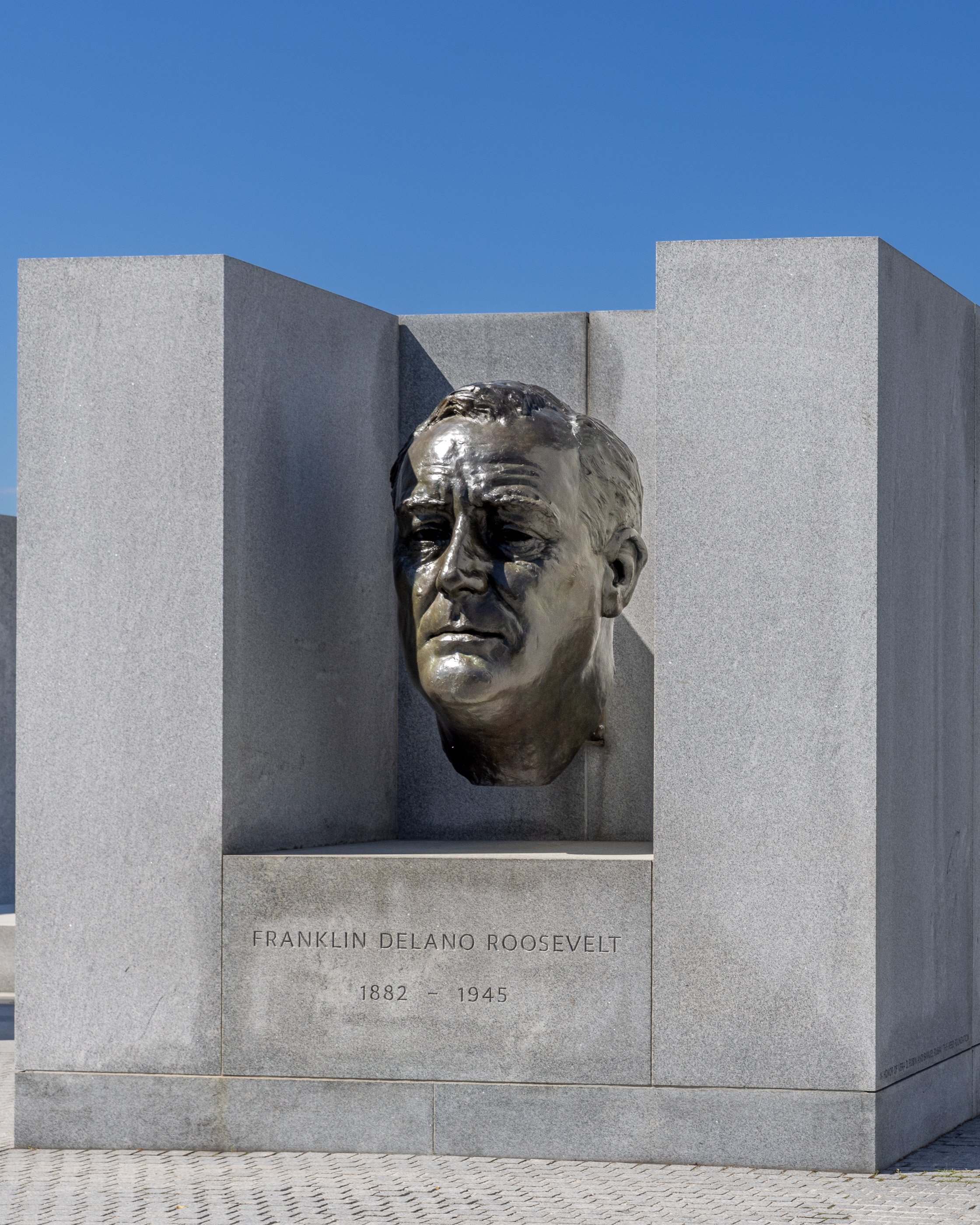
A bronze portrait of Franklin D. Roosevelt sits within Louis Kahn’s Four Freedoms Park. Its formal presentation contrasts with another Roosevelt memorial farther north that depicts him openly using the wheelchair he largely kept from public view.
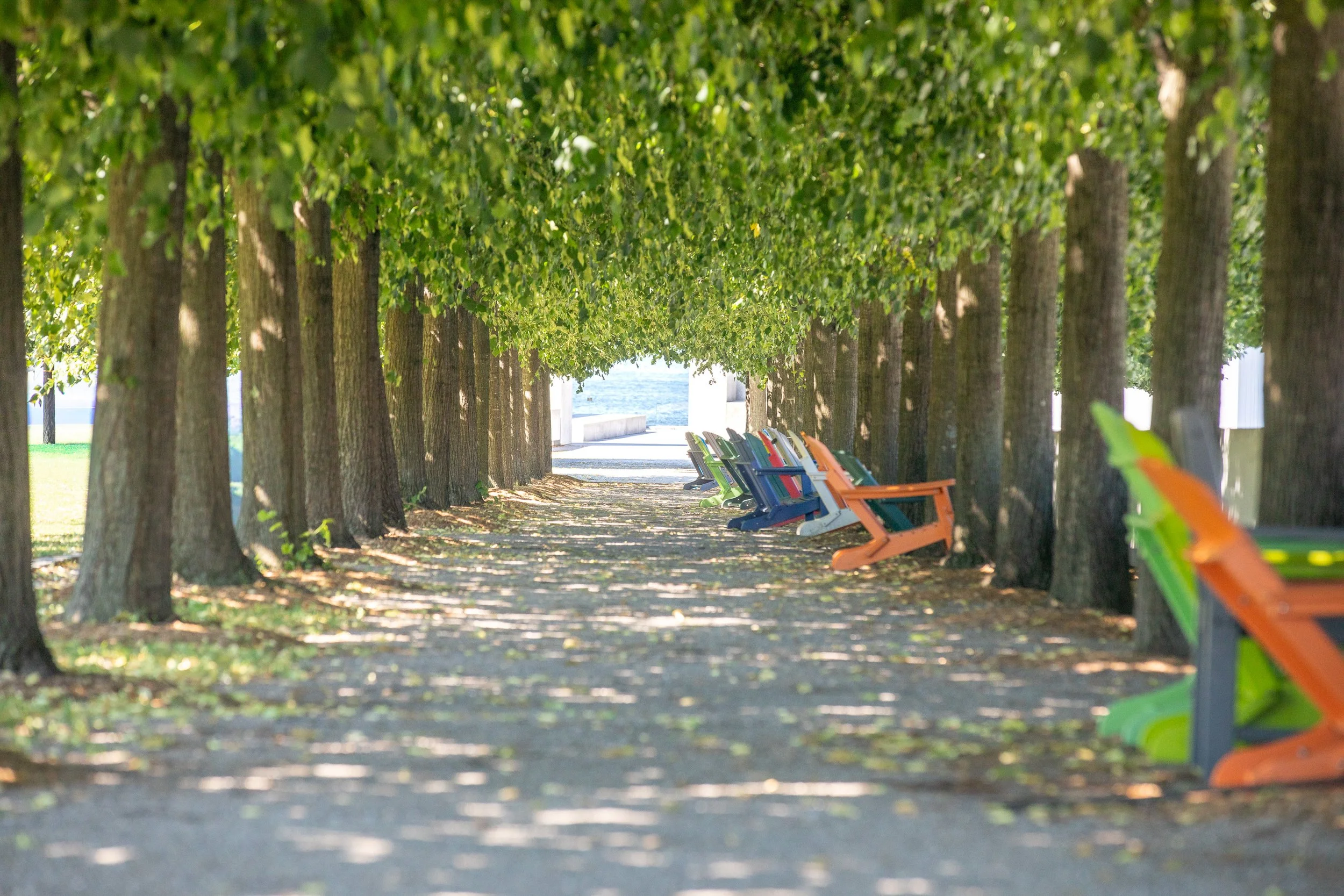
A linden-lined path runs alongside the central lawn at Four Freedoms Park, leading toward Roosevelt’s bronze portrait. Louis Kahn designed the approach to narrow and focus the view as visitors move toward the island’s tip.
STORY BEHIND THIS PLACE
The photographs show this place as it exists today. Discover the decisions, people, and events that shaped it.